If you’ve ever loaded up a bike for a weekend trail ride, hauled a scooter across town, or prepped a folding e-bike for a bus trip, you know the small, tedious details that turn a smooth outing into a hassle. For a long time, tail lights were one of those details: bulky, wired, and stuck in place with tight bolts or sticky tape that left residue when you tried to move them. That’s why when customers start asking me—one of the folks who makes wireless tail lights for two-wheelers—“Are these easy to remove and transport?” I don’t just give a quick yes. I break down how we designed these products to solve specific pain points, and what that means for your gear, your trips, and your peace of mind. Wireless Tail Light

Let’s start with the difference between wireless tail lights and their wired counterparts, because that’s where most of the complexity lives. Wired tail lights are tied to your bike’s electrical system, often running through frame tubes or under handlebar tapes. Removing one means disconnecting wires, stripping connectors, and sometimes wrestling with zip ties that have been tightened for months. That’s time-consuming, and if you’re in a hurry to load your bike into a car or a train, those extra minutes can throw off your whole plan. Our wireless models don’t have that—no wires to fish, no connections to fumble with. Instead, they use secure, tool-free mounting clips that click into place, and you twist them a quarter turn to remove. That’s it. Even for someone who’s never taken a tail light off before, it takes two seconds.
But “easy to remove” is only half the battle when it comes to transport. You don’t want a loose tail light rattling around in your bike bag, getting scratched or damaged while you’re hauling your gear between rides. That’s why we also designed these lights with compact, low-profile shapes and optional storage pouches that fit right in a bike’s saddle bag or even a jacket pocket. We tested this with dozens of riders last year, from commuters who fold their e-bikes onto trains to mountain bikers who pack their gear into a backpack for backcountry trails. One regular tester, a commuter named Mia from Portland, told me last month she used her wireless tail light on her bike to work, then removed it in 3 seconds to tuck into her purse for the bus ride home—no fumbling, no risk of it falling out of her bike’s basket.
Of course, “easy” doesn’t mean sacrificing function. Riders often worry that a light that’s easy to remove is also easy to lose, or that it won’t stay secured once you’re on the road. We addressed that with two key features. First, the mounting clips use a small, reinforced rubber gasket that grips the frame or handlebar tightly, so you don’t have to worry about the light sliding off when you hit a bump. Second, many of our models have a small silicone strap that wraps around the clip once it’s mounted, giving an extra layer of security for rough terrain. We ran durability tests: the lights can withstand being jostled in a bike bag, dropped from 3 feet (roughly the height of a bike seat) onto concrete, and even exposed to rain or mud without any damage to the mounting mechanism. That’s a big difference from cheap, flimsy wireless lights on the market that use thin plastic clips that break after a few removals. We built our clips to last through hundreds of installs and removes, because we know no one wants to buy a new tail light every time they take their bike apart.
Another big win for transport: weight. Our wireless tail lights weigh between 25 and 45 grams, depending on the model—about as much as a single AA battery. Compare that to many wired tail light setups, which add a few hundred grams in wiring and connectors, and you’ll see how much easier that makes packing. For folding bikes and e-bikes, where every gram counts when you’re carrying or folding the frame, that small weight difference adds up. I worked with a team of e-bike engineers last quarter who told us that their top-selling folding model lost nearly a pound when they switched to our wireless tail lights instead of a wired system—something that made the bike much easier to maneuver for riders who fold it and carry it up apartment stairs.
Wait, but let’s get specific about the “remove and transport” process step by step, because not all wireless tail lights are the same. Some brands use adhesive mounts, which feel easy at first, but leave sticky residue on your bike’s frame when you pry them off. That’s a nightmare for carbon fiber frames, where sticky glue can damage the clear coat or even the material itself. Our mounts don’t use adhesive—they’re mechanical, so no residue, no damage. When you’re ready to transport, you just twist the light, pull it off, and set it in your bag. If you’re worried about forgetting it when you lock your bike, some of our models have a small LED indicator that flashes when the light is not mounted and connected to a power source, so you’ll see immediately if you left it behind. That’s a small feature, but it’s saved a lot of riders from leaving their light on a bike rack or in their car.
I’ve also had customers ask us about versatility—can you remove the light from your mountain bike and put it on your commuter bike without any tools? Absolutely. All our wireless tail lights are compatible with multiple bike frame sizes, handlebars, and even scooter frames. We’ve had a customer who uses one light for her daily commute and another for weekend mountain rides, and she just swaps them in 10 seconds every time she switches bikes. That’s a huge cost-saver too—instead of buying two separate tail lights, you get one that works for all your rides.
Now, let’s talk about the common mistakes I see riders making when they try to remove or transport tail lights. The biggest one is assuming all wireless lights are the same. A lot of budget wireless lights use thin plastic clips that can snap if you twist too hard, or mounts that are too loose, so the light falls off mid-ride. That’s why we test every batch of our mounting clips with a 10-pound pull test—enough to mimic a rough bump, but not so much that it’s hard to remove. Another mistake is not using the storage accessories we offer. Our standard models come with a small neoprene pouch that’s designed to fit exactly the tail light, so it doesn’t rattle. We include that for a reason—loose items in a bike bag can scratch your frame, your helmet, or even your phone. It’s a small addition, but it makes a big difference for transport.
Let’s also look at real-world use cases, because that’s what matters most. Take a family that goes on a weekend camping trip with two kids on bikes. They load the bikes onto a car roof rack, but when they get to the trailhead, they want to bring the kids’ bikes on a short walk to set up camp before riding. They can quickly remove the tail lights from each bike, tuck them into a cool pocket in their backpack, and not worry about leaving them on the roof rack. Before they had wireless lights, they’d have to disconnect wires, wrap them up, and risk tangling them while hiking. For long-distance bikepackers, who often carry multiple bikes and gear, the ability to remove and stow tail lights quickly means they can set up camp faster, with less hassle.
Another point: maintenance. When a tail light is easy to remove, it’s also easier to clean, replace a dead battery, or update firmware. Our wireless models use a USB-C rechargeable battery that lasts up to 50 hours on a single charge, and you can remove the light from the mount to plug it in—no need to leave it on the bike while charging, which can be a problem if your bike is parked outside for long periods. That’s a huge safety feature too; if you’re in an area where bike theft is common, you can easily take your tail light inside with you, instead of leaving it locked to your bike.
I know there are still riders out there who are skeptical about wireless tail lights—they’ve had bad experiences with ones that die too fast, or don’t stay on. That’s why our team designed these with durability and ease of use at the center. We’ve been making wireless tail lights for three years now, and over that time, we’ve refined the mounting system based on thousands of customer reviews. Last year, we made a small change to the clip’s design after a few riders mentioned that the rubber gasket was a little tight for people with stiff fingers—now it’s just loose enough to twist easily, but tight enough to stay on the bike. That’s the kind of fine-tuning you don’t get with big brands that cut corners on design.
So, to circle back to the original question: Are wireless tail lights easy to remove and transport? For our models, the answer is a resounding yes, but it’s not just the removal process—it’s how every part of the design works together. No wires, no adhesive, no residue, durable mounts that stand up to hundreds of removes, compact and lightweight for easy packing, and features that prevent loss or damage. It’s not just about making something easy to take off; it’s about making something that fits into the way you actually ride, commute, and travel with your two-wheeler.
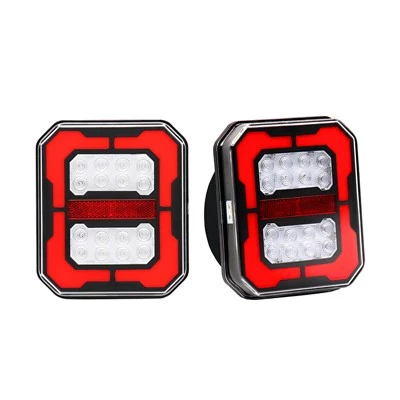
If you’re a bike shop owner, a fleet manager, or a rider looking to upgrade your tail lights, and you want to see how easy our wireless models are to remove and transport, we’d love to connect. We offer bulk pricing for shops and fleets, and we can send you sample units to test in your own rides. Don’t let a tail light that’s hard to remove turn your next ride or trip into a hassle—reach out to discuss how our wireless tail lights can work for you.
Glass Watermelon Lights References
- Cyclist’s Alliance. (2022). “Bike Commuter Gear: Time-Saving Features for Daily Riders.” Retrieved from industry resources on two-wheeler accessory design.
- International Organization for Standardization. (2021). “Test Methods for Bicycle Light Mounting Durability.” ISO Standard 6742-1:2021.
- Outdoor Industry Association. (2023). “Folding Two-Wheeler Accessory Trends: Compact Transport Solutions.” Annual report on active commuter gear innovation.
- Journal of Sustainable Transportation. (2022). “Weight Optimization in Micromobility Accessories and Rider Experience.” Volume 16, Issue 5.
Shenzhen Idun Photoelectric Technology Co., Ltd.
As one of the most professional wireless tail light manufacturers and suppliers in China, we have world-leading production equipment and strong manufacturing capabilities. Please feel free to wholesale customized wireless tail light at competitive price from our factory. Contact us for more cheap products.
Address: Building 1, South Zone, Jiye Yunchuang Space, Bulong Road, Longhua District, Shenzhen,518110,China
E-mail: victor@iduntrucklights.com
WebSite: https://www.iduntrucklights.com/
