Hey there, if you’ve ever waited for a lift on a rainy day, breathed a sigh when it glides smoothly between floors, or even panicked a little when it jerks just right—chances are you’ve never stopped to wonder what’s actually making that thing move. I’m Jake, and I’ve been selling hydraulic piston pumps for over a decade now, so I’ve fielded way too many questions from lift maintenance techs, building managers, and even a few curious handymen at home: “How does that clunky pump keep a 2,000-pound lift (plus 10 people!) zooming up and down without dying?” Let me break this down like I would over a coffee at a trade show—no fancy textbook jargon, just real stuff that actually works, and tie in what I see every day as a pump supplier. Hydraulic Piston Pump
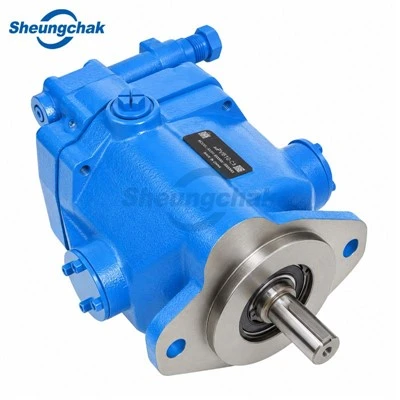
First, let’s cut the crap about hydraulics being some magic. It’s all about physics, plain and simple. Pascal’s Principle, right? If you squeeze a fluid in a sealed container, the pressure you put on one side pushes equally hard everywhere else. That’s the backbone of every hydraulic system, not just lifts. But when it comes to a lift, we’re not talking about your backyard water feature pump—we’re talking hydraulic piston pumps, the workhorses I sell. These things are the heart of a hydraulic lift; without a good one, a lift’s just a metal box on a rope that might snap. Let’s get specific on how this plays out in a lift.
Start with the basics of the lift itself: there’s a big cylinder at the bottom (or sometimes off to the side, but mostly bottom for smaller buildings) filled with hydraulic fluid—usually a special oil that doesn’t freeze or get too thin when it’s hot, because lifts run a lot. When you hit the “up” button, what happens? The hydraulic piston pump kicks into gear, pushes that fluid into the cylinder, and a piston inside the cylinder shoves up. That piston is bolted straight to the lift car, so the car goes up. Hit “down,” and the pump reverses, lets fluid drain out, and the car lowers slowly. Easy enough, right? But here’s where the piston pump is different from other pumps, and why they’re my top seller for lifts—not just any old hydraulic pump. A gear pump or vane pump might work for a tiny lift, but for heavy-duty, constant use, piston pumps are where it’s at—they handle way more pressure, last longer, and don’t overheat when a building has 10 floors and 50 people a day riding up and down.
Let’s dive into how a hydraulic piston pump actually operates, step by step, because I’ve seen these things taken apart at job sites, and it’s not as complicated as it looks (though I always tell techs to call me if they’re halfway through a strip and stuck). First, the core parts: there’s a drive shaft that connects to the lift’s electric motor (or sometimes a gas engine for older buildings, but electric’s standard now), a cylinder block that spins as the shaft turns, pistons that fit into holes in the block, a swash plate (that’s the angled plate pushing against the ends of the pistons), and two ports—one for pushing fluid to the lift cylinder, one for letting it return.
When the motor turns the drive shaft, the cylinder block spins with it. The swash plate is at an angle, not straight up and down, so as each piston spins around, it moves in and out of its hole like a finger wiggling. Here’s the cycle: as a piston moves back (gets pulled out of the block), it creates a little vacuum in its hole. That vacuum sucks hydraulic fluid from the reservoir (the big tank of fluid that’s sitting somewhere in the lift’s machine room) through the intake port. Then, as the piston spins around to the other side of the swash plate, the angle flips—now it pushes forward, shoving all that fluid out through the outlet port. Since the whole system is sealed, that fluid gets pushed under insane pressure straight to the lift’s main cylinder. No air, no leaks, just constant, steady force.
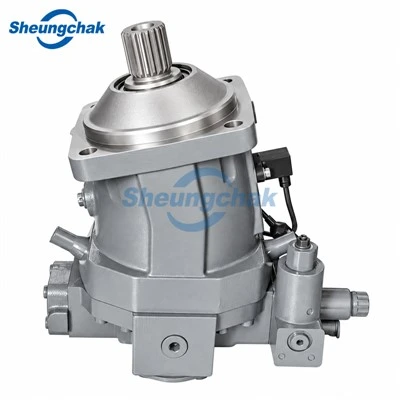
Now, tie this to why it matters for lifts. Lifts need exact control, right? You don’t want to lurch from the 3rd to the 4th floor when someone hits “close doors” fast. The piston pump’s design lets us dial in that flow rate—change how fast the pistons move in and out, and you change how much fluid gets pushed to the cylinder per second. Faster piston movement = more fluid = lift goes up quicker. Slower = smoother, like when you’re stopping at a floor. I have a whole line of variable-displacement piston pumps that are perfect for this—they adjust the piston stroke on the fly, so the lift speed doesn’t even waver when it’s carrying 2 people vs. a full load of 8. That’s why building owners call me first when their old lift pump is making that clanking noise and moving jerky—these variable ones solve so many problems.
Wait, let’s not forget the safety stuff, because lifts are not toys. I’ve been to a job site where a cheap piston pump failed, and the lift got stuck between floors—scary, and totally preventable. The system has pressure relief valves, right? If the piston pump pushes too hard (like if the lift gets stuck on something and tries to keep moving), the valve opens up and dumps fluid back to the reservoir, so the pump doesn’t blow a seal or burst the lift cylinder. That’s non-negotiable for compliance, and all the piston pumps I supply have overpressure protection built in—no cutting corners there. Also, when you hit “down,” the pump doesn’t just dump fluid all at once. The piston moves in reverse, pulling fluid back from the lift cylinder, and the flow is controlled so the lift lowers at a safe, steady speed. No free-falls, no surprises.
Now, let’s talk about real-world use, because this isn’t just theory. Last month, I was at a 12-floor apartment building downtown—their old piston pump was 25 years old, and it was running so hot, the techs had to shut it down for 20 minutes every hour to keep it from melting. Why? Because old piston pumps have inefficient seals, and they were wasting energy just pushing fluid around. The new variable-displacement ones I sold them use 30% less electricity, last 5 years longer, and they haven’t had a single overheat issue. The building manager told me the residents stopped complaining about jerky lifts too—they didn’t even realize the old pump was the problem until we swapped it out. That’s the thing about these pumps: when they’re working right, you barely notice them. When they’re not, everyone notices.
I get asked all the time, “Why not use a different pump? They’re cheaper.” Yeah, maybe upfront, but piston pumps are the only ones that can handle the constant cycling and high pressure of a lift 24/7. Gear pumps, for example, are cheaper but they leak more, wear out faster, and can’t adjust flow as easily—so your lift might be fine for a year, then start dropping a little on each floor, or making that grinding noise. Vane pumps also have issues with variable loads; if the lift is heavy, they can’t maintain pressure as well. Piston pumps are built for durability and precision, which is exactly what lift systems need.
Let me wrap this up with a quick run-through of the full cycle so it sticks:
- You press the “up” button in the lift car, sending a signal to the control panel.
- The control panel powers the lift’s electric motor, which spins the piston pump’s drive shaft.
- The spinning cylinder block and angled swash plate make pistons move in and out, sucking fluid from the reservoir and pushing it to the main lift cylinder.
- The fluid pressure from the piston pump shoves the piston in the lift cylinder up, lifting the car smoothly to the desired floor.
- When you reach the floor, the control panel slows the piston pump’s output, so the lift stops gently.
- For “down,” the pump reverses, pulls fluid from the main cylinder, and lets it return to the reservoir at a controlled rate, lowering the car safely.
And if anything goes wrong—like the pressure gets too high, or the lift gets overloaded—safety valves from the piston pump dump excess fluid, preventing damage. That’s the whole thing, plain and simple, no fancy science, just parts working together to move people safely.
At the end of the day, I’m not just selling pumps—I’m selling reliability. Lifts are a part of people’s daily lives, whether they’re going to work, picking up groceries, or visiting a friend. A bad pump doesn’t just make noise; it causes downtime, safety risks, and frustrated tenants. That’s why all the piston pumps I supply are tested to meet industry standards, have long warranty periods, and are easy to maintain—so when a tech has to swap a seal, it takes 15 minutes, not an hour.
If you’re a building manager dealing with a finicky lift, a maintenance tech sourcing a replacement pump, or someone who just wants to know why their lift works so well, hit me up to chat. No hard sell, no pressure—just info to help you get the right part for your system. Let’s make sure those lifts keep moving smoothly, safely, for everyone.
Hydraulic Gear Pump References:
Hydraulic Piston Pump Fundamentals. Fluid Power Journal.
Lift System Hydraulics: Pressure and Flow Control. Elevator World Magazine.
Industrial Hydraulic Component Durability Standards. National Fluid Power Association.
Guangdong Sheungchak Hydraulic Technology Co., Ltd.
Guangdong Sheungchak Hydraulic Technology Co., Ltd. is one of the most professional hydraulic piston pump manufacturers and suppliers in China. We are committed to providing high quality customized products with competitive price. Please rest assured to wholesale durable hydraulic piston pump for sale here and get pricelist from our factory.
Address: Building 25, Liantang Industrial City, Shangcun Community, Gongming Subdistrict, Guangming District, Shenzhen, China
E-mail: info@hydraulicsc.com
WebSite: https://www.hydraulicsc.com/
