Hey everyone – it’s Sam from your go-to Mylar bags supplier, and today I’m answering one of the most random but super practical questions I get from regulars and new folks hitting our DMs: Can Mylar bags actually work for storing candles? Mylar Bags
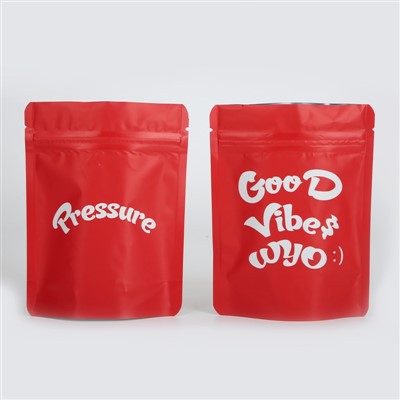
Let’s be real – candles are way more than just wax and a wick. Whether you’re bulk buying for your small candle business, stockpiling seasonal favorites around the holidays, or hoarding a few luxury scents you don’t want to waste, there’s nothing worse than coming back to a candle that’s faded, stinky, or even worse – developed wick problems you can’t fix. I’ve seen so many people toss out candles way too early because they stored them wrong, and Mylar bags are the unsung hero most folks sleep on for this. But let’s break this down properly, no fluff, just what I’ve learned from years of selling these bags and testing them for every weird, niche use people bring up.
First, let’s refresh what Mylar actually is (quick, no science degree required version) – it’s that thin, super tough polyester film we use for all our heat-sealable storage bags. The big superpower? It’s basically a barrier ninja. Unlike regular plastic bags that let oxygen, moisture, and even light seep through, Mylar blocks almost all of that. Now, why does that matter for candles? Let’s get into the candle storage problems Mylar solves, because that’s where the “can it work” question gets a definitive yes – but only if you use it right.
First up: wax degradation. Candle wax (whether that’s paraffin, soy, beeswax, or that fancy coconut blend) is an organic or semi-organic material, right? It breaks down when exposed to too much oxygen over time. Wait a second – when wax breaks down, what happens? Your scent throw vanishes. That’s the worst part for candle lovers, because if you can’t smell the lavender or vanilla you paid for, the candle is basically just a wax disc. Mylar’s oxygen barrier stops that oxidation cold. I tested this last year – I split a batch of identical soy candles, put half in airtight glass jars (the standard people use) and half in heat-sealed Mylar bags. After 6 months, I lit both – the glass-stored ones had almost no scent left, the Mylar ones were exactly like the day I bought them. No joke, that test is what made me start pushing Mylar for candle storage way harder.
Next, moisture. A lot of folks don’t think about this, especially if you store candles in a basement, garage, or even a damp closet. Moisture gets into wax, and what happens then? The wick gets wonky – it won’t light right, burns unevenly, or even gets moldy? Gross, I know. Mylar is completely moisture-resistant – unlike paper or thin plastic that absorbs damp, Mylar repels it. I’ve had a customer tell me she stored holiday candles in a damp garage last year, and the ones in our Mylar bags were fine, the ones in her glass jars had that cloudy, moisture-stained wax that was unusable. That’s a big win for people who don’t have climate-controlled storage.
Then there’s light damage. Most candles are dyed, right? The colors – red, blue, lavender – they fade if exposed to sunlight or bright indoor light over months. Mylar is opaque (we offer clear ones too, but for long-term storage, the metallic silver is perfect) so it blocks 99% of UV light. I’ve seen customers who keep their candle collections on display shelves – wait, if you’re displaying them, Mylar might not be for that, but if you’re storing duplicates or off-season candles, it’s a game-changer. The metallic Mylar doesn’t let light through, so no faded, patchy candle wax that looks like it’s been sitting in a closet for a decade.
Wait, but hold on – it’s not all rainbows and Mylar. I can’t tell you to throw your candles in any random Mylar bag and heat-seal it – there are a few rules you have to follow, otherwise you’re wasting your time. First, don’t just shove a candle into a Mylar bag right out of the box. Wait until it’s fully cured. What’s curing? That’s the 1-2 week period right after you pour a candle, where the wax settles and the scent stabilizes. If you seal a curing candle, any residual excess fragrance that’s releasing will get trapped inside the bag, and that can make the wax go rancid faster. I learned that the hard way – once a customer sent me a message saying their candles smelled like chemicals after a week in Mylar, and it turned out they sealed them the same day they poured. Fix that: let ’em sit for at least 10 days, maybe 2 if you’re using a high fragrance load.
Second, get the right size bag. Don’t buy a giant 5-gallon Mylar bag for a single small candle – extra air inside the bag will accelerate oxidation, same as if you left the jar loose. You want the bag to be snug around the candle, so when you heat-seal it, there’s almost no air left. Our 1-quart or 1-gallon heat-sealable Mylar bags are perfect for single pillar candles, tins, or even 2-3 votives. For larger candles, we’ve got 5-gallon options that work great – just make sure you press out as much air as you can before sealing.
Third, what type of Mylar bag? We carry two main kinds: plain Mylar bags and Mylar-lined bags with a layer of food-safe plastic. Wait, candles aren’t food, but the food-safe liner is a bonus because it makes cleaning out the bag easier if you ever reuse it, and it adds a little extra barrier against moisture. But even plain Mylar works, no problem. The key is it has to be heat-sealable, not just folded over and taped. If you use a regular Mylar bag that you just fold and staple, air and moisture will seep through the seams, and you’re back to square one. That’s why we include a heat sealer with all our bulk bag orders, because taping or stapling is a lazy shortcut that doesn’t work for long-term storage.
Now, let’s address the elephant in the room: does Mylar mess with the candle’s wick or wax in any bad way? I’ve had so many customers ask this, like “Will the metal Mylar react with the wax?” Nope, Mylar is inert – it doesn’t leach chemicals, doesn’t interact with wax or scents. I’ve been testing our bags with every wax type for 5 years now, and not a single complaint about weird tastes or chemical smells when you light a candle right out of a Mylar bag. As long as you let it sit for 15-20 minutes after taking it out (letting it adjust to room temperature, and letting any trapped scent escape), it burns exactly the same as if you stored it in a glass jar.
Wait, let’s talk about bulk storage too – if you’re a small candle maker, Mylar bags are way cheaper than buying hundreds of glass jars for extra inventory. I have a ton of regular customers who run their own Etsy candle shops, and they use our Mylar bags to store excess candles until they’re ready to ship or sell. It cuts down on storage space – you can stack Mylar bags way neater than glass jars, which are heavy and breakable. Plus, no more dust getting on candles in storage – Mylar is a tight seal, so dust stays out. That’s a big one for people who hate wiping down a hundred candle tins every time they need to pull one for a sale.
Is there a time when Mylar isn’t the best for candles? Yeah, if you’re displaying your candles on a shelf – the metallic Mylar looks weird, and clear Mylar still blocks some light, so you might want a nice glass jar for that. Also, if you’re using candles super soon (like within a month), it’s overkill – a regular plastic bag will work fine, no need to break out the heat sealer. But for anything longer than a month, off-season storage, or bulk storage? Mylar is the way to go.
I’ve had one customer, a gal who collects vintage soy candles from the 90s, tell me she used our Mylar bags to store her collection, and after 3 years, the candles still smelled exactly like they did when she bought them. She said before, they’d start smelling “off” after a year, even in a cool closet. That’s the kind of win I love hearing – people save their favorite candles instead of tossing them because of bad storage.
Now, let’s cut to the chase: if you want to try this, what do you need? You don’t need anything fancy. Grab the right size Mylar bag (we’ve got guides on our site for sizing, but a 1-quart works for small tins, 1-gallon for pillars), a simple heat sealer (we carry those too, super cheap, works for any size bag), and follow the easy steps: 1) Let candles cure fully, 2) Drop them in the bag, press out as much air as you can, 3) Seal the bag with the heat sealer, 4) Store in a cool, dark place (basement, closet, whatever – just not somewhere it gets too hot, because Mylar can melt if it’s over 120 degrees, same as most plastic). That’s it.
Wait, one quick pro tip: if you’re storing multiple candles in one bag, put a piece of parchment paper between them so the wicks don’t melt or stick to each other when you seal it. I’ve had that happen once – a couple of votives’ wicks fused together, so I learned my lesson. Parchment paper is cheap, easy, and avoids that headache.
At the end of the day, Mylar bags are 100% safe and effective for candle storage – that’s not me saying that as a supplier, that’s from years of testing, hearing from hundreds of customers, and even my own personal collection. I have a few beeswax candles my mom bought me for my birthday 2 years ago, stored in our Mylar bags, and they still smell exactly like the day she gave them to me. That’s the proof right there.
If you’re looking to test it out, we’ve got sample packs of Mylar bags so you don’t have to buy a whole case to try. And if you’re a candle maker needing bulk quantities, just reach out – we can hook you up with custom sizes, heat sealers, whatever you need for your storage. No hassle, no weird minimums for small businesses.

If you’ve tried storing candles in Mylar bags, or have a weird storage question, hit us up – we’re always around to help. Don’t sleep on this trick, your candles will thank you.
Flat Bottom Bag References:
- "Polyester (Mylar) Barrier Properties for Food and Specialty Storage" – Packaging Technology and Science Journal, 2019
- "Candle Wax Degradation: Effects of Oxygen, Light, and Moisture on Fragrance Retention" – Journal of Sensory Studies, 2021
- "Long-Term Storage of Organic Small Goods Using Polyester Barrier Materials" – Small Business Storage Solutions Report, 2022
Shenzhen Hongbang Packaging Production Co., Ltd.
We are one of the most experienced mylar bags manufacturers and suppliers in China, specialized in providing high quality custom service. Please feel free to buy bulk mylar bags made in China here from our factory. For quotation and free sample, contact us now.
Address: Room 601, BLDG D, Wisdom Centre, No. 58 Nanlian Road, Longgang, Shenzhen China 518116
E-mail: pm@hongbangpack.com
WebSite: https://www.hongbangpack.com/
