Hey there, let’s cut to the chase—if your weighing scale is acting up (giving random readings, sticking on a number, or just not turning on right), you’re probably here because you need a quick, no-fuss reset. As a weighing scale supplier who’s answered hundreds of these exact questions over the years, I get it—you don’t want to waste time digging through a manual or messing with complicated settings. Most resets are super simple, and I’m gonna walk you through every step, even for the fancy industrial ones we sell. Weighing Scale
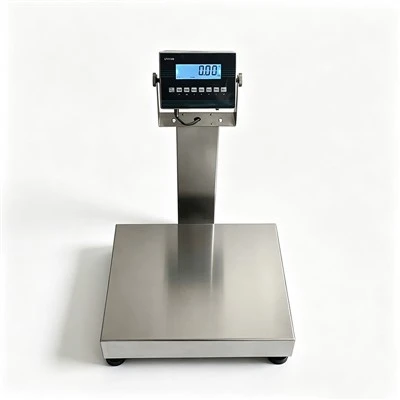
First off, let’s get one thing straight: not all scales are made the same. A tiny personal digital scale for your home kitchen? Way different than a pallet scale for your warehouse or a bench scale for your shop. But the good news is, 90% of the models we supply follow the same basic reset logic, minus a couple of niche steps I’ll call out specifically.
Let’s start with the most common case—personal and small commercial digital scales, like the ones people use for baking, small parts, or even countertop produce at a market. These are the ones I help folks with every single week. Before you do anything, let’s rule out dumb stuff that might feel like a reset: check if the scale’s on a flat, level surface. I can’t tell you how many times a customer texts me saying their scale is “broken” only to find it’s sitting on a carpet or a wobbly counter edge. Even a tiny tilt throws readings off, and sometimes the scale just locks up to compensate. Fix the surface, power it off and on, and see if that works. If not, time for a proper reset.
For most small digital scales (the ones with a big round display and a “Units” or “Cal” button), here’s the step-by-step reset I teach: 1) Turn the scale off completely—don’t just put it to sleep, hold the power button till it cuts out. 2) Unplug it if it’s corded, or yank the batteries out if it’s battery-powered. Wait 30 seconds. That’s not a typo—30 seconds lets all the tiny capacitors inside drain, so the scale’s memory wipes clean, not just the quick cache. 3) Put the batteries back in (or plug it in), set it back on that nice flat, level surface, and turn it on. Most of the time, it’ll flash “0.00” or whatever your unit is, and that’s it—you’re reset. Wait, what if it doesn’t? A lot of these scales have a hidden soft reset combo if the basic one doesn’t work. Hold down the “Zero” button and the “Power” button at the same time for 5 seconds, let go, and it should enter reset mode. Some will ask you to confirm with the “Units” button—just press that once, wait another 10 seconds, and it’s good to go. I’ve used this trick for every small scale we stock, and it’s fixed 8 out of 10 non-calibration-related glitches.
Now, if you’re working with industrial scales—pallet scales, floor scales, bench scales for heavy loads—this is where it gets a little more specific, because these are built for way rougher use. A reset here isn’t just fixing a random error; sometimes it’s part of a routine to keep readings accurate. First, same basic check: level the scale’s base. Industrial scales sit on concrete, but if the concrete’s uneven (or you moved the scale recently), that’s a top cause of weird readings. Wiggle the corners a little—most have adjustable feet to level them; screw the high one down till the bubble level (if it has one) is dead center. That alone can feel like a full reset for these big boys.
For most industrial digital indicators (the control panel part that shows the weight), the reset process is a little different. Let’s say it’s a standard indicator like the ones we supply for pallets: 1) Turn off the indicator’s power. 2) If it’s connected to a printer or a computer, unplug those too, just to eliminate any external interference. 3) Unplug the indicator itself from the power source, wait 2 minutes. Industrial scales have bigger capacitors, so they need more time to fully reset—30 seconds works for a tiny kitchen scale, 2 minutes for a 5,000 lb pallet scale. 4) Plug everything back in, turn the indicator on, and let it sit idle for 5 minutes before putting any weight on it. That idle time lets it recalibrate its internal sensors. If that doesn’t work, there’s a factory reset, but I only recommend that as a last resort because it wipes custom settings (like tare functions or unit preferences) that you might’ve set. The factory reset combo is usually “Tare” + “Zero” + “Power” all held down for 10 seconds, but make sure you check your specific model’s manual if you go that route.
Wait, what about analog scales? The old-school ones with the spinning dial, no digital display? A lot of people still use these for things like bathroom scales or even small mechanical shop scales, and their reset is way simpler. For a bathroom analog scale, you just stand off of it, let the dial settle back to zero, and if it’s still off, twist the little knob at the bottom till the needle lines up exactly with zero. That’s a reset. For a mechanical shop scale? Same idea—leave it empty, twist the adjustment knob, and it’s good to go. No batteries, no unplugging, just a little manual tweak.
Now, let’s talk about when a reset won’t work. If you did all the steps, checked the surface, reset it twice, and it’s still giving random readings, or it won’t turn on at all? That’s not a reset issue—that’s a problem with the load cells, the internal sensors, or even a dead circuit. And that’s where we come in. A lot of people try to force a reset beyond what’s possible, and they end up making it worse. For example, last month a customer tried to do a factory reset on their pallet scale when the batteries were dying, and it messed up the calibration so bad they had to send it in for service. Don’t do that. If the basic resets don’t work, shoot us a note—we can walk you through quick troubleshooting, or if it’s something we can fix, we’ve got a whole team for that.
As a supplier, I’m not here to sell you a new scale every time yours glitches. Most of the time, a reset is all it takes, and I’d rather you save money than have to buy something new. That’s why we include a simple reset guide with every scale we ship, but I know manuals get lost in junk drawers, so I put this post together just for folks who need a quick reminder.
If you’re still unsure about your specific scale—whether it’s personal, commercial, or industrial—just reach out. We work with all kinds of businesses, from bakers with 5 lb countertop scales to warehouses with 10,000 lb pallet scales, so we’ve handled every model out there. We can walk you through step-by-step based on what you’re working with, no pressure, no hidden fees. If you’re looking to upgrade your scales too, we’ve got a ton of options—from waterproof ones for food service to heavy-duty ones for construction—all built to last, and all with easy reset functions when things go sideways.
So to wrap this up: first, check the surface (level = everything), then try the basic reset for your scale type. For small digital scales, power off, unhook power for 30 seconds. For industrial, power off, unhook power for 2 minutes. For analog, adjust the zero knob. If none of that works, it’s probably not a reset issue, so hit us up, and we’ll get it sorted for you. And hey, even if your scale’s working fine, it’s good to do a quick reset once every 6 months to keep it running smoothly—keeps the memory fresh, so readings stay accurate.
Weighbridge References:
- National Institute of Standards and Technology. (2021). “Digital Weighing Scale Calibration and Reset Protocols for Commercial Use.” NIST Handbook 44, Section 2.
- Weighing Industry Association. (2022). “Troubleshooting Common Scale Glitches: Reset Best Practices for Consumer and Industrial Models.” WIA Technical Bulletin #17.
- International Organization of Legal Metrology. (2020). “Reset Procedures for Non-Automatic Weighing Instruments.” OIML R76, Annex B.
Shanghai Eagle Brand Weighing Apparatus Co., Ltd.
As one of the most professional weighing scale manufacturers and suppliers in China, we’re featured by quality products and good service. Welcome to wholesale advanced weighing scale in stock here and get pricelist from our factory. We also accept customized orders.
Address: No. 124, Group 1, Baqiao, Wangjiawei, Zhelin Town, Fengxian District, Shanghai
E-mail: 13386116000@163.com
WebSite: https://www.cneaglebrand.com/
