If you’ve ever stood in a building materials lab, running flammability tests for architects, code officials, or product manufacturers, you know that “fire resistance” is never just about how fast something burns. One of the most critical, yet often misunderstood, metrics we use every day is the Smoke Developed Index, or SDI. As a supplier of building materials flammability testers, I talk to engineers and product managers all the time who mix up SDI with other fire-related measurements—like flame spread rating, ignition temperature, or heat release rate. That’s why I wanted to break down exactly what SDI is, why it matters for safety, and how our equipment is designed to measure it accurately. Building Materials Flammability Tester
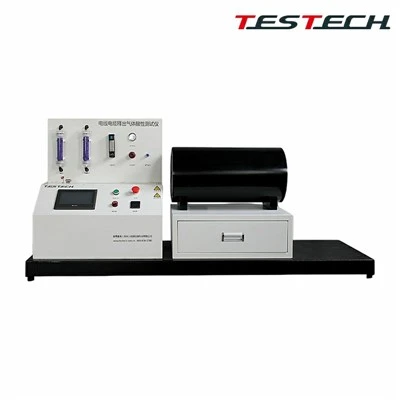
First, let’s start with the basics: smoke is one of the leading causes of fire-related deaths in buildings. The National Fire Protection Association (NFPA) reports that over 80% of fire fatalities in the U.S. stem from inhaling toxic smoke, not burns. That’s not just a stat—it’s a reality we see play out in test labs every time we run an SDI test. Unlike flame spread, which measures how quickly fire moves across a material’s surface, SDI quantifies the amount of smoke a material releases during fire exposure, relative to a reference material. It’s not just about how much smoke is produced; it’s about its density and visibility, which directly impacts how long occupants have to evacuate and how easy it is for first responders to navigate a burning space.
SDI is calculated using two key test methods, both standardized by ASTM International and referenced in NFPA codes. The primary method for interior building materials is ASTM E84, Standard Test Method for Surface Burning Characteristics of Building Materials. This test uses a 25-foot long, 20-inch wide test chamber lined with the material being evaluated, and a pilot flame applied to one end for 10 minutes. During the test, two things are measured: the flame spread along the material (which gives the Flame Spread Index, FSI) and the amount of smoke released. The smoke measurement is taken using a photometer at the far end of the chamber, which detects light obscuration caused by smoke particles. The results are compared to a reference material—usually red oak flooring, which has an assigned SDI of 100, and a non-combustible material like mineral wool, which has an SDI of 0. That comparison is what gives a material its final SDI score.
Let’s clarify that reference scale because it’s where a lot of confusion happens. If a material has an SDI of 50, that means it produces half as much smoke as red oak under the same test conditions. A material with an SDI of 200 produces twice as much smoke as red oak, and so on. Most building codes set strict limits on SDI for interior finishes. For example, NFPA 101, the Life Safety Code, requires that wall and ceiling finishes in most occupied spaces have an SDI of 25 or less. Some high-risk areas—like hospital corridors, schools, or exit stairwells—often require even lower SDIs, sometimes 10 or less. That’s because these spaces need to remain as smoke-free as possible during an evacuation to prevent injuries from smoke inhalation.
A common mistake I see is people thinking SDI only applies to finished products like paint, drywall, or wall coverings. But it’s critical for a huge range of building materials, including insulation, flooring, ceiling tiles, and even structural components. For example, foam insulation used in exterior walls might have a high flame spread rating, but if its SDI is low, it can be a safer choice than a faster-burning material that releases massive amounts of thick, toxic smoke. Another example: in a commercial office building, the ceiling tiles above workstations might need an SDI of 0 to meet code, because a fire there would spread quickly and the smoke could block exit routes.
Now, let’s talk about how we measure SDI accurately, because that’s where specialized equipment comes in. As a flammability tester supplier, we’ve engineered our SDI test apparatuses to meet the strict precision requirements of ASTM E84, because a faulty test means a product might not meet code, or worse, a material that looks safe could be hiding a dangerous smoke output. The core of our test equipment for SDI is the photometer system, which is calibrated to detect small changes in light obscuration. If the photometer isn’t calibrated correctly, it might undercount or overcount smoke particles, leading to an incorrect SDI score.
Another key feature of our equipment is the chamber’s ventilation control. ASTM E84 specifies a precise air flow rate in the test chamber, because too much or too little air can affect smoke movement and concentration. For example, too much air will blow smoke out of the chamber before the photometer can measure it, leading to an artificially low SDI. Too little air will cause smoke to build up, overestimating the score. Our testers have automated ventilation controls that maintain the exact air flow required by the standard, which is something many lower-cost alternatives skip—leading to unreliable test results.
We also build in real-time data logging, which is essential for SDI testing. The SDI isn’t a single number; it’s an average of smoke output over the 10-minute test period. But looking at how smoke production changes over time can tell engineers a lot about a material’s behavior. For example, a material that releases a lot of smoke in the first 2 minutes of the test might be more dangerous than one that slowly releases smoke over 10 minutes, because occupants would be exposed to toxic fumes earlier. Our equipment logs smoke density every 10 seconds, so customers can analyze this timeline and adjust their material formulations accordingly.
Let’s talk about a real-world example to put this in perspective. A few years ago, a manufacturer was developing a new line of residential carpet. Their initial product had a flame spread rating of 30, which was well below the code limit of 75 for residential interiors. But when they tested SDI, it came back at 120—far above the 25 limit required for most living spaces. The problem was the carpet’s backing material, which released thick, black smoke when heated. Instead of just tweaking the flame retardant (which had already worked for FSI), they had to switch to a different backing material with a lower smoke output. If they hadn’t tested SDI, their carpet would have passed the flame spread test but failed the safety requirement that prevents smoke-related deaths. That’s why SDI isn’t just a technical metric—it’s a life safety standard.
Another important point: SDI isn’t the only smoke-related test, but it’s the most widely recognized in building codes. There are other tests, like the Smoke Developed Rating in NFPA 255, or the Smoke Density test used for materials in aircraft or ships, but SDI from ASTM E84 is the standard for most commercial and residential buildings in North America and many other regions. It’s also referenced in international codes, like the International Building Code (IBC), which means no building project can move forward without having SDI tested for interior finishes.
One misconception we often hear is that “natural” materials have low SDI. That’s not always true. For example, pine wood has an SDI of around 100, same as red oak. Untreated cotton fabric can have an SDI of 150, because it burns quickly and releases a lot of smoke. On the other hand, some non-combustible materials, like gypsum board, have an SDI of 0, which makes them ideal for wall assemblies. The key isn’t whether a material is natural or synthetic—it’s how it performs when exposed to fire, which is exactly what SDI measures.
As a supplier, we work with a lot of small manufacturers who might not have a full in-house lab, so we also provide training on how to run SDI tests correctly. Even the best equipment won’t give accurate results if the test is done wrong. For example, if a test sample isn’t properly conditioned before testing—meaning it’s not dried to a specific moisture content—moisture in the material can affect smoke production. Our team teaches customers how to prepare samples according to ASTM standards, how to calibrate the photometer, and how to interpret the results in the context of their specific application.
The demand for reliable SDI testing is only going to grow. Building codes are getting stricter about smoke safety, especially as more people work and live in tall buildings, where evacuation times are longer and smoke can spread quickly through elevator shafts and stairwells. We’ve also seen a rise in new materials, like bio-based composites and cross-laminated timber, which are being used more in construction and require rigorous SDI testing to meet code. That means our flammability testers are constantly evolving to keep up with these new materials and changing code requirements.
If you’re a product manufacturer, architect, code official, or lab manager who needs accurate SDI testing for your projects, the right equipment and expertise matter. Running an SDI test that’s compliant with ASTM E84 isn’t just a box to check—it’s a critical step to ensure your materials don’t put building occupants at risk. Whether you’re developing a new interior finish, testing insulation for a commercial building, or auditing materials for a code update, having a reliable way to measure smoke output is non-negotiable.
If you’re looking for a partner to provide the equipment and support you need for SDI testing, our team is here to help. We work with labs of all sizes, from small in-house product testing facilities to large third-party certification labs, and we can tailor our equipment to meet your specific needs. We also offer ongoing calibration services, training, and technical support to make sure your SDI tests are accurate and compliant every time.
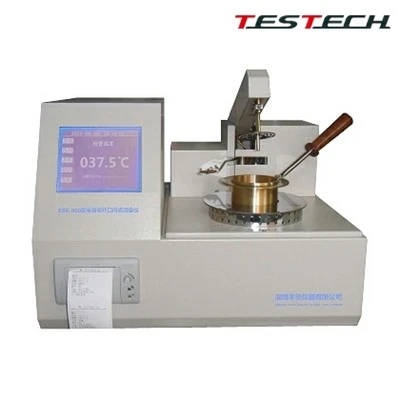
Don’t wait until a project is on the line to address SDI. Smoke safety is one of the most important aspects of building code compliance, and accurate SDI testing is the foundation of that safety. Reach out to our team to learn more about our flammability testers and how we can support your SDI testing needs.
Building Materials Flammability Tester References:
National Fire Protection Association. (2023). Fire Loss in the United States. NFPA.
ASTM International. (2022). Standard Test Method for Surface Burning Characteristics of Building Materials (ASTM E84). ASTM.
National Fire Protection Association. (2021). Life Safety Code (NFPA 101). NFPA.
International Code Council. (2022). International Building Code (IBC). ICC.
TESTech Instrument (Suzhou) Technologies
TESTech Instrument (Suzhou) Technologies is one of the most reliable building materials flammability tester manufacturers and suppliers in China. If you’re going to wholesale durable building materials flammability tester, welcome to get quotation from our factory. For price consultation, contact us.
Address: 8/F, R&D and Production Workshop No. 5, Jiangsu Guoqian Technology Innovation Industrial Park, 168 Lüliangshan Road, Huqiu District, Suzhou, Jiangsu Province, China
E-mail: molly@testech.com.cn
WebSite: https://www.testechfiretest.com/
