What’s the Moisture Vapor Transmission Rate of Vacuum-Metalized CPP Film? Vacuum-Metalized CPP Film
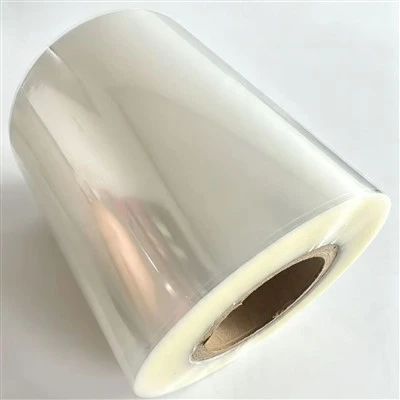
If you work in flexible packaging—whether you’re a brand manager for snack foods, a pharma supply lead, or someone who ships moisture-sensitive electronics—you’ve definitely heard of vacuum-metalized CPP film. And if you’re digging into its core performance, one number’s probably bugging you: its moisture vapor transmission rate (MVTR). Let’s cut through the jargon here; I’m a supplier of this stuff, not a textbook writer, so we’ll keep this real, no stuffy formulas unless they matter.
First, let’s start with what makes vacuum-metalized CPP different from regular CPP (cast polypropylene) film. Regular CPP’s MVTR? Not great for high-moisture barrier needs. It’s a porous, plastic-like material that lets tiny water molecules slip right through—like a screen door for H2O. But when we slap a super thin layer of aluminum (think 20 to 50 nanometers thick, way thinner than a human hair) onto its surface in a vacuum chamber? That changes everything. The aluminum layer acts like a solid barrier, blocking most water vapor from passing through. That’s why brands use it for things like chocolate packaging (which hates humidity) or coffee bags (stale coffee = bad sales).
Now, the big question: what’s the actual MVTR? It’s not a one-size-fits-all number, I’ll tell you that right off the bat. MVTR is measured in grams of water vapor passing through 1 square meter of film in 24 hours (g/m²/day)—standard test conditions, too, usually 38°C and 90% relative humidity, which mimics real-world hot, humid conditions. Let’s break down the ranges we supply, since that’s what actually matters for you.
First, if you’re after a medium barrier, that’s our 25nm aluminum-coated CPP. Its MVTR usually sits around 5-10 g/m²/day. Wait, compare that to regular CPP: that’s like 50-100 g/m²/day, right? So way better. But if you need a stronger barrier—say, for freeze-dried food or pharmaceutical blister packaging that can’t let any moisture in—our 45nm aluminum version drops MVTR down to 1-3 g/m²/day. That’s a huge jump in performance. And we’ve got a thinner option for when cost is tight but you still need a bit of barrier: 15nm coated CPP clocks in at ~15-20 g/m²/day. Perfect for things like craft candy that’s sensitive to a little humidity but not extreme.
But wait—don’t just take our word for it. MVTR numbers aren’t pulled out of thin air; they’re tested, and there are factors that can shift them. Let’s be transparent here, because no supplier should hide that. First, the aluminum layer thickness: duh, thicker aluminum = fewer pinholes = lower MVTR. But if we mess up the vacuum process—like if there’s too much moisture in the chamber when we coat, or the aluminum layer has tiny gaps (pinholes)—that will spike MVTR. That’s why we run random tests on every batch, not just once a month. Last year, a customer thought their 30nm film had “bad MVTR” until we realized a batch had a 2% defect rate from a clogged vacuum nozzle. We fixed the nozzle, and their numbers were right back on track.
Another factor: film surface prep. CPP film has a rough, corona-treated surface sometimes, right? If we don’t clean that surface properly before metalizing, the aluminum won’t stick evenly, leading to more pinholes. We’ve got a whole step in our process where we plasma-treat the CPP first to make it super smooth, which cuts down on those gaps. That’s why our numbers are consistent—no wild swings from batch to batch.
Then there’s test method. Some labs test at 23°C instead of 38°C, which gives lower (but not real-world accurate) MVTR numbers. Or they use a different humidity level. We always use the standard 38°C/90% RH method because that’s what you’ll actually face when shipping to Southeast Asia, Latin America, or any place with sticky summers. A lot of cheap metalized films use 23°C to fake better MVTR, so always ask which test method was used.
Let’s tie this to real use cases, so you can see why MVTR matters for your job. Take a craft chocolate brand: if they use regular CPP, their chocolate gets white “bloom” in a month because moisture seeps through and makes the cocoa fat separate. With our 25nm metalized CPP, that bloom is gone for 6 months. That’s not just a performance win—it’s a sales win, because customers don’t see that yucky bloom and toss the bar. For pharma, say, a blister pack for antibiotics: even a tiny bit of moisture can make the pills go bad. Our 45nm CPP’s 1-3 g/m²/day MVTR keeps those pills stable for 2 years, which is exactly what regulators require.
Wait, can we get even lower MVTR? No, actually—vacuum-metalized CPP tops out around 0.5 g/m²/day if we do a double coat, but that’s way more expensive, and most customers don’t need it. It’s overkill, like buying a tank to drive to the grocery store. We only push that if someone’s packaging something like a moisture-sensitive ceramic component, which most folks aren’t.
A common myth I hear: “Metalized films block oxygen too, so MVTR is irrelevant.” No—oxygen and moisture are different molecules. Aluminum blocks both, but they test separately. You still need to look at MVTR for moisture, and oxygen transmission rate (OTR) for air. But if moisture is your main problem—like if you’re packaging dried fruit, nuts, or coffee—MVTR is the number you care about most.
Now, let’s talk about how we measure our film, because transparency is non-negotiable. We use a Mocon Permatran tester—everyone in the flexible packaging industry knows Mocon, it’s the gold standard. Every batch of metalized CPP gets tested, and we send a COA (certificate of analysis) with MVTR numbers right on it. No vague “barrier properties” here—you get a specific number for the exact roll you’re buying.
We also have a trick we use for customers who are unsure: send them a 6-inch sample for free. Test it in their own lab, or send it to theirs. We’ve had a snack brand do that, test their regular CPP vs. our metalized, and cut their product spoilage by 70% in 3 months. That’s the kind of result that matters, not just a number on a spec sheet.
What about when you’re processing the film into bags or pouches? Does printing or sealing mess up the MVTR? Good question. If you use a water-based ink, that’s fine—it won’t penetrate the aluminum layer. Solvent-based ink? Some solvents can eat at the thin aluminum, which might slightly raise MVTR, but only if you use a ton of it. We suggest water-based inks for that reason, but if you already use solvent-based, just let us know, and we can adjust our coating thickness a tiny bit to compensate. For heat sealing, too—we use a sealant layer (usually LDPE or LLDPE) on the CPP backside, which doesn’t affect the aluminum’s moisture barrier at all. The MVTR stays the same, because the aluminum is still intact.
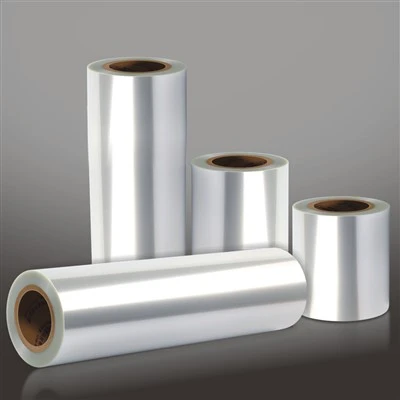
Let’s wrap this up, because I know you’ve got other stuff to do than read a long blog. The takeaway: vacuum-metalized CPP’s MVTR isn’t a fixed number, but for most common uses, it’s 1-20 g/m²/day, depending on aluminum thickness. For your specific product, pick the right thickness: 15nm for low-cost, medium barrier; 25nm for general use (snacks, candy, coffee); 45nm for high-barrier needs (pharma, freeze-dried food). Always check that the MVTR is tested at 38°C/90% RH, and ask for a COA so you’re not getting a number that’s too good to be true.
Polyethylene Film If you’re tired of your current film’s MVTR letting moisture ruin your products, let’s chat. We’ll send a free sample, answer any questions about thickness or processing, and get you a quote that fits your budget. No sales pitch, just straight talk about what works for your packaging needs.
References
- Han, J. H. (2005). Flexible Food Packaging. CRC Press.
- Mocon Inc. (2022). Moisture Vapor Transmission Rate Testing Standards for Flexible Packaging. Technical Report.
- Vacuum Metalization Association. (2021). Performance Properties of Vacuum-Metalized Polypropylene Films. Industry Guidelines.
Qingzhou Huiyuan Packaging Materials Co., Ltd.
As one of the most professional vacuum-metalized cpp film suppliers in China since 1997, we’re featured by quality products and good service. Please feel free to buy cheap vacuum-metalized cpp film made in China here from our factory. For price consultation, contact us.
Address: Naoshan Industrial Park, Shaozhuang Town, Qingzhou City, Weifang, Shandong Province, China.
E-mail: 15864598133@163.com
WebSite: https://www.huiyuanfilms.com/
