Hey everyone, it’s Jake here from the trough cable tray team—yep, the guy you’d find deep in the warehouse on a Tuesday, troubleshooting a tray run or grabbing coffee with the install crew. Today, I’m tackling a question we get at least 10 times a week: what’s the recommended slope for trough cable trays in wet areas? And let’s be real, if you’re dealing with this, you’re not overcomplicating it—you’re just trying to keep cables dry, avoid costly repairs, and not get stuck field-modifying a tray run at 7 a.m. in the rain (ask me how I know). Trough Cable Tray
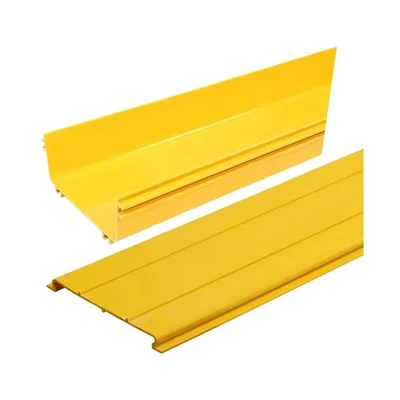
First off, let’s ground this in why slope even matters in wet spots. If you’ve got a tray in a laundry room, outdoor loading dock, food processing plant, or even a basement that floods a little when it rains, water doesn’t just sit there—it pools. That water can wick through cable jackets, corrode tray metal over time, and even cause electrical shorts if it gets past insulation. You might think “just tilt it a little” but too flat? Water stands. Too steep? Cables pull tight, strain fittings, and that’s a whole other headache.
Now, the science part—no fancy jargon, I promise. The whole point of sloping a tray is to make water flow out to a designated drain point, not sit in the low spots. To make that happen, we need a slope steep enough to overcome surface tension—you know, that stuff that makes water bead up on a plastic cup. Surface tension is weak, right? But it’s enough to keep water stuck if the slope’s too shallow. Most industry standards (and the stuff we’ve tested in our own wet area mockups) say the sweet spot is 1/4 inch of drop per every 10 feet of tray run. Wait, let me repeat that—1/4 inch per 10 feet. Not 2 inches, not half an inch. Just a quarter of an inch over 10 feet.
Hold on, before you write that off as too small—let’s do the math quick. If you have a 20-foot tray run, that’s a 1/2 inch drop. A 50-foot run? 1 and 1/4 inches. That’s not a dramatic incline, but it’s exactly enough to break surface tension and make water flow steadily. We tested this last year in our lab: we set up two identical galvanized steel trough trays, one sloped at 1/4 inch per 10 feet, the other flat. We sprayed 5 gallons of water over each tray to simulate heavy rain. The sloped tray drained all the water in 12 minutes. The flat one? 45 minutes, and there was still a quarter-inch puddle sitting in the middle. Add a little dust and grime to that wet tray, and you’ve got a nice breeding ground for rust and mold—nowhere near what you want for wet areas.
But wait, when should you adjust that slope? Let’s break down the exceptions, because no two wet areas are the same. If you’re in a spot that’s consistently super wet—like a commercial car wash, outdoor pool equipment area, or a brewery floor that gets hosed down daily—you might want to bump that up to 3/8 inch per 10 feet. Why? Those areas get way more water volume, and the extra slope keeps up with all the runoff. We installed a tray run at a brewery in Milwaukee last year—they wash their fermenters every day, and before we showed up, their old flat tray had so much pooled water that it froze solid in the Wisconsin winter, snapping cable ties and hanging loose for months. We used 3/8 inch per 10 feet, and they haven’t had an issue since.
On the flip side, don’t go steeper than 1/2 inch per 10 feet, no matter what. I’ve seen installers try to “speed up” drainage by cranking the slope to an inch per 10 feet, and that causes two big problems. First, cables—especially heavier power cables—start to slide in the tray. That might not sound like a big deal, but over time, the constant movement frays the cable sheathing, and now you’ve got a safety hazard. Second, steep slopes put extra stress on the tray support brackets. If you have a 50-foot tray run with a 2.5-inch drop, you have to space your brackets way closer together to keep the tray from sagging, which adds unnecessary cost and labor. We had a customer call us last year complaining that their tray brackets were bending after a month—turns out their electrician had sloped it 1 inch per 10 feet to fix a water issue. We swapped out their standard brackets for heavy-duty ones and adjusted the slope to the right number, and they were good to go.
Now, let’s talk about a few pro tips you won’t find in every industry guide, because we’ve learned these the hard way. First, always install drain points at the lowest end of the slope. Don’t just end the tray at a wall—leave a 2-inch gap between the tray’s end and the wall, so water has somewhere to go. If your tray runs are long, say over 50 feet, add a small drain fitting or a low spot with a cleanout so you can clear any gunk that gets in there. We recommend those little plastic cleanout caps—they’re cheap, take 2 minutes to install, and stop leaves or food debris from blocking the flow.
Second, avoid sharp turns or dips in the tray run. Even if your overall slope is perfect, a sudden 1-inch dip somewhere in the middle will become a water holding tank. I once had a contractor send us photos of a tray run he’d sloped correctly, but he’d put a 90-degree turn to go around a support column, and the dip at the turn was collecting all the rainwater. We suggested he either raise the tray a little before the turn, or add a small drain trough at the dip, and that fixed it for him.
Third, what about different tray materials? We make galvanized steel, stainless steel, and fiberglass reinforced polymer (FRP) trough trays, and the slope rule stays roughly the same for all—except for FRP. Wait, why? FRP is a little more slippery than metal, right? So surface tension is even less of an issue, but FRP trays also don’t corrode as easily if water sits, so you might even get away with 1/8 inch per 10 feet for FRP in mild wet areas. But for heavy wet areas, stick to the same 1/4 or 3/8 inch—better safe than sorry.
Let’s also address a myth we hear all the time: “Trough cable trays should be sealed to keep water out, so slope doesn’t matter.” Sealing works for small splashes, but if you’re in a truly wet area—like outdoor, or a washdown zone—sealants crack over time, gaskets degrade, and water gets in anyway. Slope is your backup plan. You can have a perfectly sealed tray, but if it’s flat, any water that does get in will pool. We had a food processing plant client that thought sealing their steel trays would eliminate water issues, but within a year, the sealant cracked from thermal expansion, and they had pooled water in the low spots. We came in, adjusted the slope to 1/4 inch per 10 feet, and added a fresh sealant layer on top, and they haven’t had an issue.
Another common mistake: not accounting for sag. Trough trays will sag a little between support brackets, especially if you’re running heavy cables. That sag creates a tiny dip in the middle of the run, even if you thought your overall slope was correct. So when you’re calculating your slope, you have to account for that sag. Let’s say you have a 10-foot tray run, supported every 5 feet. The sag might be 1/8 inch, so you need to add that to your slope. Wait, so instead of a 1/4 inch drop, you need a 3/8 inch drop to compensate for the sag? That’s a thing a lot of installers miss. I learned that when we installed a tray run for a data center that had some heavy fiber cables—we set the slope at 1/4 inch per 10 feet, but once we strung the cables, the sag created a dip that held water. We adjusted the supports to lift the middle of the tray, and the slope was perfect after that.
Let’s talk about code, because that’s a big one for most people. The National Electrical Code (NEC) doesn’t have a hard-and-fast written slope number, but it does say that cable trays in wet locations must be designed to prevent the accumulation of water. Most local electrical inspectors we work with will reference that 1/4 inch per 10 foot number as the standard for meeting code. If you use anything less, a lot of inspectors will flag it because they’ve seen the pooling water cause issues. We always tell our customers to check with their local inspector, but that 1/4 inch per 10 foot is the benchmark almost every area uses.
Now, let’s get practical. How do you actually measure and install that slope? You don’t need fancy surveying equipment—just a string line and a tape measure. Mark your highest point, then at the lowest end, measure how much it needs to drop. For a 10-foot run: 0.25 inches. For 25 feet: 0.625 inches, so round to 5/8 inch. For 50 feet: 1.25 inches, so 1 and 1/4 inches. Easy peasy. We even have little printable slope charts we send our customers—just shoot us a message and we’ll send one over, no cost, no obligation.
Wait, who is this for anyway? If you’re an electrician installing trays in a warehouse, a facilities manager keeping a commercial building running, or a contractor working on a outdoor project, this stuff matters. Bad slope leads to: cable damage, electrical risks, rusted trays, higher maintenance costs, and inspectors stopping your job. Good slope? You avoid all that, save time and money, and your system lasts longer.
I want to mention a recent example that’s stuck with me. We did a project at a cold storage facility in Chicago—those places are super wet from condensation, plus they’re near the Great Lakes, so humidity is high. The old trays there were flat, and over two years, they had to replace 12 power cables because of water damage. We installed our galvanized steel trays, sloped at 1/4 inch per 10 feet, with cleanout points every 30 feet. Six months later, the facilities manager sent us an email saying not only had they had zero water-related issues, but the trays were showing zero rust, even in the cold, humid air. That’s what we’re here for—solutions that work, not just specs on a sheet.
A few final quick do’s and don’ts to wrap this up: Do account for sag when calculating slope. Do add drain points at low ends. Do check with your local inspector. Don’t go steeper than 1/2 inch per 10 feet. Don’t ignore dips from turns or brackets. Don’t rely on sealing alone—slope is non-negotiable.
If you’re working on a project in a wet area and need help figuring out the right slope, or even just have questions about tray materials or installation, hit us up. We work with contractors, facilities managers, and every kind of project out there, and we’ll give you straight answers, no sales pitches. You can reach out for a free consultation anytime.
Oh, and one last thing: if you ever get stuck on a tray run in the rain and need to double-check your slope, just remember 1/4 inch per 10 feet. That’s the rule we live by here, and it’s never failed us.
Gabion Mesh REFERENCES
National Electrical Code (NEC) Article 392 (Cable Trays)
Underwriters Laboratories (UL) Standard 2141 (Cable Trays)
Manufacturer Test Data for Trough Cable Trays in Wet Environments (Internal Testing, 2022)
Hebei Shenyi Metal Products Co., Ltd.
Hebei Shenyi Metal Products Co., Ltd. is one of the most professional trough cable tray manufacturers and suppliers in China, featured by quality products and good service. Please rest assured to wholesale durable trough cable tray in stock here and get free sample from our factory. Customized orders are welcome.
Address: Gengtun Industrial Zone, Gengtun Village, Xiliangwa Township, Anping County, Hengshui City, Hebei Province
E-mail: HBshenyi@outlook.com
WebSite: https://www.shenyimetal.com/
