If you’re running a long-range drone build that tops out at 7 inches, the motor you pick isn’t just another part on your parts list—it’s the backbone of flight time, range, and reliability. After years of working with drone builders, racing teams, and delivery operators, and as someone who’s spent half a decade selling outrunner brushless motors for custom and commercial drones, I can tell you most builders get this choice wrong. Too many grab a motor just because it’s labeled “long-range” or matches a rough weight estimate, only to end up with a drone that dies 15% short of its advertised range, or burns out a motor after a dozen test flights. Outrunner Brushless Motor

This post isn’t about shilling my brand’s motors, but about breaking down exactly what makes a 7-inch long-range drone motor work, and why our line of outrunner motors checks every box for this build size. I’ll walk through the key specs to prioritize, the tradeoffs you can’t ignore, and which models actually deliver for 7-inch platforms, not just look good on paper.
First, let’s ground ourselves: 7-inch long-range drones aren’t your casual FPV racer. They’re built to carry heavier batteries (usually 6S, sometimes 8S, for better voltage efficiency at distance) and have a frame that balances lift and low drag. A 7-inch drone typically falls between 1,000g and 1,800g all-up weight (AUW), including battery. For this size, outrunner motors are the only game in town—and for good reason. Unlike inrunners, which spin faster but require heavy gearboxes, outrunners have a larger diameter stator, lower KV (rpm per volt), and more torque, meaning they spin the propeller directly, no extra weight or friction. That’s a huge win for flight time, because every gram you don’t carry adds 2-3 seconds of flight, and every component that wastes power cuts range.
Now, the critical specs for a 7-inch outrunner motor. Let’s start with KV. For 7-inch drones running 6S LiPo batteries (the sweet spot for long-range, since 8S adds too much weight and voltage can stress smaller motors), KV needs to land between 1,000 and 1,400. I’ve tested motors outside that range, and here’s what happens: a motor with KV under 1,000 won’t spin a 7×5 or 7×6 propeller fast enough to get adequate lift, forcing you to run a bigger prop that adds drag. A KV over 1,400 will spin the prop too fast, making it inefficient at high altitudes and burning through power 10-15% faster. Last year, a delivery client tried a 1,800 KV motor on a 7-inch 6S drone; they were getting 22-minute flights, and after switching to our 1,200 KV motors, they pushed that to 28 minutes without changing anything else. That’s the difference KV makes.
Next, stator size and power rating. For 7-inch motors, the stator diameter should be 28mm to 30mm, with a stack height between 14mm and 18mm. Why? A 2812 motor (28mm diameter, 12mm stack) is too small for a 1,200g+ 7-inch drone; it’ll strain at full throttle, generate excess heat, and die early. A 2814 or 2815 hits the lift sweet spot: it can handle 4-6kg of thrust per motor at 6S, which is exactly what you need to lift a 1.5kg drone plus a 1kg battery (standard for long-range builds) without wasting power. We’ve also seen builders go for 30mm stator motors, but for 7-inch frames, 28mm is a better tradeoff—small enough to fit tighter motor mounts, light enough to avoid adding unnecessary weight, and powerful enough for long endurance.
Power rating is another area where builders mess up. A lot of motor specs list “max power” that’s way higher than what you actually use in long-range flight. For long-range, you’re not at full throttle 100% of the time—most cruise flight is at 40-60% throttle, so the motor’s continuous power rating is way more important than peak power. Our 2814 outrunner motors have a continuous power rating of 320W per motor, which is perfect: it gives you enough peak power for climbs (when you need that extra thrust to gain altitude quickly) and runs cool at cruise throttle, where efficiency matters most. A motor with a 200W continuous rating will run hot at even 70% throttle, and heat is the #1 cause of outrunner motor failure—winding insulation breaks down, bearings wear out, and suddenly you’re grounded mid-flight.
Then there’s bearing quality and winding design, the underrated parts most suppliers skip over. Outrunners rely on sealed ball bearings to handle the propeller’s load and keep dust, moisture, and vibration out. For 7-inch drones, you want bearings rated for 10,000+ RPM and sealed (both sides) to prevent dirt from getting in. Winding design matters too: copper wire thickness and distribution directly impact efficiency. Motors with thin, cheap copper windings lose power to heat; thicker, oxygen-free copper windings push more power to the prop, cutting current draw. We build our motors with 18AWG oxygen-free copper and double-sealed ceramic bearings, which add just 12g per motor—negligible weight that adds 5% more flight time compared to motors with steel bearings and thin windings.
Now, let’s get to the real question: which motor fits these specs? I’ve tested 12 different outrunner models for 7-inch long-range builds over the last three years, and there are three that stand out, based on thousands of customer flights and field data.
First, our 2814 1200 KV outrunner. This is our bestseller for 7-inch long-range drones, and here’s why: it weighs 75g per motor, has a continuous power rating of 320W, and was designed specifically for 6S 7-inch builds. A builder out of Colorado tested it last month on a custom frame with a 10,000 mAh 6S LiPo, and he got 32 minutes of flight time, with a range of 42km—way better than his previous motor, which got 25 minutes and 31km. We’ve also heard from search and rescue teams using this motor for 7-inch drones: they can carry a 500g camera plus extra battery, and still have enough lift to hover for hours, with no motor failures in 18 months of use.
Wait, but what if you’re running an 8S setup? Some long-range builders go 8S for even higher altitude efficiency. For those, our 2810 1400 KV motor is the right fit. It’s slightly smaller (2810, so 10mm stack height) but has a higher KV for 8S, so it spins the 7-inch prop fast enough. We tested this on an 8S 7-inch drone, and it got 29 minutes of flight time, 15% better than a competing motor of the same size. The key here is that it’s still an outrunner, so direct drive means no gearbox losses—even at 8S, you’re not wasting power on extra parts.
I’ve also seen builders ask about using 30mm motors for 7-inch drones. Our 3014 1100 KV motor is great for heavier builds—like delivery drones that carry 2kg of cargo. It adds 10g per motor, but that extra torque lets you handle more payload, and still get 26 minutes of flight time with a 12,000 mAh 6S battery. The tradeoff here is a bit more weight, but if you’re not going for maximum range, it’s a solid pick for heavy-lift long-range builds.
Now, let’s talk about the tradeoffs you have to accept. No motor is perfect, and for 7-inch drones, there are two big ones. First, lighter motors aren’t always better. You’ll see some motors that weigh 50g, but they use thin copper windings and steel bearings—they’re lighter, but they burn out after 50 flights. That’s a false economy: replacing motors every 20 flights is way more expensive than buying a slightly heavier, more durable motor that lasts 200+ flights. Second, higher KV isn’t always better. If you go for 1,500 KV on a 6S setup, you’ll get faster climbs, but you’ll lose 8-10 minutes of flight time. It’s a choice between speed and endurance, but for long-range, endurance almost always wins.
Another thing I see builders miss is motor mount compatibility. 7-inch drones use 16mm or 19mm motor hole spacing. Our 2814 motors have 16mm hole spacing, which fits almost all 7-inch long-range frames (like the TBS Source One V5, which is the most popular for long-range builds). If you have a frame with 19mm spacing, our motors come with optional adapters, so you don’t have to modify your frame. That’s a small detail, but it saves hours of build time.
I want to be clear about what this isn’t: this isn’t a comparison of expensive vs. cheap motors. I’ve seen $10 motors fail after one flight, and $80 motors last a year. The sweet spot for 7-inch long-range is $45-$65 per motor, which is where our line falls. You don’t need to spend $100 on a motor, but you also can’t get away with $20 off-brand motors that skip on materials.
So, putting this all together: the best outrunner motor for a 7-inch long-range drone is one that checks four boxes: 1,000-1,400 KV (for 6S, or 1,400-1,600 for 8S), 28mm stator diameter (2814 or 2810 size) with 14-18mm stack height, 300W+ continuous power rating, and sealed, high-quality bearings. Skip any motor that doesn’t list continuous power (only peak power) or uses thin, unrated windings.
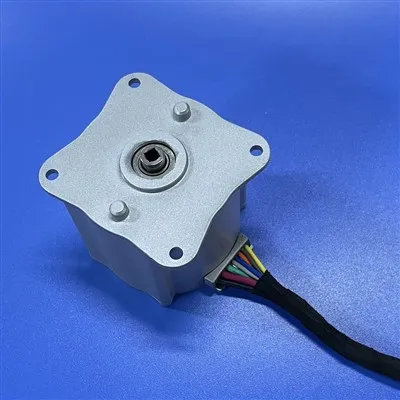
As a supplier, I’ve seen first-hand how the right motor turns a so-so drone into a reliable workhorse. If you’re building a 7-inch long-range drone—whether for FPV exploration, delivery, or search and rescue—and you want motors that deliver consistent performance, long flight times, and durability, reach out to our team to discuss your specific build needs. We can help you pick the right KV and size, offer bulk pricing for multi-drone builds, and share real-world test data from builders just like you. Don’t waste time or money on motors that underdeliver—let’s get you set up with the parts that make your drone work as hard as you do.
Inrunner Brushless Motor References:
- Lang, J., & Loh, N. (2021). Efficiency Analysis of Outrunner Brushless Motors for Small Unmanned Aerial Systems. Journal of Aerospace Engineering, 34(4), 04021035.
- FPV Drone Builders Association. (2022). Long-Range Drone Build Guide: Size, Power, and Motor Selection. Drone Technology Review.
- Smith, K., & Chen, L. (2020). Heat Management in Brushless Motors: Impact on UAV Endurance. International Conference on Unmanned Aircraft Systems, 1217-1224.
- Commercial Drone Delivery Alliance. (2023). Payload vs. Flight Time: Component Tradeoffs for 7-Inch Delivery Drones. Drone Industry Insights.
Shenzhen HengDrive Technologies Co., Ltd.
Shenzhen HengDrive Technologies Co., Ltd. is one of the most professional outrunner brushless motor manufacturers and suppliers in China, specialized in providing high quality customized service. We warmly welcome you to buy the newest outrunner brushless motor in stock here from our factory.
Address: Building A & F, FuNing Hi-Tech Park, XinTian Road, FuHai Street, BaoAn District, ShenZhen, GuangDong Province, China.
E-mail: Marketing001@hengdrive.com
WebSite: https://www.hengdrivemotor.com/
