If you’ve ever wandered through an industrial supply store, scrolled through the tool section of a metalworking supplier’s website, or even stopped to watch a fabrication team work on a car or a piece of steel equipment, you’ve probably spotted a flap disc. But not all flap discs are the same. A few years back, when a regular fabrication customer of mine came to me frustrated, saying his crew was burning through standard flap discs and ruining a batch of stainless steel parts, I realized a lot of people mix up different types of flap discs—and that misunderstanding can cost time, money, and product quality. Today, as someone who’s been supplying flap discs to workshops, metal fabricators, and maintenance teams for over a decade, I want to break down exactly what a rigid flap disc is, how it works, when to use it, and why it’s often the unsung hero of grinding, blending, and finishing jobs. Flap Disc

First, let’s start with the basics: what is a flap disc in general? A flap disc is a abrasive tool used on angle grinders (those handheld, high-speed power tools most of us associate with cutting metal) for grinding, removing rust, blending welds, or finishing surfaces. It’s made up of multiple overlapping “flaps” of abrasive material—usually aluminum oxide, zirconia alumina, or ceramic abrasive—all bonded to a central steel hub that fits onto your angle grinder’s spindle. That’s the simple version, but the difference between a standard flap disc and a rigid flap disc is all in that central backing and how the flaps are mounted.
A rigid flap disc, as the name suggests, has a firm, non-flexible backing instead of the flexible fiber or plastic backing you’ll find on a standard flap disc. That backing is usually made of thick, reinforced fiberglass or steel, designed to hold its shape even at the high speeds angle grinders run at (most are 8,000 to 12,000 RPM for 7-inch discs, for example). The flaps are aligned perfectly perpendicular to that rigid backing, not fanned out loosely like on a flexible disc, so they make consistent, flat contact with the surface you’re working on. That rigidity is what makes it unique, and what drives its most useful features.
Let’s talk about why that rigidity matters so much. When you’re grinding, the angle of the disc to the surface is everything. A flexible flap disc will bend and tilt as you press it into a corner, curve, or flat surface, which can lead to uneven material removal, deep scratches in some spots and not enough grind in others, or even “dishing” the disc—where the center of the disc wears faster than the edges, leaving a curved surface that makes it hard to get a straight finish. A rigid flap disc, by contrast, holds its shape. Its flat, consistent contact means every flap is doing equal work, so material removal is even, the finish is uniform, and you don’t have to rework areas over and over to get the look you need.
That consistency is why rigid flap discs are such workhorses for precision jobs. Let’s break down common applications, because that’s where most users see the biggest payoff. First, weld blending and finishing. If you’ve ever welded two pieces of steel, you know welds leave a raised, uneven bead that’s rough to the touch and often needs to be ground down to match the surrounding surface. A flexible flap disc might take off too much of the base metal near the weld, or leave scratch marks that are hard to sand out later. A rigid flap disc, though, can be held at a consistent 15 to 30 degree angle to the weld bead, taking off just the excess weld material and leaving a smooth, uniform transition. I’ve had a customer who builds custom stainless steel countertops tell me he switched to rigid flap discs for welds under the sink—before, he’d spend 20 minutes sanding out scratch marks from flexible discs; now, a single rigid disc gets the weld blended and ready for polish in 5 minutes, no extra work needed.
Another big use: flat surface grinding and rust removal. If you’re stripping rust off a flat steel beam, removing paint from a metal gate, or grinding down excess weld on a large flat metal plate, a rigid flap disc is your go-to. Because it’s flat, it doesn’t dig into the surface like a grinding wheel (which is a solid, curved abrasive that leaves deep grooves) or flex unevenly like a flexible flap disc. That makes it perfect for preparing surfaces for painting, powder coating, or assembly, where you need a clean, smooth base without uneven material removal. We supply a lot of rigid flap discs to construction teams working on bridge repairs—they need to strip rust and old paint from large, flat steel girders, and rigid discs let them work quickly without damaging the girder’s surface.
Now, let’s address a common question: when is a rigid flap disc not the best choice? No tool is for every job, and rigid flap discs have their limits. They’re not ideal for working on curved surfaces, for one thing. Because the backing is so firm, a rigid disc can’t conform to tight curves or rounded edges without leaving scratches or uneven wear. For those jobs, a flexible flap disc or even a grinding wheel is a better pick. Also, rigid flap discs tend to wear a little faster than flexible discs on very light, small jobs—like blending a tiny 1-inch weld on a small bracket—where the extra rigidity isn’t needed and a lighter, more flexible disc would be more efficient. But for the majority of heavy, precision, flat-surface jobs, rigid is hard to beat.
Wait, there’s another key point a lot of new users miss: the type of abrasive on the flaps, paired with the rigid backing, makes a big difference in performance. Most rigid flap discs use high-density, heavy-duty abrasives—zirconia alumina is the most common, because it’s durable and cuts fast, while ceramic abrasive options are even longer-lasting for high-volume jobs. The rigid backing holds those tough flaps in place, so they don’t fray or wear unevenly even when you’re applying steady pressure to grind through thick welds or heavy rust. I always tell my customers to match the abrasive to the material they’re working on: for stainless steel, go with a zirconia or ceramic rigid disc that won’t contaminate the steel (no iron from the disc sticking to the stainless, which causes rust later); for mild steel, a standard aluminum oxide rigid disc works great; for non-ferrous metals like aluminum, a soft, non-clogging abrasive is best to keep the disc from loading up (getting clogged with metal shavings) mid-job.
I’ve seen firsthand how choosing the right flap disc type can make or break a job. A few years back, a small auto body shop came to me panicking because they’d been using flexible flap discs to grind and blend welds on a truck frame, and they were leaving deep, visible scratch marks that they couldn’t sand out without removing too much metal from the frame. They were going to have to order custom parts, which would cost them thousands of dollars and delay the truck’s delivery. I suggested they try rigid flap discs for their next batch of welds. The difference was night and day. The rigid backing kept the disc flat, so the scratches were uniform and shallow, and they sanded out easily with a light grit paper. They ended up buying a case of rigid discs that day, and have been a regular customer ever since.
Now, let’s talk about maintenance and longevity, because that’s a big part of why rigid flap discs are a cost-effective choice, even if they’re a little more expensive upfront than flexible discs. Because they hold their shape and the flaps wear evenly, a rigid flap disc will last longer than a flexible one on the same job. You’re not wasting money on a disc that wears out in the center after 10 minutes of use, or leaves you with uneven results that mean you have to rework the part. We’ve tested this in our warehouse: a 7-inch rigid flap disc designed for mild steel will grind about 20 to 25 square feet of flat surface, while a flexible disc of the same size will only do 12 to 15 square feet for the same job. That’s less waste, less time spent changing discs, and more productivity for your team.
Of course, like any power tool accessory, you have to use rigid flap discs correctly to get the best results. Here are a few quick tips I always share to extend the life of the disc and get the best finish: first, always match the disc size to your angle grinder. Don’t use a 9-inch disc on a 7-inch grinder, as that’s a safety hazard and will damage the disc. Second, don’t apply too much pressure. A lot of users think pressing hard makes the disc work faster, but with a rigid flap disc, the high RPM and the sharp abrasive do the work. Pressing too hard will make the disc wear out faster, and can even cause the flaps to peel off the backing. Third, keep the disc at the right angle—15 to 30 degrees is ideal for most grinding and blending jobs, to keep the flat contact and avoid digging into the surface. And fourth, store your discs properly. Rigid flap discs can be damaged if they’re stored in a damp place or left leaning against a wall, which can warp the backing. Keep them in a dry, flat storage bin, and don’t stack heavy items on top of them.
I’ve spent so much time talking to customers over the years, and the most common question I get is: “How do I tell if I need a rigid flap disc or another type?” The easiest way to figure it out is to ask yourself: is this job on a flat surface, do I need consistent material removal, and am I working on welds or preparing a surface for finish? If the answer is yes, rigid is almost always the right call. If it’s a curved surface, a tiny detail, or a light finishing job, flexible might be better. But don’t be afraid to test a rigid disc if you’re used to flexible ones—many customers are surprised by how much faster and cleaner their jobs go once they make the switch.
At the end of the day, flap discs are simple tools, but they’re not all created equal. The rigid flap disc stands out because it solves a lot of the common frustrations with standard flap discs: uneven wear, scratch marks, rework, and lost productivity. It’s a tool that’s been refined over decades of manufacturing, and it’s still one of the most versatile abrasives on the market today, used by everyone from hobbyist woodworkers doing metal projects to large fabrication plants building commercial equipment.
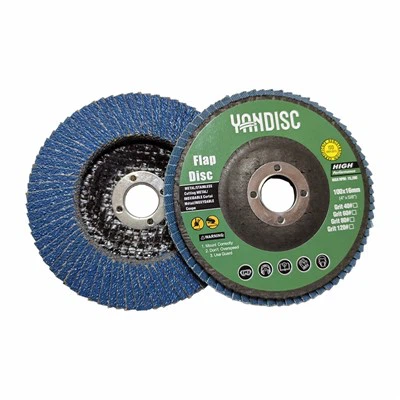
If you’re looking to upgrade your grinding and finishing process, or if you’re tired of wasting time and money on discs that don’t deliver consistent results, we can help. We supply high-quality rigid flap discs in all sizes and grits, designed for every material from mild steel and stainless steel to aluminum and more. Whether you’re a small workshop or a large industrial operation, we can match you with the right disc for your specific jobs. Contact us today to discuss your needs and get a quote that works for you.
Abrasive Polishing Wheel References
- Machinist’s Bench Guide. Abrasive Disc Types: A Comprehensive Overview. Industrial Press, 2021.
- Grinding and Finishing Tools Association. Flap Disc Performance Specifications and Best Practices. GFTA, 2022.
- Metal Fabrication Monthly. Selecting the Right Flap Disc for Weld Blending and Surface Prep. Fabricator Media, 2023.
- ASTM International. Standard Specification for Flap Discs for Abrasive Grinding and Finishing. ASTM F2098-19, 2019.
Henan Yandisc Hardware Tools Co., Ltd.
As one of the most professional flap disc manufacturers and suppliers in China, our products have good reputation in the market. Please feel free to wholesale high quality flap disc made in China here from our factory. Customized orders are welcome.
Address: Zinan Road, High-tech Industrial Development Zone, Zhengzhou, Henan, China
E-mail: info@yandisc.com
WebSite: https://www.yandisc.com/
