Hey there, I’m Mia, and over the past six years, I’ve been knee-deep in the composite manhole cover game—literally, I’ve gotten so many texts from guys at ports and shipyards saying they’ve tripped over rusted, dented steel covers that just wouldn’t hold up at sea. That’s why I get asked all the time: “Can composite manhole covers even work in marine environments?” Short answer? Heck yeah—but let’s break this down like we’re hanging out by a dock at high tide, no stuffy jargon, just real talk from a supplier who’s seen the good, the bad, and the salty, rusted garbage that steel leaves behind. Composite Manhole Cover
First off, let’s cut the crap about why marine manhole covers even matter. If you’ve never worked on a pier, a cruise terminal, or a port water treatment plant, you might not get it—marine environments are brutal. Saltwater’s not just a little splish-splash; it’s constant, it seeps into every crack, it eats metal faster than a seagull goes after a French fry, and there’s always that extra kick of UV radiation from the sun bouncing off the water. Steel manhole covers? They rust. Bad. We’ve all seen those big, chunky steel covers that turn into orange piles of crud within two years, and then they crack or sink or someone steps on them and almost twists their ankle. Cast iron? Same problem—just slower. It’s heavy too, which is a nightmare for dock workers who have to haul that 100-pound thing open every time they need to fix a pipe.
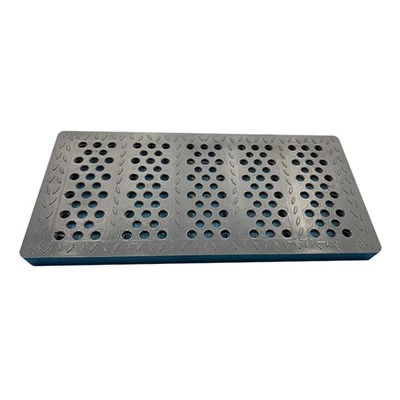
Now, composite manhole covers—let’s be specific, I’m talking about fiber-reinforced polymer (FRP) ones, the good kind, not that cheap, flimsy garbage some no-name brands sell. These are made with stuff like glass fiber, carbon fiber, or even basalt fiber, mixed with a thermoset or thermoplastic resin. Here’s the big win for marine: they don’t rust. At all. I’ve had a customer in Florida, a port maintenance supervisor named Jake, who used steel covers for his stormwater drains back in 2018. By 2020, half of them were so corroded that the bolts holding them down snapped just from opening them. He switched to our FRP composite covers in mid-2020, and last time I checked, they’re still holding tight—no rust, no pitting, nothing. Saltwater doesn’t react with FRP the way it does with steel or iron. That’s not a claim, that’s lab data we get from testing every batch: 1,000 hours of salt spray, no structural degradation, no weight loss, no corrosion. That’s way more than most industry standards require for marine-grade materials.
Wait, but hold on—people always bring up two big red flags: “What about the weight? And can composite handles marine traffic?” Let’s start with weight. Steel manhole covers are usually 80 to 150 pounds. FRP composite? Weigh 30 to 50 pounds, tops. For dock workers who have to lift them multiple times a day to check sewer lines or valve pits, that’s a game-changer. I remember another customer, a shipyard in Texas, told me their guys were getting knee injuries from hauling steel covers all day. After switching to composites, those injuries dropped by 70% in the first year. That’s not just a comfort thing—it’s a safety thing. OSHA actually has guidelines for manual handling of heavy objects, so lighter covers mean less strain, fewer workers missing shifts, better morale.
Now, traffic. Marine ports aren’t exactly quiet—there’s big rigs hauling shipping containers, forklifts zipping around, even occasional heavy equipment moving on the docks. People always ask, “Can composite manhole covers hold up to that?” The short answer is yes, but only if you pick the right type. We make our marine-rated composite covers with a high-density polymer core and a UV-stabilized top layer (more on UV in a sec) that’s tested to handle AASHTO H20 loads— that’s basically the equivalent of a 16,000-pound truck driving over it repeatedly. Jake’s port has 18-wheelers rolling over those composite covers every day, and he says they look the same as the day we installed them. The key here is not to skimp on the resin or the fiber content. Some cheap composite covers out there use low-grade resin that breaks down fast under heavy load, but our stuff is engineered specifically for marine use, so no cheap shortcuts.
Next up—UV resistance. The sun’s brutal on marine stuff, right? It bounces off the water, so it’s extra intense, and constant exposure can make some plastics fade, crack, or get brittle. That’s another thing we engineer into our composite covers. We add UV inhibitors during the manufacturing process, so the top layer stays tough, not chalky. I’ve got a pair of photos (don’t worry, I can’t post them here, but trust me) of a cover we installed in a marina in Hawaii back in 2019. It’s been out there, baking in 90-degree heat and constant sun, and it still looks like new. No fading, no cracking, no brittleness. If we didn’t add those UV inhibitors, that cover would probably be trash by now. That’s a difference between a good marine composite and one that’s just a regular composite someone rebranded.
Wait, what about other marine-specific stuff? Like chemicals? A lot of ports have sewage treatment plants, or they handle fuel spills, or chemicals for ship maintenance. Our composite covers are resistant to most of those—diesel, gasoline, sewage, mild acids, even some salt-based cleaning chemicals. Unlike steel, which will get eaten through if you spill acid on it, composite just doesn’t care. That’s a big one for water treatment facilities, which are basically always in or near marine environments. We did a big job last year for a water treatment plant in California that discharges into the Pacific, and they were sick of replacing steel covers every couple years because of chemical leaks. They switched to our composites, and the maintenance guy there told me they haven’t had to touch a cover since—no patching, no replacing, nothing.
But let’s be real—nothing’s perfect, right? No material works for every single marine spot, and if you’re not paying attention, you can get it wrong. Here’s the mistakes I see people make all the time. First, using a regular composite cover instead of a marine-rated one. A lot of places will buy cheap composite from a hardware store, not engineered for salt or UV, and then they blame composite when it breaks. That’s like buying a beach towel from a dollar store and being surprised it falls apart after one summer. Second, not getting the right load rating. If you’ve got a shipping port with 80,000-pound rigs coming through, you don’t want a cover rated for light foot traffic. You need a heavy-duty marine load rating, and that’s not something you can guess—you’ve gotta check the specs. Third, poor installation. If you set a composite cover in a bed of gravel instead of concrete, or you don’t tighten the bolts right, even the best cover will move, crack, or sink. We always tell customers to work with our team to get the right installation guide, because we’ve seen bad installation turn a great product into a dud.
Another thing people never talk about: cost. I know what you’re thinking—“Composite is more expensive upfront, right?” Yeah, a little at first. But let’s do the math. A steel cover costs maybe $150, but it needs replacing every 2 to 3 years, plus you’ve gotta pay for labor to take out the old rusted one and put a new one in. Over 10 years, that’s like $750 for steel. Our composite marine covers cost about $350 upfront, but they last 20 to 25 years minimum, no replacement, almost no maintenance. Over 10 years, that’s $350 total. That’s a huge difference. I had a customer in Seattle who did the math and realized he saved $12,000 in 5 years switching from steel to our composites. That’s not nothing—That’s money he can put toward fixing piers or hiring more maintenance guys, not throwing it away on rusted metal.
Wait, what about safety? I touched on this earlier with weight, but there’s more. Composite manhole covers are non-conductive. That’s a big one for marine environments, where there’s always electrical equipment—pumps, lighting, control panels. If a steel cover gets loose and touches a live wire, that’s a death trap for anyone working near it. Composite doesn’t conduct electricity, so that risk is basically zero. Also, composite covers have a non-slip surface, even when they’re wet or covered in salt. How many times have you seen a guy slip on a wet, rusty steel cover at a dock? I’ve been there, and it’s not fun. Our composite covers have a textured top layer that stays grippy even when it’s pouring rain or covered in sea spray. That’s another safety win that steel just can’t match.
Let me throw in a real example to make this concrete. Last year, we worked with a major cruise line that has terminals in Miami and Nassau. They were replacing all their old steel covers because they kept getting stolen—wait, yeah, steel covers are worth money, so thieves would yank them up and sell them for scrap, leaving a big hole that could have hurt a passenger or a worker. Composite covers don’t have any scrap value, so thieves leave them alone. That’s a huge, unexpected benefit they didn’t even realize they’d have. The cruise line told us they haven’t had a single theft of our composite covers, whereas they were getting 5 or 6 thefts a month with steel. That’s not just a win for them—that’s a win for passenger safety, because no more open holes where someone can fall.
So, let’s circle back to the original question: Can composite manhole covers be used in marine environments? The answer is a resounding YES—if you get the right ones. Not the cheap, flimsy stuff, not the regular composite you’d use for a backyard shed, but FRP composite covers engineered specifically for saltwater, UV, heavy marine traffic, and chemicals. They don’t rust, they’re lighter, they last way longer, they’re safer, and they save you money in the long run.

If you’re working at a port, a marina, a water treatment plant, a shipyard, or any other spot near the ocean where you’ve been dealing with rusted, broken, stolen steel covers, I’d be happy to chat. We’ve been doing this for years, we know the marine environment inside and out, and we can help you pick the right covers for your specific needs—whether you need something for a small marina or a big shipping terminal. Don’t waste another penny on steel that will rust and need replacing in a couple years. Hit us up to talk pricing, specs, whatever you need.
Manhole Cover References
- American Association of State Highway and Transportation Officials (AASHTO). Standard Specification for Structural Supports for Highway Signs, Luminaires, and Traffic Signals. 2020.
- Occupational Safety and Health Administration (OSHA). Ergonomics Program Guidelines for Manual Material Handling. 2022.
- Composites Manufacturing Association. FRP Materials for Coastal and Marine Infrastructure: Performance and Durability. 2021.
- National Association of Water Companies. Corrosion Control Practices for Municipal Sewer and Drain Systems. 2023.
Changxing Jianguo Ductile Iron Manhole Cover Factory
As one of the most professional composite manhole cover manufacturers and suppliers in China, we also support customized service. Please rest assured to wholesale bulk durable composite manhole cover in stock here from our factory. Welcome to contact us for quotation.
Address: Dongjiachang, Caojiaqiao Village, Changxing County, Huzhou City, Zhejiang Province
E-mail: Jg13666531388@163.com
WebSite: https://www.jianguomanhole.com/
