If you’ve ever walked through a construction yard, a food processing plant, or a manufacturing workshop, you’ve probably seen a tie rod cylinder in action. These workhorses of hydraulics convert fluid power into linear motion, moving heavy parts, pressing materials, or positioning equipment with precision. But here’s a secret that many new operators and even some maintenance teams miss: none of that smooth, reliable operation would happen without a tiny, often overlooked part tucked right into the cylinder’s design—the pressure switch. As someone who’s supplied tie rod cylinders to industries across North America for over a decade, I’ve seen firsthand how misunderstanding the pressure switch’s role leads to breakdowns, wasted time, and avoidable costs. Today, I want to break down exactly what this component does, why it’s non-negotiable for your system, and how we design our cylinders to integrate pressure switches that keep your operations running smoothly. Tie Rod Cylinder
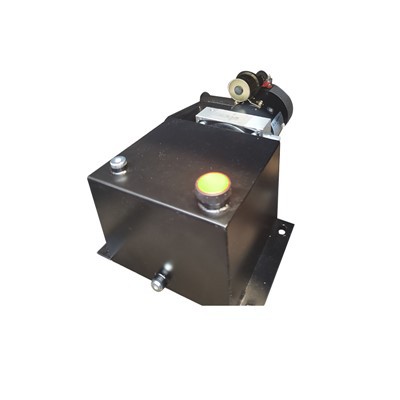
Let’s start with the basics to set the stage. A tie rod cylinder gets its name from the four heavy steel rods that run along its sides, clamping the cylinder head, barrel, and base together to handle high internal hydraulic pressure. This makes them durable, versatile, and suitable for everything from agricultural equipment to packaging lines. But their power comes with a catch: too much pressure, or pressure applied at the wrong time, can damage seals, warp the cylinder barrel, or even cause a catastrophic failure mid-cycle. That’s where the pressure switch steps in. Think of it as the cylinder’s built-in safety officer, feedback controller, and timing coordinator all rolled into one small, rugged package.
First, and most critically, the pressure switch acts as a safeguard against overpressure events. Every tie rod cylinder is engineered to a maximum operating pressure—let’s say 3,000 PSI for a standard heavy-duty model. If the hydraulic system pushes past that number, even for a split second, it can stretch the tie rods, crack the cylinder’s end caps, or destroy the seals that keep fluid contained. The pressure switch is calibrated to trigger at that exact threshold. When pressure hits the pre-set limit, it sends an electrical signal to the hydraulic pump’s control module, telling it to slow down, reduce flow, or shut off entirely. I once had a customer in the logging industry call me at 2 a.m. panicking because their log-clamping cylinder had blown a seal during a load shift. When our service tech got on-site, they found the pressure switch had been bypassed by a new operator who thought it was slowing down their cycle. By the time we replaced that switch and re-calibrated the system, the customer had missed a scheduled delivery, costing them over $15,000 in penalties. That’s the kind of avoidable loss that makes pressure switches non-negotiable, not optional.
But the pressure switch does more than just stop disasters—it’s the core of the cylinder’s precision and cycle consistency. Tie rod cylinders are often used in applications where repeatability matters: a packaging machine that presses a cardboard box shut 500 times an hour, a robotic arm that lifts engine blocks to an exact height, or a farm loader that positions seed trays with millimeter accuracy. For these jobs, it’s not enough for the cylinder to move; it has to stop and hold position at a very specific point. The pressure switch makes that possible. Here’s how: when the cylinder extends, it builds pressure gradually as it meets resistance—for example, when it presses a box against a fixture. When the pressure reaches the level that corresponds to the cylinder being fully extended or the load being properly seated, the switch triggers a signal to stop the cylinder’s motion. This is far more reliable than relying on limit switches or time-based cycles, which can be thrown off by fluid temperature, wear in the cylinder’s seals, or changes in load weight. At our company, we test every cylinder with an integrated pressure switch to ensure that this trigger point is within +/- 2% of our calibrated specification. For a customer in the automotive parts industry, that consistency meant their brake caliper assembly line went from a 2% defect rate to 0.3% because each cylinder’s stop point was identical, no matter how long the system had been running.
Another key role of the pressure switch is cycle synchronization in multi-cylinder systems. Many industrial setups use multiple tie rod cylinders working together—think of a press that has four identical cylinders to apply even force across a large die, or a conveyor system that uses two cylinders to lift a full load. If each cylinder extended at a slightly different rate, you’d end up with uneven force, misaligned loads, or even damage to the equipment frame. The pressure switch solves this by acting as a timing reference. When each cylinder reaches the correct operating pressure for its position, the switch sends a signal to the PLC (programmable logic controller) to trigger the next step in the cycle. For example, in a steel stamping press, all four pressure switches are calibrated to trigger at the same 2,800 PSI point. This ensures every cylinder applies exactly the right force at the same time, eliminating uneven wear on the die and reducing downtime from misaligned parts. I’ve worked with a construction equipment manufacturer that switched from individual limit switches to pressure-integrated tie rod cylinders for their excavator arm assemblies. The result? Their cycle time reduced by 12% because the PLC didn’t have to wait for each limit switch to register, and the number of arm alignment issues dropped by 80%.
Of course, pressure switches aren’t one-size-fits-all. That’s why our team works closely with every customer to select and integrate the right switch for their specific application. For low-pressure, light-duty uses—like a small packaging cylinder operating at 500 PSI—we use compact, low-amperage pressure switches that fit seamlessly into the cylinder’s mounting ports without adding bulk. For heavy-duty, high-pressure applications—like mining equipment cylinders operating at 5,000 PSI—we partner with switch manufacturers that build units with stainless steel housings and hermetically sealed contacts to withstand dust, vibration, and extreme temperatures. We also offer both adjustable and fixed pressure switches: fixed switches are ideal for applications where cycle consistency is non-negotiable, while adjustable switches let operators tweak the trigger point if their load or process changes over time. We even offer explosion-proof pressure switches for customers working in hazardous environments, like grain elevators or chemical processing plants, where electrical components can’t pose a fire risk.
A common mistake we see new customers make is treating the pressure switch as an afterthought, something to add on later rather than integrating into the cylinder’s design from the start. That’s why when we design a custom tie rod cylinder for a customer, we factor in the pressure switch’s position during the initial engineering phase. We machine the cylinder’s barrel and port to accommodate the switch without weakening its structure, route electrical wiring through the cylinder’s internal channels to prevent damage from debris or hydraulic fluid, and test the entire assembly in our in-house pressure chamber to ensure the switch works reliably under the operating conditions the customer will face. Last year, we worked with a renewable energy customer that needed tie rod cylinders for solar panel tracking systems that operate in desert temperatures ranging from 20°F to 120°F. Most cylinder suppliers would have offered a standard pressure switch, but our team selected a temperature-compensated pressure switch that adjusts its calibration slightly to account for fluid viscosity changes in extreme heat or cold. The result? The tracking system maintained precise alignment year-round, with zero pressure switch-related failures in the first 12 months of operation.
Now, let’s talk about maintenance, because even the best pressure switches won’t last forever if you don’t check them regularly. Over time, hydraulic fluid contamination, vibration, and wear can cause pressure switches to drift out of calibration. A switch that’s set to trigger at 3,000 PSI might start triggering at 2,700, leading to incomplete cylinder strokes, or 3,300, leading to overpressure. We always include a maintenance guide with every cylinder we supply, outlining a simple quarterly check for pressure switch calibration. The guide walks operators through how to connect a pressure gauge to the cylinder’s test port, compare the gauge reading to the switch’s trigger point, and adjust the switch if needed. We also recommend having a spare pressure switch on hand for critical applications, so a quick replacement doesn’t lead to extended downtime. In our 15 years in this business, we’ve found that customers who follow our maintenance guidelines see 40% fewer cylinder-related breakdowns than those who don’t.

At the end of the day, the pressure switch’s role is simple but profound: it’s the component that turns a powerful hydraulic cylinder from a rigid, unforgiving tool into a precise, reliable part of your operation. It’s the difference between a cylinder that moves heavy loads and one that moves heavy loads safely, consistently, and efficiently. If you’re currently sourcing tie rod cylinders for your business, or if you’ve been dealing with cylinder-related downtime that you can’t explain, I’d encourage you to take a closer look at how pressure switches are integrated into your system. As a tie rod cylinder supplier, we don’t just sell parts—we solve problems, and that starts with making sure every component, no matter how small, is working as it should. If you’re ready to learn more about how pressure switches can improve your system’s performance, or if you need help sizing a tie rod cylinder with the right pressure switch for your application, feel free to reach out to our team to discuss your needs. We’re here to help you keep your operations running smoothly, no matter the industry.
Hydraulic System References
Hydraulic Institute. (2021). Hydraulic Cylinder Design and Application Guidelines. Hydraulic Press Association.
Spence, W. (2019). Pressure Switch Integration in Industrial Hydraulic Systems. Industrial Hydraulics Magazine, 42(3), 18-24.
American National Standards Institute. (2020). ANSI/HI 9.6.7-2020: Hydraulic Cylinders for General Industrial Applications.
Wuhu Zhongye Fluid Equipment Co., Ltd.
We are one of the most experienced tie rod cylinder manufacturers and suppliers in China, specialized in providing high quality customized products. Please feel free to wholesale bulk durable tie rod cylinder in stock here from our factory. Contact us for quotation.
Address: No. 2, Hexing Road, Sanshan District, Wuhu City, Anhui Province
E-mail: zhongyehydro20@163.com
WebSite: https://www.zhongyehydro.com/
