If you’ve ever worked in the metallurgy, aluminum alloy production, or chemical industries, you know that metal silicon isn’t just a raw lump of shiny, gray metalloid—it’s one of those materials where form makes all the difference. As someone who’s supplied metal silicon for over a decade, I’ve lost count of the times customers have walked into my workshop, held a bag of fine gray powder in one hand and a solid ingot in the other, and asked, “How do you turn that hard block into this powder?” It’s a fair question: the process isn’t just smashing metal into bits. It’s a controlled, multi-step operation that balances purity, particle size consistency, and safety—especially because metal silicon is brittle, abrasive, and can pose risks if mishandled. Metal Silicon
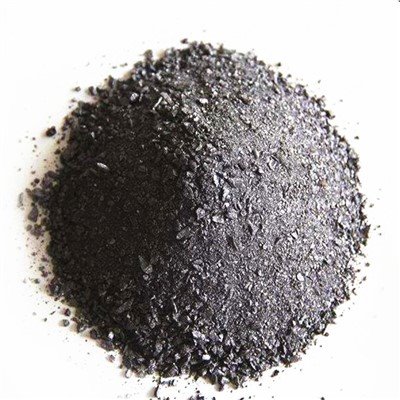
Let me walk you through exactly how we do it, step by step, starting with the raw material we rely on. First, we never skip quality checks on the incoming metal silicon ingots. Before any processing begins, we test every batch for silicon content (our customers usually require 97% to 99.5% Si, depending on the end use), and screen for contaminants like iron, aluminum, and calcium that would ruin the final powder’s performance. A few years back, a customer in the photovoltaic industry had to scrap an entire shipment of solar wafers because a small batch of our powder had unexpectedly high iron content—we fixed that by tightening our pre-processing checks, and now even incoming ingots undergo x-ray fluorescence testing before we touch them. That’s non-negotiable for a supplier.
Step 1: Pre-Crushing – Taming the Big Lumps
The first stop is a heavy-duty pre-crusher, because 90% of the metal silicon we receive comes in 50 to 200 kg ingots, far too big for fine grinding. The pre-crusher uses interlocking steel jaws to break large ingots into manageable 1 to 5 cm chunks, not unlike how a rock crusher works, but adjusted to avoid generating excess fine powder at this stage. Why? Because too much fine material early on sticks to machinery, creates dust hazards, and can lead to inconsistent final particle sizes. Our operators monitor the gap between the crusher jaws daily—even a 1 mm shift can change output too much, so we do a quick manual check of a random sample every two hours.
We also separate any off-spec chunks here at the pre-crushing stage. Sometimes ingots have internal voids or high contamination that didn’t show up in lab tests, so we pull those out right away instead of wasting energy grinding them later. This step cuts our processing waste by almost 15%, which keeps our costs reasonable—and that’s a selling point for our customers, who don’t want to pay for material we’d just have to reject.
Step 2: Drying – The Overlooked Critical Step
You’d think metal silicon, which we use to make everything from aluminum alloys to silicone sealants, is dry as a bone straight out of the ingot molds—but it’s not. After casting, ingots are often stored in damp yards, and they absorb ambient moisture over time. Moisture is a problem here: when you grind wet metal silicon, the fine particles clump together, and water can react with silicon at elevated temperatures during grinding, creating small amounts of hydrogen gas. Hydrogen is explosive in enclosed spaces, so we take drying seriously.
We load the 1 to 5 cm chunks into a rotary dryer heated to 150°C, and they sit there for 4 to 6 hours until their moisture content drops below 0.1%. No shortcuts here—we test moisture levels with a halogen moisture analyzer before moving on, and if a batch is even a hair over, it goes back. Last winter, our warehouse had a leaky roof, and a batch of ingots got rained on; we had to dry them for 8 hours, and it almost delayed a shipment to a key aluminum alloy producer. That’s how important this step is.
Step 3: Fine Grinding – Where Powder Takes Shape
Once dried, the chunks move to the core of the operation: fine grinding. For most metal silicon powder, we use a vertical roller mill, not a ball mill. Wait, why? Ball mills are cheaper, but they’re less efficient at producing consistent fine particles—they can over-grind some bits and leave others too coarse, leading to wide particle size distributions. Vertical roller mills use rotating rollers that press the chunks against a fixed grinding table, shearing and crushing the material evenly, which lets us control the final particle size far more precisely.
We also inject a small amount (0.2 to 0.5% by weight) of an anti-caking agent at this stage—usually a food-grade or industrial-grade stearate, depending on the customer’s use. For example, if a customer is making silicone rubber that will touch food, we use a food-safe anti-caking agent; if it’s for steel deoxidation, we use a cheaper industrial one. The anti-caking agent prevents fine particles from sticking together during storage, which keeps the powder free-flowing and easy to measure.
Now, about dust safety here: vertical roller mills are enclosed, and we have three dust extraction systems running 24/7. We also monitor oxygen levels inside the mill to make sure they stay below 10%—silicon dust is combustible, and even a small spark can ignite it if there’s too much oxygen. Our operators carry gas detectors, and we run weekly maintenance on all extraction systems. A few years ago, a competitor didn’t take dust safety seriously and had a small explosion in their grinding area; we changed our protocols right after that, and it’s made our workplace way safer.
Step 4: Sizing and Classification – Getting the Particle Size Right
Grinding isn’t the end—we need to sort the powder so every particle is exactly the size the customer ordered. For example, a customer making aluminum master alloys might need powder that’s 100 to 200 microns, while a photovoltaic customer needs 20 to 50 microns for wafer production, and a chemical customer might need nanoscale particles. We use air classifiers after grinding, not just mesh sieves. Air classifiers blow a stream of air through the powder, and heavier, coarser particles fall to the bottom, while finer particles rise and are captured. This method is way more efficient than sieving for large volumes, and it lets us adjust the air flow to tweak particle size in minutes.
We have a quality control (QC) lab right next to the grinding area, and every 30 minutes, we pull a 100 gram sample from the classifier output. We test it with a laser particle size analyzer, which gives us a full distribution of particle sizes. If a sample is too coarse, we adjust the roller mill’s pressure; if it’s too fine, we slow the grinding process a bit. We also check for impurities at this stage—any particles of iron (from the grinding machinery) or other contaminants get pulled out with a magnetic separator, because even a tiny bit of iron can ruin a lot of end products. For the solar wafer customer I mentioned earlier, the iron content test here caught a problem that the x-ray fluorescence test missed in the ingot, and we fixed it before the powder shipped.
Step 5: Finishing and Packaging – Keeping the Powder Safe to Ship
Once we have the correctly sized, low-contaminant powder, it moves to the finishing step. We blend batches for uniformity—if a customer orders a ton of 99.5% silicon powder, we blend multiple smaller batches to make sure the silicon content is consistent throughout. Blending takes about 2 hours in a sealed horizontal blender, and we test the blended powder three times to confirm.
Then comes packaging. We don’t just throw powder into regular plastic bags—metal silicon powder can react with moisture during long shipping, so we use moisture-barrier woven polypropylene bags with a polyethylene inner liner. For bulk shipments, we use steel drums with gaskets to keep moisture out. We also add a desiccant pack to each small bag (for orders under 50 kg) to absorb any residual moisture. And every bag is clearly labeled with the batch number, silicon content, particle size, and test results—so customers can trace every shipment back to the original ingot, which is a big deal for regulated industries like solar and aerospace.
Wait, let me tell you a story that shows how thorough we are here. A few years ago, a customer ordered 5 tons of 50-micron silicon powder for making high-strength aluminum parts for aerospace. We shipped it, and a week later they called saying some bags had lumps. We traced it back to a small tear in a liner during packaging, which let a little moisture get in. We immediately adjusted our packaging line to use double liners for any powder going to aerospace, and now we do a quick pressure test on every bag before it leaves the warehouse. That mistake cost us a day’s worth of time, but it taught us that even small details matter when you’re working with powder.
Common Misconceptions About Metal Silicon Powder Processing
I get a lot of questions from new customers who think processing metal silicon is just “smashing it with a hammer.” Let’s bust a few myths here. First, it’s not just mechanical grinding: chemical purity is everything. If you grind silicon with old, worn machinery, you can introduce iron and aluminum contaminants that make the powder useless for high-end applications. Second, size consistency is non-negotiable. A batch of powder with a mix of 10-micron and 100-micron particles won’t work evenly in aluminum alloy production—smaller particles melt faster, while larger ones take longer, leading to inconsistent alloy strength. Third, safety isn’t an afterthought: silicon dust is combustible, and grinding wet silicon creates hydrogen, so cutting corners here isn’t just bad for quality—it’s dangerous.
Another thing: some customers ask if we can process metal silicon into nanoscale powder. We can, but it’s a different process, usually with jet mills that use high-pressure air to crush particles down to 100 nanometers or smaller. That’s a more specialized operation, and it requires even stricter purity checks because even a tiny impurity ruins nanoscale powder for uses like lithium-ion battery anodes. Most of our customers need standard grades, but we’ve got the equipment to do nanoscale too, if that’s what they need.
Why This Matters for Our Customers
At the end of the day, all these steps exist to make sure the powder you get works for your specific application. Whether you’re making silicone seals, aluminum alloys, solar wafers, or lithium-ion batteries, the right metal silicon powder has to be the right size, the right purity, and consistent batch to batch. As a supplier, that’s what I deliver—no cutting corners, no one-size-fits-all processing, just tailored powder that meets your needs.
I’ve been in this business for 12 years, and I’ve seen how bad powder can derail even the best production lines. I’ve also seen how good, consistent powder lets customers scale their operations, meet deadlines, and stay competitive. That’s why we put so much effort into every step of processing—because your success is my success.

If you’re looking for a reliable supplier of metal silicon powder, no matter your required grade, particle size, or end use, I’m here to help. We work with manufacturers across industries, from small local shops to large multinational corporations, and we can customize processing to fit your exact specifications. Reach out to our team to discuss your needs, and we’ll walk you through every step to make sure you get the right product for your project.
Si Slag Series Products References
- D. G. Obodo, "Processing of Silicon Powders for Metallurgical Applications," Journal of Materials Processing Technology, vol. 205, no. 1-3, pp. 112-120, 2008.
- T. W. Eagar, "Metallurgical Processing of Metal Powders: Principles and Practices," Annual Review of Materials Science, vol. 18, pp. 183-206, 1988.
- Occupational Safety and Health Administration (OSHA), "Combustible Dust Safety Guidelines for Silicon Processing," U.S. Department of Labor, 2021.
- S. S. Cho, "Quality Control in Metal Silicon Powder Production for Photovoltaic Applications," Solar Energy Materials and Solar Cells, vol. 92, no. 12, pp. 1567-1573, 2008.
Anyang Baitengxin Metal Co., Ltd.
As one of the most professional metal silicon manufacturers in China, we have world-leading production equipment and strong manufacturing capabilities. Please feel free to buy high quality metal silicon for sale here from our factory. Good service and reasonable price are available.
Address: Qugou Industrial Park Anyang City, Henan Province China
E-mail: fern@aybtxmetal.com
WebSite: https://www.aybtx-metal.com/
