If you run a screen printing operation—whether that’s a small shop with a handful of presses or a mid-sized facility churning out custom apparel, promotional goods, or industrial textiles—you’ve probably spent time weighing the difference between standard power and reliable power. As a supplier of automatic screen printing presses, I work with shop owners every week who ask the same question: “Do I really need a generator for my press?” It’s a fair ask. Generators are an added expense, and if your location has consistent, reliable grid power, it might feel like an unnecessary line item. But to answer this question, you have to look at how your automatic press works, what’s at stake when power drops, and what a generator actually brings to your operation. Automatic Screen Printing Press
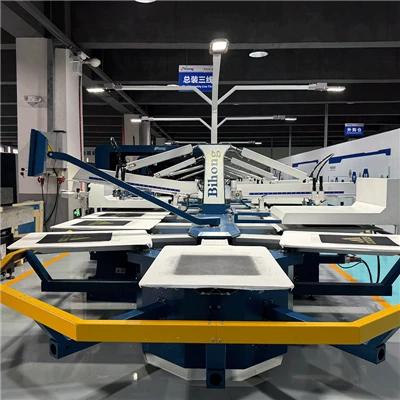
First, let’s ground this in how an automatic screen printing press operates. Unlike manual presses, which are hand-fed and powered by small, low-voltage motors, automatic presses run on a continuous, synchronized system. They rely on multiple components working in lockstep: the screen carousel, the printing heads that align perfectly with each screen, the conveyor that moves shirts or substrates through the press, and the drying system that sets ink instantly—all controlled by a central programmable logic controller (PLC). Even a brief power dip, a flicker that lasts just a few seconds, can throw this entire sequence off. The carousel might stop mid-rotation, the printing heads might shift out of alignment, or the conveyor might stall while a shirt is still under a screen.
For context, I’ve seen this happen dozens of times with customers who skipped a generator. Last year, a shop owner in the Midwest told me he lost 120 finished hoodies when a lightning strike caused a 10-second power outage. His press shut down mid-print, and the ink that had already been applied to the hoodies wasn’t set. By the time the power came back on, the hoodies were smudged, irreparable, and marked as defective. That single outage cost him over $800 in materials and more than a day of rework. Another customer in Florida deals with frequent summer thunderstorms that cause 2 to 3 minute outages weekly. Without a generator, every time power drops, his press has to go through a full reset—wasting ink on test prints, losing production time, and risking misprints that ruin batches. It’s not just rare disasters either; consistent minor power fluctuations, common in older industrial areas, can shorten the lifespan of press motors and control boards over time. Automatic presses are precision tools, and precision requires consistent power.
Now, let’s break down when a generator is actually a need, not a want. If your operation is in an area with a history of frequent, unplanned power outages—say, regions prone to severe weather, or urban areas with aging power grids—you can bet a generator will pay for itself quickly. Even if outages are rare, the cost of downtime is hard to ignore. For a mid-sized automatic press running 8 hours a day, 5 days a week, downtime can cost $1,500 to $3,000 a day in lost orders, labor, and materials. A 1-hour outage doesn’t just mean 1 hour of no production; it means resetting the press, cleaning the screens, and re-running test prints before you can get back to printing. That’s often 2 hours of lost work for a single power dip.
On the flip side, if your shop is in an area with 99.9% reliable power, and you run small, low-volume jobs, a generator might not be critical. But even then, there’s a hidden benefit: surge protection. Automatic screen printing presses draw a large startup load when they turn on—often 2 to 3 times their running power. If your shop’s electrical panel isn’t properly sized, that startup surge can cause other equipment to trip, like your dryer or your computer design stations. A generator can act as a buffer, stabilizing power for the press and preventing those secondary interruptions. I’ve had customers with reliable power install generators just for that surge protection, and they’ve reported far fewer electrical issues across their entire shop.
Wait, but not all generators are created equal for automatic screen printing presses. This is where a lot of shop owners go wrong. A standard portable generator might be enough to power a fridge, but it doesn’t provide the clean, steady AC power that a PLC and precision printing heads need. Inconsistent voltage from a portable generator can cause the press’s control system to glitch, leading to misaligned prints, skipped screens, or even permanent damage to the press’s electronics. That’s why when I advise customers, I always point them toward inverter generators or standby generators specifically rated for sensitive industrial equipment. Inverter generators deliver clean, sine wave power that matches the grid’s, so your press’s PLC won’t even notice the power switch. Standby generators, which automatically kick on within seconds of an outage, are the best option for high-volume operations because they eliminate any gap between power loss and power restoration—no need for manual startup, no time lost while the generator ramps up.
Let’s also talk about operational continuity, which is huge if you take on client orders with tight deadlines. A lot of my customers specialize in custom work for events—festival apparel, corporate uniform orders, trade show swag—where a delayed delivery can cost you a client, not just a day of work. Last quarter, a customer on the East Coast had a deadline for 500 shirts for a college’s homecoming event. A 2-hour power outage would have made them miss the deadline, costing them a $10,000 contract. The generator we helped them select for their new automatic press kicked on without issue, and they finished the order on time, keeping a long-term client who now recommends our presses to other shops.
Another angle: equipment longevity. Automatic screen printing presses are built to last 10 to 15 years with proper care, but power surges and outages are two of the biggest causes of premature wear. When power drops suddenly, the press’s motors and control systems can experience voltage spikes that fry circuit boards or wear out belts faster. A generator with voltage regulation eliminates those spikes, protecting your investment. I’ve seen shops that skipped generators end up replacing a PLC board every 2 to 3 years, at a cost of $2,000 to $3,000 per replacement—cost that far outweighs the price of a generator over time.
Now, let’s address the counterpoint: the upfront cost. A standby generator for a mid-sized automatic press can range from $3,000 to $7,000, depending on the size and features. A portable inverter generator might be $1,000 to $2,500. That’s a significant add-on when you’re already investing in an automatic press. But when you calculate the cost of downtime, materials, and repairs, it’s rarely a bad investment. For a shop that runs 2,000 shirts a day, even a single major outage can erase the generator’s cost in one go. For smaller shops that run a few hundred shirts a day, it might take 6 to 12 months to recoup the cost, but the peace of mind is worth it—especially if you’re just starting out and can’t afford to lose orders.
So, how do you decide if a generator is right for you? Ask yourself these three questions:
- How often do unplanned power outages affect your area? If it’s more than once a quarter, a generator is almost always worth it.
- What’s the cost of your downtime? If a 1-hour outage costs you more than the monthly payment on a generator, it’s a no-brainer.
- What’s the value of your orders and materials? If you print expensive substrates or take on high-value contracts, protecting that inventory is a top priority.
I’ll be honest: I’ve installed automatic presses for shops that run without generators, and they get by—usually in areas with rock-solid power, very low volume, or both. But those shops are the exception, not the rule. For the majority of screen printing operations that are growing, taking on consistent orders, or located in areas with any power volatility, a generator isn’t a luxury—it’s a necessary part of protecting your investment and your bottom line.
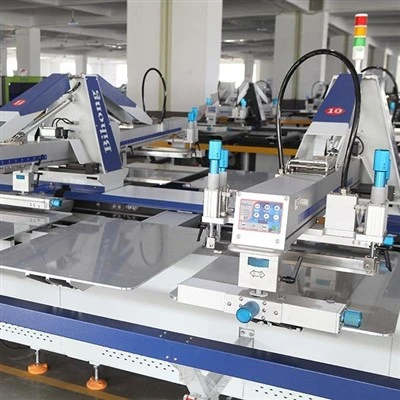
If you’re currently considering an automatic screen printing press and want to talk through whether a generator makes sense for your shop’s specific needs, reach out to our team to discuss your operation, your location, and your priorities. We can walk through the types of generators that work best with our presses, help you calculate the potential cost savings from reduced downtime, and make sure you have all the information to decide what’s right for you. Don’t let a preventable power issue derail your next big order—let’s make sure your press runs smoothly, no matter what the grid throws your way.
Mesh for Screen Printing Press References
- Smith, J. (2022). Power Requirements for Industrial Automation Equipment. Industrial Electrical Systems Journal.
- National Screen Printing Association. (2023). Best Practices for Press Maintenance and Downtime Mitigation.
- U.S. Energy Information Administration. (2023). Regional Power Outage Frequency and Impact on Small Businesses.
- Miller, L. (2021). Sine Wave Power and Industrial Machinery Compatibility. Journal of Industrial Electronics.
Guangdong Aces Machinery Co., Ltd.
Guangdong Aces Machinery Co., Ltd. is one of the most professional automatic screen printing press manufacturers and suppliers in China. We are committed to providing high quality equipment made in China with low price. If you’re going to buy durable automatic screen printing press, welcome to get pricelist from our factory. Customized orders are welcome.
Address: 701, Building 5, Liandong U Valley, No.8 Zhixin 1st Road, Dagang Town, Nansha District, Guangzhou City, Guangdong Province, China.
E-mail: jessie@bhprinter.com
WebSite: https://www.bihongprinter.com/
