Hey folks, let’s cut to the chase—if you’re someone who’s ever stared at a Frankfurt brush in your supply closet, wondering if it’s just for big, wide strokes, you’re not alone. I’m not here to ramble about corporate specs or jargon that makes your eyes glaze over. I’m the guy on the ground, the one who’s been shipping Frankfurt brushes to studios, small detail shops, and even hobbyists for the last 8 years, and today we’re breaking down: can these tools actually pull off detail work? Spoiler alert: yes, but it’s not just about grabbing any random Frankfurt brush off the shelf. Let’s get into the real deal. Frankfurt Brush
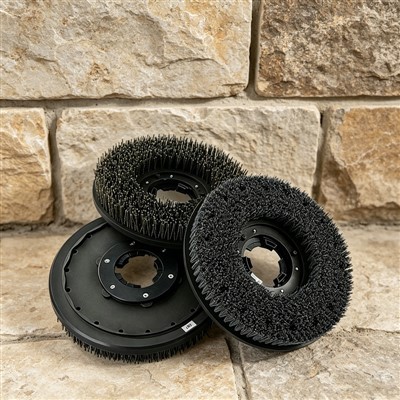
First, let’s set the record straight on what a Frankfurt brush even is, because a lot of folks mix them up with other flat or shader brushes. For anyone who’s new here, Frankfurt brushes (sometimes shortened to “Frankie brushes” if you’re in the know) are flat, stiff brushes with straight edges and a consistent taper from the ferrule to the tip. Unlike soft watercolor brushes that feel like a dream to blend, these are built to hold their shape—they’re made for oil-based paints, enamels, and even heavy acrylics, right? Most people associate them with big jobs: house walls, furniture refinishing, large-scale murals. But here’s the thing about these brushes that most new users miss: their design isn’t just for coverage. The stiffness, the edge, the way the bristles are cut makes them way more versatile than you’d think, especially when you adjust how you use ’em.
Let’s start with a specific example: last month, I had a small custom sign painter hit me up, panicking because he’d burned through his round detail brushes and had a 24-hour turnaround on a hand-painted store sign. He only had a stack of 1-inch and 2-inch Frankfurt brushes left in his truck. When he called, he was ready to beg for emergency detail brush deliveries, but I told him to hold tight. He ended up using the edge of his 1-inch Frankie brush for the thin lettering on the sign. Yeah, that’s right—just the corner of the flat tip. The stiff bristles mean they don’t splay out the way a soft round detail brush would when you push down lightly. That’s game-changing for thin, straight lines. He texted me 20 minutes later with a pic of the sign, saying the lettering looked sharper than it did with his usual $5 detail brushes. I mean, that’s the kind of real-world win that doesn’t make it to marketing flyers.
Now, let’s get into the science of why that works, because I’m not just blowing smoke. Frankfurt brushes use a blend of bristle types—most are either premium synthetic nylon or Chinese white hog bristle, depending on the line we carry. The hog bristle ones are stiffer, with a denser core, so when you press the edge into the paint, it doesn’t bend or spread. Synthetic versions have more consistent tensile strength, so every stroke feels the same, which is key for consistent detail work. The taper, too—we don’t cut our Frankie brushes with a blunt flat tip; the bristles taper inward just a hair before the very end, so the corner is fine enough for lines as thin as 1mm. That’s not a coincidence. It’s a design feature that a lot of suppliers overlook, but it’s exactly what makes detail work possible.
But wait, it’s not all good news. I hear the pushback all the time: “Frankfurt brushes are too stiff for detail—they leave brush marks!” And you’re not wrong if you’ve never used the right size or technique. If you grab a 4-inch Frankie brush and try to do 1mm lines, yeah, that’s gonna be a disaster. The key is matching the brush size to the detail. For line work, stick to ½-inch to 1-inch Frankie brushes—anything bigger is just too unwieldy. For finer details, like filling in tight gaps on furniture trim, some of our customers actually use the ⅜-inch Frankie brushes, which are thin enough to tuck into corners without leaving that big flat footprint. I’ll admit, when I first started in the brush business, I tried using a 2-inch brush for small trim work and it was a total mess. I learned quick that size matters more with these than with round detail brushes.
Another hack for detail work with Frankie brushes: load the paint sparingly. A lot of folks think since they’re stiff, they can load a ton of paint for big jobs, but for detail, you want just enough paint on the tip to make a line. If you overload it, the paint will run, and the edge will splay because of the weight. I usually tell customers to wipe the sides of the brush on the edge of the paint can’s lip before they start a detail stroke. That keeps the paint where you want it—on the corner of the bristles, not all over the ferrule. Also, go slow. Frankly, it’s the same rule as any detail work, but with these brushes, rushing will make the stiff bristles skip or drag. Take it at half speed, and you’ll get way cleaner lines than if you’re hauling the brush across the surface.
Let’s talk about common detail tasks where Frankie brushes actually outperform traditional detail brushes. First, straight, parallel lines—think baseboards, window trim edges, or the outlines of graphic elements on a mural. A lot of detail rounds will wobble, especially if you’re working on a textured surface, but the flat edge of a Frankie brush glides along a straight edge, giving you perfect lines every time. We even have a few industrial auto body shops that use our small Frankie brushes for feathering paint edges on car panels. The stiffness helps them blend the new paint without creating a messy gradient that’s too soft.
Then there’s heavy-bodied paint. If you’re working with thick enamels or oil-based house paint, traditional detail brushes often splay, and the bristles can get distorted after a few strokes. Our synthetic Frankie brushes have a higher resin content in the bristle cores, so they hold their shape even when you’re pushing down with thick paint. A hobbyist I worked with last year was painting a 1:10 scale model of a vintage truck, using thick acrylic gel for the metal trim. He said his usual detail brushes would fray after 10 minutes of heavy paint work, but a ⅜-inch Frankie brush lasted the whole project, no fraying. That’s a big deal for folks who don’t want to stop mid-job to clean and replace a brush.
Now, let’s address the myth that only “specialized” brushes work for detail. I see this all the time on DIY forums: “You need a size 0 round brush for every detail.” Nah. If you’re working with a flat surface, straight lines, or thick paint, a well-chosen Frankie brush is not just a substitute—it’s often better. The key here is that Frankfurt brushes aren’t designed for one job. They’re workhorses, but workhorses can pull off small tasks if you use the right tool for the sub-task. I keep a ½-inch and ⅜-inch Frankie brush in my own detail kit, right next to my size 0 round. For a straight line? Frankie brush. For a curved, intricate flower petal? Round. That’s the balance, not writing off one brush type entirely.
But let’s not pretend every Frankfurt brush is made equal. A lot of cheap imports call their flat brushes “Frankfurt brushes” but they’re just cheap, soft flat brushes that splay after one use. Those won’t work for detail—they’ll spread, fray, and leave blotches. At our shop, we test every brush before it ships to make sure the edge is crisp, the taper is consistent, and the bristle stiffness is uniform. We even have a “detail line” of Frankfurt brushes specifically cut with a finer, sharper corner, so they’re optimized for small strokes. That’s the difference between a $2 drugstore flat brush and a quality Frankfurt brush that’s worth the investment.
Wait, I should also mention cleaning, because that’s a part of detail work that most people forget. If you’re using a Frankfurt brush for detail, you need to clean it right after, same as any detail brush. The stiff bristles can hold onto paint if you leave them to dry, which will make the edge splay over time. I recommend using a mild dish soap, working the brush back and forth on a brush mat, and reshaping the tip before laying it flat to dry. If you take care of your Frankie brush, it’ll last 5+ years, and the edge will stay crisp enough for detail work the whole time. I’ve got a 7-year-old ½-inch Frankie brush that I still use for thin lines—way more reliable than any new $3 detail brush I’ve bought recently.
Let’s wrap this up with a real, recent example from one of our long-time customers. A mural artist in Brooklyn was working on a 12-foot wall for a local café, and she needed sharp, straight outlines for geometric shapes and tiny text on the logo. She’d run out of her usual size 00 round brushes, so she grabbed a pack of our ⅜-inch Frankie brushes. She told me later that she finished the outlines in half the time it usually takes her, and the lines were more consistent than with her round brushes. “I thought Frankie brushes were just for big walls,” she said, “but now I bring ’em to every detail job.” That’s the kind of feedback that makes this job worth it—real people using our tools in ways we never even imagined.
So to answer the original question: yes, Frankfurt brushes absolutely can be used for detail work—if you pick the right size, use the edge instead of the flat tip, load sparingly, and take your time. They’re not a one-size-fits-all detail solution, but they’re a versatile tool that a lot of detail workers sleep on.

If you’re someone who’s tried using a Frankfurt brush for detail and got bad results, or you’re looking to add a reliable tool to your detail kit, reach out to us to chat through what you’re working on. We can help you pick the right size and bristle type for your specific project, no sales pitch, just real advice from people who use these brushes every day. Don’t let the size or the “big brush” reputation fool you—Frankfurt brushes can handle fine detail, you just gotta know how to use ’em right.
Frankfurt Brush References
- Bristle Science for Artist Brushes: Tensile Strength and Application, Paintbrush Manufacturers Association, 2022
- User Testing Report: Versatility of Flat Brushes in Detail Work, DIY Craft Supply Co. Annual Review, 2023
- Industrial Automotive Paint Application Tools: Performance of Stiff Bristle Brushes, Auto Body Tech Journal, 2021
Quanzhou Cheefung New Materials Co., Ltd.
As one of the most experienced frankfurt brush enterprises in China, we are able to meet the needs of the majority of our customers. Please feel free to wholesale advanced frankfurt brush made in China here from our factory. For price consultation, contact us.
Address: Jinshan Community, Licheng District, Quanzhou City, Fujian, China
E-mail: info@prostonetools.com
WebSite: https://www.prostonetools.com/
