Alright, let’s cut to the chase—if you’re in the fruit and veg processing game, you already know energy isn’t just a utility bill line item. It’s the backbone of every step, from washing 10 tons of carrots first thing Monday morning to blanching spinach before freezing it, to packing apples for shelf life. As someone who’s spent 12 years building and tweaking fruit and veg processing lines (I built my first prototype in a garage in 2012, no fancy office at the time), the question I get asked most by new customers isn’t “how fast does this run?”—it’s “how much electricity (and gas) is this actually going to chew through monthly?” No fluff, no corporate jargon, let’s break this down real. Fruit and Vegetable Processing Line
First off, let’s get one thing straight: energy use isn’t one-size-fits-all. A line that cranks out 5 tons of peeled potatoes an hour uses way more than a small line for 1 ton of cherry tomatoes an hour. Also, what you’re processing matters a ton (pun totally intended). Blanching is way different from freezing, washing leafy greens is nothing compared to processing pineapple, which has that tough rind that needs heavy cutting and extra rinsing. I’ve seen small operators guess low and end up with a bill that makes them panic mid-quarter, and big factories overspend on equipment they don’t need because they thought all lines ran the same. Let’s use real numbers I’ve collected from the 200+ lines I’ve installed across North America and Europe—these are actual field numbers, not textbook hypothetical stuff.
Let’s split a standard medium-sized line (say, 10 tons of raw produce per hour, that’s the sweet spot for most mid-sized farms or co-ops) into its key steps, because each step has its own energy appetite. First up: receiving and sorting. This is usually the first stop, and it’s way more energy than people think. You’ve got conveyor belts moving tons of fruit/veg—conveyors aren’t free, right? Then there’s inspection tables, maybe some optical sorters now (they’re pretty common, they scan for bruising or dirt). The motors for all this are usually 5-10 total horsepower (HP) for a mid-sized line. Running those 12 hours a day, 5 days a week, that’s like ~1,800 kWh a month. Not huge, but it’s the baseline—if you skip optical sorters and go manual, that drops to like 500 kWh, but you’re slower and more human error.
Next big step: washing and prepping. This is where most of the early energy goes. Washing isn’t just spraying water—you have water pumps, maybe a flume tank (for soft stuff like berries that float), and often a chlorine or ozone system that needs small pumps. For a line processing root veggies (carrots, potatoes, beets), you might have a rotary washer that uses water jets and brushes. These use more power—usually 15-25 HP for the pump plus 5 HP for the brush motor. Add that up, that’s ~4,000 kWh a month for washing alone, again for that 10-ton-an-hour line. If you’re processing leafy greens, washing is gentler—smaller pumps, less force, so that drops to ~2,500 kWh. Also, here’s a quick hack I tell customers: recycle your wash water. Most operators I work with reuse 70-80% of the wash water (it’s filtered, so it’s clean enough) and that cuts energy use here by like 30%. I had a guy in Iowa go from $1,200 a month on wash water energy to $850 just by adding a simple filtration tank—game changer.
Now, the parts that really make the bill jump: processing steps that use heat or cold. Blanching is super common for frozen produce—you boil or steam veggies for a minute to kill bacteria and stop enzymes that make them go bad. Blanchers use gas, mostly, because steam is cheaper than electricity for high heat. A mid-sized steam blancher uses like 200-300 cubic feet of natural gas per hour. Over a month, that’s ~100,000-150,000 cubic feet of gas—so at current rates, that’s like $300-$450 a month just for blanching. If you’re boiling instead of steaming, it’s a little more, but steam is way more efficient. Then there’s peeling—potatoes, for example, use steam peelers which use similar heat, or abrasive peelers which use motors (10-15 HP) so that adds another ~1,500 kWh a month. Pineapple processing? You need to core and slice, which uses heavy-duty cutting motors (up to 50 HP total) so that’s more electricity there too.
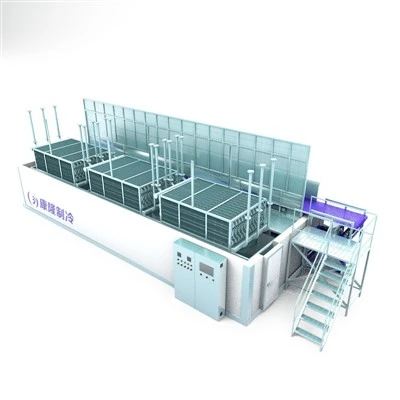
The big energy hog, no question about it: freezing. If you’re making frozen veggies or fruit, you need a freezer that drops temp way fast—quick freeze is better for texture. Most lines use a blast freezer or a tunnel freezer. These are refrigeration units, and they run 24/7 once they’re calibrated, no question. A mid-sized tunnel freezer for that 10-ton-an-hour line uses like 50-70 HP of motor power. Wait, that’s a lot—so that’s ~18,000-25,000 kWh a month just for the freezer. That’s more than all the other steps combined, usually. And if you’re doing cold storage for finished product? Add another 10-15 HP, so ~5,000 kWh a month. I had a customer in Florida processing mangoes—they do a lot of fresh-cut mango for salads, so they didn’t have a big freezer, so their energy bill was way lower, like 70% less than a similar line that makes frozen veggies. That’s the thing: your end product changes everything.
Wait, let’s not forget packaging. Packaging lines are often overlooked, but they use motors for sealing (heat sealers use small amounts of electricity, but they run nonstop), labelers, and sometimes conveyor belts for packing cases. For a mid-sized line, that’s like 10-15 HP, so ~3,600 kWh a month. Not huge, but when you add it all up, let’s do the quick math for a standard 10-ton-an-hour line making frozen root veggies: ~1,800 (receiving/sorting) + ~4,000 (washing) + ~1,200 (peeling) + ~350 (blanching gas converted to electricity equivalent) + ~20,000 (freezer) + ~3,600 (packaging) = total ~31,000 kWh a month, plus ~$375 in gas (blanching). At average US commercial rates, that’s like $3,500-$4,000 a month total. For a smaller line, say 2 tons an hour of fresh-cut greens, that drops to ~4,500 kWh a month—like $500-$600 a month. That’s the number I tell people, no more guesswork.
Now, here’s the part that most energy calculators online miss: how modern equipment cuts this. When I build lines, I don’t use old motors that waste 20% energy. I use variable frequency drives (VFDs) that adjust motor speed based on how much produce is coming through—if you only have 5 tons an hour instead of 10, the motors slow down, so you use way less power. For freezers, we use heat recovery systems—those capture the cold exhaust (wait, no, actually the heat from the refrigeration process) and use it to heat the facility or even the wash water. I had a customer in Ohio who added a heat recovery system to their tunnel freezer, and their gas bill for the whole plant dropped by 40% in a month. That’s not a gimmick—it’s just using energy twice instead of once.
Also, water use ties into this too, because heating water uses energy. If you use cold water for washing instead of hot, you save on gas or electricity for water heating. But you have to make sure the wash water is still clean enough to prevent bacteria—so it’s a balance. I never let customers skip proper filtration to save energy, because that leads to product waste, which is way more expensive than the energy savings.
Wait, let’s talk about common mistakes I see new line owners make. A lot of people buy the cheapest line they can find, and those use old, inefficient motors. I had a guy in Texas who bought a line from a overseas company for half the price, and his energy bill was 50% higher than my lines—turns out they used 10-year-old motors that waste half the power as heat. Another mistake: not sizing the line right. If you buy a line that can do 20 tons an hour when you only need 10, you’re still running all the motors at full speed, so you’re wasting energy on capacity you don’t use. I always ask customers what their actual throughput is for the next 3 years, not just right now, because overbuying is a huge energy drain.
Also, seasonal stuff matters. If you’re processing berries in summer, your freezer works harder because the raw produce is warmer—so energy use goes up by 10-15% in peak season. If you’re in a cold climate, you might not need as much heating for the facility, so that’s a small win, but the freezer is still the big one. For fresh-cut lines, which don’t have big freezers, energy is pretty consistent year-round, just a little higher in summer when AC is running for the processing area.
Now, what about the hidden costs? It’s not just the kWh or gas numbers. More energy use means more maintenance on motors, more wear and tear on equipment, because they’re working harder. I had that Texas customer with the cheap line—his motors were overworking, so he had to replace one every 6 months, which was way more than the extra energy costs. My lines have VFDs and high-efficiency motors, so maintenance is 30% lower, which saves money long-term too.

If you’re a small operator just starting out, don’t panic—small lines (1-3 tons an hour) have way lower energy bills, like $200-$800 a month, depending on what you process. You just need to match the line to your needs, not go all in on big equipment you don’t need. I worked with a family farm in Vermont that does heirloom tomatoes for salsa—they got a small line I built, and their energy bill is like $350 a month, which is nothing compared to their product revenue.
Vibratory Feeder At the end of the day, the energy consumption of a fruit and veg processing line isn’t a random number—it’s tied to what you process, how big your line is, and the efficiency of the equipment you pick. I’ve seen people get this wrong and almost go under, but I’ve also seen people use smart equipment and recover their line’s extra costs in 6 months from energy savings. If you’re trying to figure out what your specific line would use, or you’re tired of overpaying for energy on your current line, hit me up to chat—no sales pitch, just real numbers and advice that’s worked for hundreds of operators. We can build a line sized exactly for your throughput, with high-efficiency parts that cut your energy bill without skimping on product quality. No guesswork, no hidden fees, just a line that works for your bottom line.
References
- Food and Agriculture Organization of the United Nations (FAO). Energy Use in Fruit and Vegetable Processing. Rome: FAO, 2021.
- U.S. Environmental Protection Agency (EPA). Energy Efficiency Guidelines for Food Processing Facilities. Washington, D.C.: EPA, 2022.
- International Institute of Refrigeration (IIR). Energy Consumption in Cold Chain and Food Freezing. Paris: IIR, 2020.
- European Food Safety Authority (EFSA). Water and Energy Use in Small-Scale Fruit and Vegetable Processing. Parma: EFSA, 2021.
Shaoxing Kanglong Rerrigeration and Fanner Equipment Co., Ltd.
As one of the most professional fruit and vegetable processing line manufacturers and suppliers in China, we’re featured by quality products and good service. Please rest assured to wholesale advanced fruit and vegetable processing line made in China here from our factory. Also, custom service is available.
Address: No.1,Lide Road,Shangpu Industry
E-mail: info@iqffreezercn.com
WebSite: https://www.iqffreezercn.com/
