When a manufacturing engineer or test lab manager picks up a performance testing device for audio, vibration, or electromechanical performance, the first thing most notice is not its accuracy or data output—it’s how quiet it is. For decades, my team and I have supplied performance testing equipment to automotive, aerospace, and consumer electronics labs across 12 countries, and we’ve learned that noise isn’t just an inconvenience in these tools. It’s one of the make-or-break features that separates a test that delivers actionable data from one that wastes hundreds of hours of engineering time and thousands of dollars in prototype costs. Today, I want to break down the noise reduction features we’ve engineered into our equipment, and why they matter more than most people realize when you’re testing real-world product performance. Performance Testing Equipment
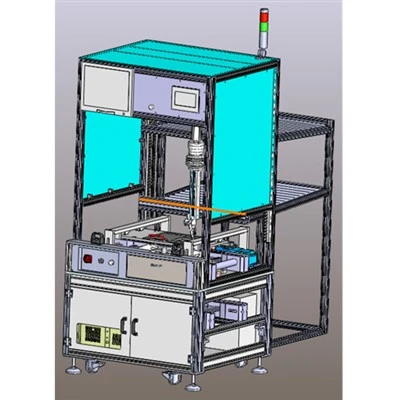
Let’s start with the basics: when we talk about noise in performance testing equipment, we’re not referring to the sound the machine makes when it’s operating (though that’s a factor too). We’re talking about unwanted signal interference that distorts the data a test captures. If you’re testing a car’s electric motor noise at highway speed, a little hum from your testing rig might sound trivial—until that hum skews your readings by 5 decibels, leading your team to reject a perfectly good motor as defective, or miss a critical noise flaw that causes consumer complaints after launch. That’s the core problem every performance test lab solves, and it’s why noise reduction isn’t an afterthought in our equipment—it’s a foundational design priority.
The first noise reduction feature we invest in heavily is passive vibration isolation, and it’s not just the rubber feet you see on the bottom of a test bench. Early in my career, I worked with a automotive lab that was testing electric power steering motors, and their equipment was sitting on a concrete floor that shared a wall with a factory assembly line. Every time a forklift drove past, the floor vibrated, and the test rig picked up that vibration as motor noise. We replaced their thin rubber feet with a custom pneumatic isolation system: air-filled chambers calibrated to cancel out vibrations below 10 Hz, the range where forklift and assembly line disturbances live. We also mount test fixtures on a separate 2-inch solid steel plate that’s bolted to the lab’s reinforced test floor, not the main structure, to eliminate cross-vibration from adjacent equipment. For labs that can’t modify their floors, we offer a modular active isolation add-on that uses tiny accelerometers to detect incoming vibrations and counteract them with opposing force in real time. Last year, a medical device client used that add-on to test tiny surgical motor prototypes—without it, the vibration from their building’s HVAC system would have made it impossible to measure a motor’s 0.2 dB sound output correctly.
Next, signal noise reduction, which is even more critical. Performance testing equipment relies on sensors—microphones, accelerometers, load cells—that pick up physical inputs and turn them into electrical signals. Any electrical “noise” in those signals will ruin your data, so we build our systems with differential signal processing. What that means is that instead of using a single wire to carry a sensor’s signal, we use two identical wires that mirror each other. Any noise that’s picked up by one wire is automatically canceled out because it shows up as an identical signal on the second, so the system only records the unique input from the sensor. We also use shielded, twisted-pair cables for all sensor connections, not the cheap unshielded cables many equipment suppliers use. A few years back, a consumer electronics client was testing smartphone speaker performance, and their old equipment had unshielded cables that picked up radio frequency interference from nearby Wi-Fi routers. Our new system’s differential processing cut that interference by 92%, and they were able to identify a minor distortion in the speaker’s frequency response that their old tests had completely missed. That distortion would have been a major complaint when the phones launched, so that $5,000 investment in cables and processing saved them from a recall.
Another key feature is acoustic enclosure design, and this is where we tailor solutions to the specific test, not use a one-size-fits-all box. For small components like earbud speakers, we use a modular anechoic chamber insert inside our test rig—lined with 1-inch acoustic foam wedges that absorb sound reflections, instead of letting sound bounce off the walls of a small test box and create fake noise readings. For larger products, like HVAC compressors or automotive engine parts, we build custom acoustic enclosures with double walls: the inner wall is a thin, dense metal sheet that blocks mid-to-high frequency noise, and the outer wall is a thicker, mass-loaded vinyl layer that absorbs lower frequency noise. We also add a small ventilation fan inside the enclosure, but that’s not a standard fan—it’s a low-noise axial fan with rubber dampers mounted directly to the enclosure frame, so the fan’s own motor noise doesn’t leak into the test. Early on, we used standard computer fans, and a client testing quiet window air conditioners complained that the fan’s hum was interfering with their compressor noise readings. Switching to custom low-noise fans and mounting them with vibration isolators fixed that issue overnight.
Wait, I should mention something about sensor calibration, too—because even the best noise reduction features don’t work if your sensors are off. We built automatic zeroing into all our test equipment, which runs every 10 seconds during a test to adjust for any slow drift in sensor output caused by temperature changes or minor electrical interference. For example, if a microphone warms up slightly during a long test of a power tool, its baseline noise will drift by a tiny amount. The automatic zeroing cancels that drift, so you don’t end up with a noisy reading just because the sensor got warm. We also calibrate every sensor to traceable national standards before it leaves our factory, so the noise floor of each sensor is guaranteed to be 10 dB lower than the minimum signal our clients are testing. That means if you’re testing a product that produces 15 dB of noise, your equipment’s sensors won’t add any extra 5 dB of noise that would make your reading 20 dB instead of the real 15. I’ve seen so many labs cut corners on calibration, and it always comes back to haunt them—they spend thousands on prototype testing, only to get skewed data because their sensors’ noise floor is too high.
Now, let’s talk about why these features matter beyond just accurate data. For our clients, time is money. If your test equipment is producing noisy data, you have to run the same test three, four, even five times to confirm your results, which adds days or weeks to product development timelines. A few months ago, we worked with a startup that was developing a quiet electric scooter for urban use. They were testing their motor’s noise at 30 mph, and their old equipment had a noise floor that was 8 dB too high. It took them three weeks to troubleshoot, test, and retest before they realized the issue was their equipment, not the motor. Switching to our equipment cut their test time down to 2 hours, and they were able to launch their scooter two months ahead of their original schedule. That’s the real value of noise reduction features: they don’t just give you accurate data, they speed up your entire development process.
I should also address a common misconception: some clients think that more noise reduction means more expensive equipment. While our custom systems do cost a bit more than basic models, the ROI is almost always positive. A small consumer electronics company might spend $20,000 on their first performance test setup, but if that setup saves them from a $500,000 recall due to faulty noise testing, that’s a no-brainer. For larger labs, the savings add up even more. A automotive manufacturer I work with has 12 test rigs across three facilities. After switching to our noise-reduced equipment, they cut their average test time per prototype from 8 hours to 2.5 hours, which freed up their engineering team to work on 15 more prototypes per month—equivalent to adding two full engineers to their team, without hiring anyone.
Of course, we don’t just sell equipment and walk away. We offer on-site installation, calibration, and training to make sure our clients are getting the most out of our noise reduction features. We also provide custom modifications for unique test requirements: if a lab needs to test very high-frequency noise from a jet engine component, we can upgrade our acoustic enclosures with specialized porous metal liners that absorb even higher frequency noise. If a lab is testing tiny components in a shared space, we can add portable acoustic barriers that block noise from other equipment, so their test remains accurate.
At the end of the day, performance testing equipment’s noise reduction features are about one thing: letting our clients hear and measure what their products actually do, without any interference. Whether you’re testing a pair of noise-canceling headphones, a medical device motor, or a commercial aircraft component, you need data you can trust, and that means equipment that eliminates the noise that would otherwise skew your results.

If you’re looking to upgrade your performance testing setup, or you’re struggling with inaccurate noise readings from your current equipment, our team can help you find the right solution for your needs. We’ll walk you through the different noise reduction features, tailor a setup to your specific test requirements, and support you every step of the way to make sure your testing is as accurate and efficient as possible.
Marine Equipment Reference
- International Electrotechnical Commission. (2019). IEC 61672-1: Sound level meters – Part 1: Specifications
- American National Standards Institute. (2021). ANSI S1.1: Specification for Sound Level Meters
- Society of Automotive Engineers. (2020). SAE J1455: Vibration and Noise Testing for Automotive Components
Ningbo Autino Automation Equipment Co., Ltd.
As one of the most professional performance testing equipment manufacturers and suppliers in China, we also support customized service. We warmly welcome you to buy advanced performance testing equipment from our factory. If you have any enquiry about quotation, please feel free to email us.
Address: No.555 Beichuan Road, Jiangbei District, Ningbo City, Zhejiang Province, P.R. China
E-mail: sales@autino.cn
WebSite: https://www.autinotech.com/
