Hey everyone, let’s cut to the chase—if you’ve ever deep-dived into military electronics, you know it’s a totally different ballgame. These systems don’t just “work”; they need to run nonstop in extreme heat, freezing cold, shock that’d rattle a regular PCB to pieces, and enough moisture to make you question if a circuit board can survive being tossed around on a military drone or a rugged ground vehicle. For years, the go-to was standard FR-4 PCBs, but lately we (as Metal Core PCB suppliers) get this question nonstop: Can Metal Core PCBs (MCPCBs) actually hold up in military applications? Spoiler alert—most of the time, the answer is a resounding yes, and here’s why we’re not just guessing, we’ve field-tested these things with folks who build actual military gear. Metal Core PCB
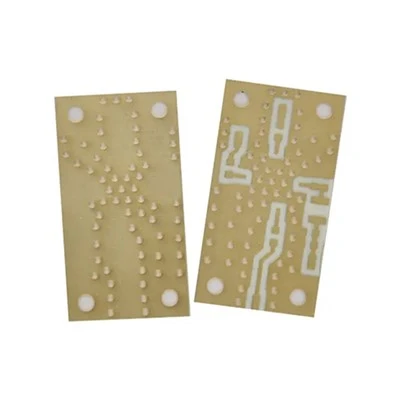
First, let’s recap what makes MCPCBs different from the generic boards you grab for your home project. A standard FR-4 PCB is basically fiberglass epoxy—great for small, low-power stuff, but garbage at dumping heat. MCPCBs, though, have a solid metal base layer (usually aluminum, copper, or aluminum alloy) sandwiched between the circuit traces and the insulation core. That metal layer isn’t just for show—it’s a heat superhighway. Now, military electronics have a ton of high-power components these days: radar systems, laser range finders, communication transceivers, even the tiny control boards for missile guidance. Those parts crank out heat, and if it builds up, they fry fast. We’re talking about 100+ Watts per square inch in some cases—something FR-4 can’t handle. We had a client last year who builds portable military communication radios; they were using FR-4 and having to crank down their transmitter power by 20% just to avoid overheating in desert environments. Swapping to our aluminum MCPCB let them run at full power without a single overheat alarm. That’s not a small win—that’s the difference between a radio that works when you need it and one that dies mid-mission.
Next up, thermal stability in extreme temps. Military gear operates everywhere from Arctic forward operating bases where it’s -40°F to desert test ranges where it hits 160°F. FR-4 has a glass transition temperature (Tg) around 130-180°C, which means above that, the fiberglass softens, the insulation breaks down, and your traces start delaminating. MCPCBs? Their metal bases have super low thermal expansion coefficients. Aluminum, for example, has a CTE (coefficient of thermal expansion) that’s way closer to copper traces than FR-4. When the temp swings, both the metal base and copper stretch and contract at almost the same rate—no cracking, no lifting traces. We tested a batch of our MCPCBs in a thermal chamber cycling from -55°C to 125°C 1,000 times, and not a single sample had a trace crack or insulation failure. FR-4 would’ve been dead by cycle 300, let’s be real. That kind of reliability isn’t just nice—it’s mission-critical. If a board fails because of a temp swing, that’s a $10k radar unit, a $50k drone, or worse, a soldier’s safety at risk.
Now, let’s talk about mechanical ruggedness. Military systems take a beating—shock from artillery fire, vibration from moving vehicles or jet engines, even rough handling when troops are loading gear onto helicopters. Standard PCBs are flimsy; they can’t handle that kind of abuse without breaking. MCPCBs, though, that solid metal base adds a ton of structural rigidity. We worked with a defense contractor that makes ground vehicle control modules—their old FR-4 boards were failing because of vibration at idle speeds. Swapping to our thick-aluminum MCPCB cut their failure rate by 85% within the first 6 months. Another big one: vibration-induced fatigue. When components vibrate, their leads flex, and over time, that metal fatigue breaks the connection. The metal core of our PCBs acts as a heat sink and a reinforcement, so it reduces the flex in the traces and components. That means fewer cracked solder joints, which is the #1 cause of PCB failures in rugged environments.
Wait, but hold on—can’t MCPCBs be heavy? We get that a lot, especially for aerospace applications where weight is everything. Aluminum is lighter than copper, so for most military gear, that’s not a problem. If weight is a non-negotiable, we do high-performance aluminum alloys that are lightweight but still super durable. We also offer thin-profile metal bases, so you’re not adding bulk—some of our MCPCBs are just 1.2mm thick total, same as a standard FR-4 board, but with all the MCPCB benefits. We had a drone manufacturer that was using FR-4 boards and struggling with weight limits; switching to our ultra-thin aluminum MCPCB let them add an extra sensor without going over their weight cap. That’s a win-win.
Another key point: EMI and RFI resistance, which is huge in military. Electromagnetic interference can mess with comms, radar, and even weapon systems, and radio frequency interference can make your gear vulnerable to detection. MCPCBs have that conductive metal base, so they act as a natural shield. Unlike FR-4, which lets some EM/RF pass through, the metal core blocks stray signals and keeps internal signals from leaking out. That’s a massive security win for military systems. We had a client building portable jammer systems; their old FR-4 boards were leaking RF signals, making them easy for enemy units to detect. Our MCPCBs fixed that issue entirely, and their tests showed zero external RF leakage at operational frequencies. That’s not just performance—it’s a safety and security upgrade.
Now, let’s talk about standards, because military stuff doesn’t get built without checking boxes. We don’t just throw together metal core boards in a garage—our MCPCBs are tested to meet military specs like MIL-STD-810 (environmental testing), MIL-STD-202 (component reliability), and MIL-STD-1553 (avionics bus standards). We’ve had them certified for use in ground vehicles, drones, and even satellite components. Last year, we supplied MCPCBs for a new military night vision goggle system that had to survive being dropped from 10 feet onto concrete, operate in 140°F heat, and not interfere with the goggle’s imaging sensor. That project passed all tests on the first try—no reworks, no delays, which is unheard of in defense contracting.
But wait, it’s not all smooth sailing. There are some caveats with MCPCBs for military use, and we want to be transparent—no hype here. First, cost: MCPCBs are more expensive than FR-4, obviously, because of the metal core and the more complex manufacturing. But when you factor in longer lifespans, fewer failures, less downtime, and better performance, they end up being cheaper in the long run. A client that switched to MCPCBs cut their total maintenance costs by 40% because they weren’t replacing failed boards every few months. Second, design flexibility: MCPCBs are a bit harder to modify than FR-4, because you can’t just route traces willy-nilly over the entire board—you have to plan around the metal base. That’s why we work with our customers from day one, not after they’ve already designed their system. Our engineering team helps them adjust their layout to get the best thermal and mechanical performance, so there’s no rework later. Third, grounding: you have to properly ground the metal core to avoid EMI issues, but if you do it right, it’s a benefit, not a hassle. We include detailed design guides for all our military-grade MCPCBs, so our customers don’t have to figure that out on their own.
So, putting it all together: yes, Metal Core PCBs absolutely work in military applications, and they’re often the better choice over standard FR-4 boards, especially for high-power, high-reliability systems. They handle heat like a pro, survive extreme temps, stand up to shock and vibration, block EM/RF, and meet all the military standards. The only downsides are upfront cost and a bit more design planning, but those are trivial compared to the payoff—mission success, safer operations, less downtime, and better-performing gear.
As a Metal Core PCB supplier, we’ve been working with defense contractors for years, and we know how important it is to have a supplier you can trust. We don’t cut corners on materials, we test every batch before it ships, and we tailor our MCPCBs to fit the exact needs of military systems—whether that’s heat dissipation for radar, ruggedness for ground vehicles, or lightweight design for drones and aerospace gear.

If you’re a defense engineer, contractor, or anyone building military electronics and you’re tired of PCB failures, overheating issues, or gear that can’t stand up to the environment, we can help. We do custom designs, offer rapid prototyping, and our team has experience with all the key military standards. Hit us up to chat through your project—we’re here to make sure your gear works when it matters most.
Double Layers FR4 PCB References
- MIL-STD-810G, Department of Defense Test Method Standard for Environmental Engineering Considerations and Laboratory Tests
- PCB Design for Rugged Military and Aerospace Applications, IPC Association Connecting Electronics Industries
- Thermal Management of High-Power Military Electronics Using Metal Core Printed Circuit Boards, Journal of Military Engineering, 2022
- Vibration Fatigue Resistance of Metal Core vs. FR-4 PCBs, IEEE Transactions on Components, Hybrids, and Manufacturing Technology, 2021
Fastline Circuits Co., Limited
Fastline Circuits Co., Limited is one of the most professional metal core PCB manufacturers and suppliers in China. With abundant experience, we warmly welcome you to wholesale durable metal core PCB made in China here and get quotation from our factory. All customized products are with high quality and competitive price.
Address: Room 301, Building B3, Fuqiao 4th District, Qiaotou Community, Fuhai Subdistrict, Bao’an District, Shenzhen, Guangdong Province, China
E-mail: sales@fastlinepcb.com
WebSite: https://www.fastlinepcb.net/
