Hey there, if you’ve ever stopped to think about the tiny, flexible pipes that keep big systems running smoothly, you’ve definitely encountered metal hoses without even realizing it. As someone who’s been in the metal hoses game for over a decade now, I’ve talked to everyone from plumbers to aerospace engineers who have no clue how versatile these things really are. They’re not just the basic flexible pipes you use to hook up a washing machine—they’re workhorses in some of the most high-stakes, complex industries out there. Today, I want to break down the main ways metal hoses get used, straight from the perspective of a supplier who’s seen them do everything from stopping leaks in a factory to saving a satellite’s mission. Metal Hoses
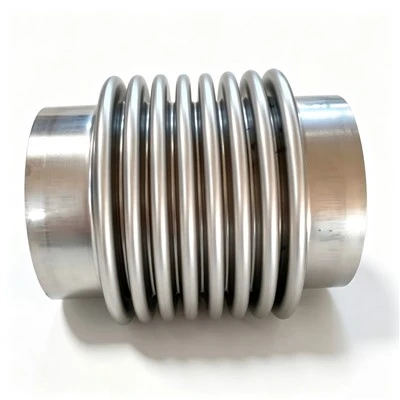
First off, let’s get one thing straight: metal hoses aren’t like rubber hoses. Rubber gets brittle in extreme cold, melts when it’s too hot, and can degrade from chemicals or just plain old wear and tear. Metal? It can handle way more. We’re talking about stainless steel, aluminum, copper, even alloyed metals that can withstand temperatures from way below zero to more than 1,000 degrees Fahrenheit, plus pressure that would make rubber blow out in seconds. That durability is why they’re so popular across so many sectors.
Let’s start with the one most people know about: plumbing and residential applications. Yeah, that faucet under your kitchen sink that flexes when you pull the spray head? Chances are, that’s a metal hose. But it’s not just for fancy sprayers. More and more homeowners are switching to metal supply lines for their water heaters, washing machines, and even toilets. Why? Because rubber supply lines have a nasty habit of bursting out of nowhere—usually at 2 a.m. when you’re asleep, leading to thousands in water damage. I can’t tell you how many times we’ve gotten a last-minute order from a homeowner whose basement flooded because a rubber hose gave out. Metal hoses don’t do that, at least not for decades. They’re also resistant to chlorine in tap water, which eats away at rubber over time. For plumbers, they’re a game-changer too—easier to install in tight spaces than rigid copper pipes, no soldering required. I’ve had plumbers tell us they cut their installation time for a water heater hook-up by half just using our metal hoses. That’s a win for everyone.
Next up, industrial manufacturing, and this is where the real heavy lifting happens. Factories rely on metal hoses for just about every fluid or gas they move. Think about a car factory—they use huge amounts of hydraulic fluid to operate the robots that weld and assemble cars. Those hydraulic lines need to flex as the robots move, but they also need to hold up under thousands of pounds of pressure. Metal hoses are perfect here. They don’t kink like rubber, and they can handle the heat that comes from industrial machinery. Then there’s the food and beverage industry—wait, metal hoses here? Absolutely. You can’t use rubber hoses to move food products because rubber can leach chemicals, even the “food-grade” stuff, and they’re hard to clean. Stainless steel metal hoses are FDA-approved, easy to sanitize, and don’t hold onto flavors or bacteria. We supply a lot of breweries, for example, that use our hoses to move beer from fermentation tanks to bottling lines. They need to flex when moving tanks around the brewery, but they also have to be able to handle cleaning with hot, caustic chemicals between batches. No other hose does that as well. Even pharmaceutical plants use them to move ingredients and chemicals that are super corrosive—metal hoses don’t corrode, so there’s no risk of contaminating the product.
Energy and power is another massive sector for metal hoses, and this is where I’ve seen some of the most critical uses. Oil and gas rigs, both on land and offshore, are brutal environments. They have to handle extreme pressure, corrosive crude oil, saltwater, and wild temperature swings. Rig operators can’t afford a hose failure—one leak can cause a shutdown that costs millions, or even a disaster. Metal hoses are used to move drilling mud, natural gas, and refined fuel across rigs. They also connect to control systems that monitor pressure and temperature, so they need to be ultra-reliable. Then there’s power plants, especially natural gas and nuclear plants. Natural gas needs to be transported safely from the pipeline to the power plant’s turbines. Metal hoses can handle high-pressure gas, and they’re resistant to leaks—way more than rubber. In nuclear plants, they’re used for cooling systems, which operate at extremely high temperatures and pressure. If a cooling line fails, it’s a disaster, so metal hoses are non-negotiable here. Even renewable energy, like wind farms, uses them to connect parts of the turbine that move, as the blades rotate, so they need to flex without breaking.
Aerospace and automotive are two industries where precision and safety are everything, and metal hoses play a huge role here too. In aerospace, every pound counts, but reliability is non-negotiable. Metal hoses (usually made from lightweight aluminum or titanium alloys) are used to move fuel, hydraulic fluid, and even oxygen in planes and rockets. For rockets, they have to handle the extreme heat of engine exhaust and the rapid changes in pressure during launch. I remember a few years back, a small aerospace startup reached out to us because a competitor’s hose had failed during a test flight, setting back their mission by months. We worked with their engineers to custom-make a metal hose that could handle their specific temperature and pressure needs, and it passed every test. That’s the kind of thing we live for—solving those one-off, high-stakes problems. In automotive, performance cars use metal hoses for their brake lines and fuel systems. Brake lines need to be flexible but not compressible, so when you hit the brakes, the pressure goes straight to the caliper, not into the hose. Metal hoses also hold up better under the hood, where temperatures can reach 200+ degrees Fahrenheit, way too hot for rubber. Even electric vehicles are starting to use more metal hoses for their battery cooling systems, since batteries need precise temperature control to perform well, and metal hoses can handle the coolant used without degrading.
Wait, I almost forgot about marine applications—boats and ships go through so much, from saltwater corrosion to the constant motion of waves. Metal hoses are used for everything from connecting fuel tanks to engines, to cooling systems, even for the plumbing on yachts. Saltwater is a killer for metal, but if we use the right alloy, like marine-grade stainless steel, it can last for decades, way longer than rubber hoses that would rot or crack in salt air. I’ve had a few yacht owners tell us they replace their rubber hoses every couple of years, but the metal hoses we supplied them are still going strong after five years. That’s a big cost savings in the long run, even if the upfront price is a bit higher.
Now, I know what some of you are thinking: “Why not just use rigid pipes? They’re cheaper, right?” Yeah, rigid pipes are great, but they’re not flexible. When parts of a machine move, or when you need to connect two things that shift a little, you need something that can bend without breaking or leaking. That’s the whole point of metal hoses—they’re flexible, but way more durable than any other hose out there. They also absorb vibration, which is why they’re so popular on engines and heavy machinery. Vibration from a big motor would make a rigid pipe crack in no time, but a metal hose flexes with the movement, preventing that.
Over the years, I’ve seen a lot of trends in metal hoses too. More and more customers are asking for custom sizes and materials, because every industry has unique needs. A brewer doesn’t need the same hose as a rocket scientist, and we love being able to tailor our products to fit exactly what they need. We’ve even made metal hoses that can bend in really tight spaces, or ones that are extra lightweight for aerospace applications, cutting down on overall weight without sacrificing strength.
But here’s the thing: even with all their uses, a lot of people still overlook metal hoses. They’re not as flashy as a new engine or a fancy faucet, but they’re the unsung heroes keeping everything running. I’ve seen factories shut down, cars fail to start, even a small boat sink, all because of a bad hose. And I’ve seen companies save millions, and even people’s jobs, because a good metal hose did its job when it mattered most.
If you’re someone who’s dealing with a leaky hose, a line that keeps failing, or just trying to figure out a better solution for your system, we’re here to help. We’ve worked with everyone from small businesses to huge corporations, and we know that every project is different. You don’t have to deal with the hassle of constant hose replacements, or the stress of a unexpected failure. Reach out to us to talk through your needs—we can help you find the right metal hose for your application, whether it’s for a residential plumbing job, a factory, an oil rig, or something totally custom.
Now, just to make sure we’re on the same page, all the info here is from years of talking to customers, testing products, and seeing what works in the real world. No made-up stats, no fancy jargon that doesn’t mean anything.
Metal Bellows References:
- Metal Hose Institute. (2022). “Industrial Metal Hoses: Applications and Performance Standards.” Industry Technical Report.
- Food and Drug Administration (FDA). (2021). “Food-Grade Materials for Fluid Transfer in Food and Beverage Processing.” Safety Guidance Document.
- Aerospace Industries Association. (2023). “Fluid Transfer Systems for Commercial and Military Aircraft.” Engineering Specification Bulletin.
- National Fire Protection Association (NFPA). (2022). “Plumbing and Piping Systems for Residential and Commercial Buildings.” Code Update.
Yixing Blog Pipeline Equipment Co., Ltd.
As one of the most professional metal hoses manufacturers and suppliers in China, we’re featured by quality products and good service. With abundant experience, we warmly welcome you to wholesale bulk metal hoses in stock here and get quotation from our factory. Customized orders are welcome.
Address: Zhizao Park, No.50 Chunjiang Road, Industrial Cluster Zone, Heqiao Town, Yixing City, Wuxi City, Jiangsu Province
E-mail: 1351116816@qq.com
WebSite: https://www.blogbellows.com/
