Hey there, if you’ve ever scrolled industrial specs or talked to folks in manufacturing, you’ve probably run into carbon steel grating before—especially when you’re talking about safe, sturdy walkways, drainage grates, or even platform flooring. But if you’re here, odds are you’re wondering about one specific, super practical question: what’s the electrical conductivity of carbon steel grating? And since I’m the owner of a carbon steel grating supplier that’s been in this game for over a decade, I get why this matters. It’s not just a random stat—if you’re ordering grating for a plant, a loading dock, or even a commercial rooftop, conductivity might make or break whether your build works. Let’s break this down, no boring textbook jargon, just real stuff we deal with every day at the shop. Carbon Steel Grating
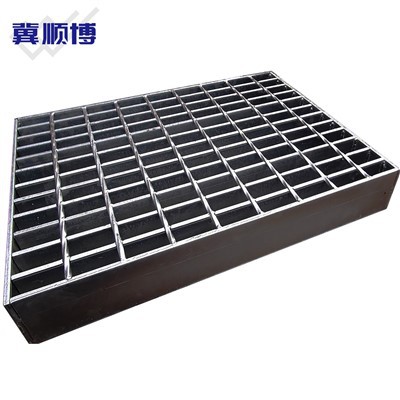
First, let’s get one thing straight: I’m not here to give you a vague number. Carbon steel isn’t like copper or silver—those are high-conductivity metals everyone knows. Carbon steel is an alloy, right? Mix of iron, a tiny bit of carbon, and sometimes other elements like manganese to make it strong. That mix changes conductivity a lot. We test every batch of our grating, and I can tell you straight up, the electrical conductivity of standard carbon steel grating usually lands around 6.9 to 7.5 million siemens per meter (S/m). Wait, let’s translate that to something relatable—copper’s around 59 million S/m, so yeah, carbon steel is way less conductive. That’s not a flaw, though; it’s just how it is, and it’s important to frame that context before you make a call.
Now, why does that number matter for you, not just engineers? Let’s say you’re building a walkway next to power lines, or a platform for a facility with sensitive electrical equipment. If the grating is too conductive, you might get stray current buildup—something no one wants because it can mess with machinery or even create a shock risk. But if it’s not conductive enough, wait—no, actually, sometimes you need a little conductivity to ground static electricity, right? Like if you’re moving pallets of flammable materials, static buildup is a real hazard. That’s where carbon steel grating hits a sweet spot for a lot of clients: it’s conductive enough to bleed off static, but not so conductive that it’s a liability for high-voltage areas. I’ve had so many clients call panicking thinking their grating was going to short out a circuit, and 9 times out of 10, the standard carbon steel we stock is perfect for their needs once they see that stat.
Wait, but hold on—this number isn’t set in stone. Let’s talk variables, because that’s where a lot of suppliers skip the details and just give you a generic number, which is garbage. First, the carbon content. If we’re talking low-carbon steel (like the A36 we use for 90% of our standard grating), that’s the sweet spot for conductivity because too much carbon actually messes with the atomic structure that carries electricity. If you go higher carbon, like 1045 steel, that’s a little less conductive—around 6.3 S/m million, from our tests. And if you go even higher, like tool steel, it drops way more, but we rarely use that for grating anyway because it’s too brittle.
Next, surface treatment. Oh, this is a huge one I wish more people knew. A lot of our customers ask about galvanized carbon steel grating, which is our most popular product. Galvanizing is when we dip the steel in molten zinc to prevent rust, right? That zinc layer is super thin—like 2 to 5 ounces per square foot—but it changes conductivity. Our hot-dip galvanized grating usually tests around 7.2 to 7.8 S/m million, which is actually a little higher than bare carbon steel? Wait, why? Because zinc is more conductive than some of the impurities in our standard steel, and the thin layer doesn’t add much resistance. But if we use a different coating, like powder coating? That’s a whole other story. Powder coating is non-conductive, duh—so if you order powder-coated grating, the surface is insulated, even if the steel underneath is conductive. That’s critical to mention because I’ve had a few clients mix up “grating material” and “coating” and end up with the wrong product for their job.
Another big factor: temperature. Metal conductivity drops when it gets hot, right? We tested that a couple years back for a client who was building a platform near a furnace. At room temp (around 20°C), our A36 grating is 7.1 S/m million. At 100°C, it’s around 6.7, and at 300°C, it’s almost 5.5. That might not sound like a huge drop, but for facilities running high heat, that’s a number you need to factor in. Cold weather actually does the opposite—conductivity goes up a little, which is good for clients in northern states dealing with harsh winters.
Wait, let’s also address the myth that carbon steel is too conductive for outdoor use. No, that’s not true. The rust protection (whether galvanized, painted, or just treated) is the main thing for outdoor use, and conductivity doesn’t change that much with exposure—unless the steel gets super corroded. Oh, right! Corrosion is a conductivity killer. If your grating gets pitted or rusted through, the iron oxide that forms is way less conductive than steel, so conductivity drops. That’s why we always recommend proper surface prep and coatings for outdoor jobs, not just for safety but for consistent conductivity too. I’ve seen old grating at a warehouse that was 20 years old, rusted all over, and its conductivity was like half of new stock—definitely something to watch for if you’re replacing old grating.
Now, let’s get to real-world use cases, because numbers don’t mean squat without context. Let’s take the three most common jobs our clients bring us:
First, industrial walkways and platforms. 70% of our grating goes to factories, warehouses, and processing plants. For these, the standard conductivity of our A36 carbon steel (around 7 S/m million) is perfect. It’s conductive enough to ground static from forklifts, pallet jacks, and workers’ shoes, which prevents static sparks near flammable materials like gasoline fumes or chemical powders. It’s not so conductive that it’ll create a shock hazard if someone touches it when there’s a minor electrical leak, which is exactly what most plant engineers want.
Second, drainage grates and trench covers. A lot of these go in parking lots or loading docks. Conductivity here is less about static and more about grounding the metal so it doesn’t interfere with underground wiring or lightning strikes. Our galvanized grating works great here because the zinc coating adds a little extra conductivity and rust resistance, so it stays consistent for years. I had a big logistics company order 500 pieces of our galvanized grating last year for their new distribution center, and their electrical team tested a sample batch—came back right at 7.4 S/m million, which is exactly what they needed to meet their facility’s specs.
Third, elevated rooftops. Rooftop grating needs to be lightweight, rust-resistant, and also not interfere with solar panel wiring or grounding systems. Wait, a lot of people think grating for rooftops should be non-conductive, but that’s not right. You need a little conductivity to ground the roof and prevent lightning damage, but not so much that it messes with the solar panels. Our powder-coated carbon steel grating is actually a great middle ground—underneath, it’s conductive, so it grounds well, and the powder coating protects it from weather without adding too much insulation. We’ve installed that for several solar farms, and their electrical engineers love that we can adjust the coating thickness to hit exactly the conductivity they need.
Now, what if you need higher or lower conductivity? I’m not here to sell you something you don’t need, so let’s be honest. If you need more conductivity, we can do solid steel bars (our standard grating has serrated or flat bars, but solid bars are more conductive than the welded mesh type) or even offer carbon steel with a little less manganese, which boosts conductivity a tiny bit. If you need lower conductivity, we can work with our team to adjust coatings or use a slightly higher carbon steel, though we don’t recommend going too high because that makes the grating more brittle, which is bad for walkways.
Wait, let’s also clear up a common mix-up between conductivity and resistivity. Some people use resistivity instead, which is just the inverse of conductivity. So if you see a number like 142.86 x 10^-8 ohm-meters, that’s the same as 7 S/m million, right? I get confused too, so we always put both numbers in our spec sheets so clients don’t mix them up. No one wants to order something that’s supposed to be conductive but turns out to be wrong just because they misread the units.
Let me also talk about how we test all this at our shop. We don’t just rely on the mill’s specs—we test every single batch before it leaves our warehouse. We use a simple four-point probe tester, which is the standard for metal conductivity, and we log every result. That way, if a client calls and says their batch is off, we can pull the test records and check. We’ve had a few clients who are electrical engineers ask for their own test data, and we’re always happy to provide copies—no secrets here.
Now, I know what you’re thinking: “This is useful, but how do I know what I need for my project?” That’s the thing— conductivity isn’t a one-size-fits-all thing, which is why you shouldn’t just Google “carbon steel grating conductivity” and go with the first number you see. It depends on your industry, the location of the grating, the other materials around it, and any local codes or standards. For example, OSHA has some guidelines about conductive materials in workplaces with static hazards, and NFPA has rules for flammable environments that you need to follow. That’s why we work with every client to walk through their specific needs, pull test data from our batches, and make sure the conductivity of the carbon steel grating we’re providing is exactly what their project requires.
If you’re in the market for carbon steel grating right now, don’t just look at price alone—ask about conductivity, ask about surface treatments, ask for test data, and make sure the supplier is being honest about how those factors change the number. We’ve had so many clients come to us after ordering cheaper grating from a supplier that didn’t disclose a high-carbon steel and thick paint layer, which messed up their project. We fix those, but we’d rather help you get it right the first time.

At the end of the day, the electrical conductivity of carbon steel grating isn’t the flashiest part of the product, but it’s one of the most important for safety and functionality. It’s not as high as copper, it’s not as low as plastic, and that balance is why it’s been the go-to for industrial and commercial projects for decades. If you’re working on a new build, replacing old grating, or just have questions about conductivity, our team is here to help. We can send you spec sheets with test data, answer any questions you have about coatings or steel grades, and even help you figure out exactly what conductivity your project needs. Don’t guess—reach out, and we’ll make sure you get the right carbon steel grating for your job.
Carbon Steel Grating References
- ASM International. (2019). Properties of Carbon Steels. Materials Park, OH: ASM International.
- National Fire Protection Association (NFPA). (2021). NFPA 70: National Electrical Code. Quincy, MA: NFPA.
- ASTM International. (2020). Standard Test Method for Electrical Conductivity of Metals by the Four-Point Probe Method. West Conshohocken, PA: ASTM International.
Hebei Shunbo Metal Wire Mesh Manufacturing Co., Ltd.
As one of the most professional carbon steel grating manufacturers and suppliers in China, we’re featured by quality products and good price. Please rest assured to buy high-grade carbon steel grating for sale here from our factory. Contact us for more details.
Address: No.66, Xicheng Avenue, West Zone, Economic Development Zone, Raoyang County, Hengshui City, Hebei Province, China
E-mail: info@steelgratingworld.com
WebSite: https://www.shunbosteelgrating.com/
