Hey there! As a supplier of conical spring washers, I’ve seen my fair share of these nifty little components. One question that often pops up is, "What is the impact of surface defects on a conical spring washer?" Well, let’s dive right in and explore this topic. Conical Spring Washer
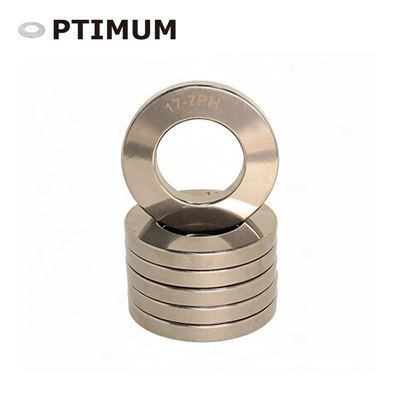
First off, let’s talk about what conical spring washers are. These are those cone – shaped washers that are used in a whole bunch of applications. They’re great for providing a constant load, absorbing shock, and compensating for thermal expansion and contraction. You’ll find them in everything from automotive engines to industrial machinery.
Now, onto surface defects. Surface defects can come in many forms. There could be scratches, dents, pits, or even rust spots. And trust me, these seemingly small issues can have a big impact on how well the conical spring washer works.
Let’s start with scratches. Scratches on the surface of the washer can act as stress concentrators. When a load is applied to the conical spring washer, the stress is supposed to be distributed evenly across its surface. But a scratch disrupts this even distribution. The stress gets concentrated at the edges of the scratch, which can lead to premature failure of the washer. For example, in a high – vibration environment like an engine, a scratched washer might start to crack much earlier than a washer with a smooth surface. This can cause the whole system to malfunction, leading to costly repairs and downtime.
Dents are another type of surface defect that can cause problems. A dent changes the shape of the conical spring washer. Since the performance of these washers is highly dependent on their precise conical shape, any deviation can mess things up. A dented washer might not be able to provide the same amount of spring force as an undented one. This can result in a loss of pre – load in the application, which is a big no – no. In a bolted joint, for instance, a loss of pre – load can lead to loosening of the bolts, which can compromise the safety and integrity of the structure.
Pits on the surface of the conical spring washer are also a concern. Pits can be caused by corrosion or improper manufacturing processes. Similar to scratches, pits act as stress raisers. They can also trap moisture and contaminants, which can further accelerate the corrosion process. If the corrosion spreads, it can weaken the material of the washer, reducing its strength and durability. In a marine environment, where the air is salty and humid, a pitted conical spring washer can corrode quickly, leading to a shorter lifespan and potential failure.
Rust spots are a clear sign of corrosion. Rust eats away at the metal of the conical spring washer, reducing its cross – sectional area. As a result, the washer becomes weaker and less able to withstand the loads it’s designed for. Rust can also make the surface of the washer rough, which can increase friction and wear between the washer and the mating parts. In a precision instrument, this increased friction can cause the instrument to operate less smoothly and accurately.
The impact of surface defects isn’t just limited to the performance of the conical spring washer itself. It can also have a domino effect on the entire system in which it’s used. For example, if a defective washer fails in a machine, it can cause damage to other components. In an assembly line, a single failed washer can bring the whole production process to a halt, resulting in a significant loss of time and money.
Now, you might be wondering how to prevent these surface defects. Well, at our place, we’ve got a pretty strict quality control process. We start with high – quality raw materials. We make sure the materials are free from any inherent defects before we start the manufacturing process. During manufacturing, we use advanced machining techniques to minimize the risk of scratches and dents. After the washers are made, we conduct thorough inspections. We use various testing methods, like visual inspections, ultrasonic testing, and magnetic particle inspection to detect any surface or subsurface defects.
But even with the best quality control measures, sometimes a few defective washers can slip through. That’s why we also offer a guarantee. If you find any surface defects in the conical spring washers you purchase from us, we’ll take them back and replace them with new, defect – free ones.
As a supplier, we know how important it is to provide you with reliable conical spring washers. Surface defects can be a real headache, but with our commitment to quality and continuous improvement, we’re doing everything we can to minimize their occurrence.
If you’re in the market for conical spring washers, whether it’s for a small DIY project or a large – scale industrial application, we’d love to talk to you. We’ve got a wide range of sizes and materials to meet your specific needs. And if you have any questions about our products or the impact of surface defects, don’t hesitate to reach out. We’re here to help you make the best choice for your application.
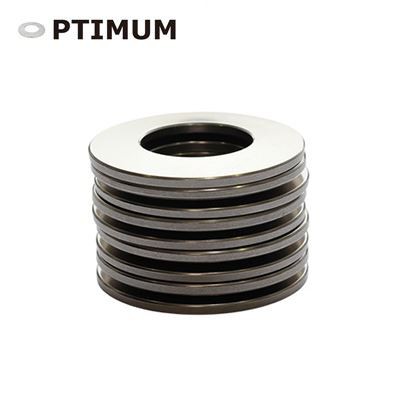
Let’s work together to ensure your projects run smoothly and efficiently with our high – quality conical spring washers.
Conical Spring Washer References:
- Machinery’s Handbook by Industrial Press Inc.
- Handbook of Spring Design by SAE International
Yangzhou Optimum Spring Manufacturing Co., Ltd.
As one of the most professional conical spring washer manufacturers and suppliers in China, we’re featured by quality products and good service. Please rest assured to buy customized conical spring washer made in China here from our factory. For more information, contact us now.
Address: No.9 West of Shuangtang Rd, Yangzhou, P.R. China 225000
E-mail: susie@optimum-spring.com
WebSite: https://www.optimum-spring.com/
