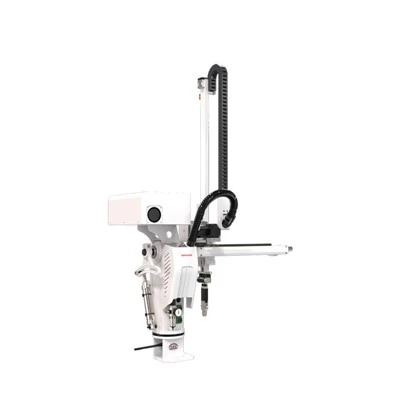
In the dynamic landscape of manufacturing, injection molding stands as a cornerstone process, enabling the mass – production of high – precision plastic parts. As an injection molding robot supplier, I’ve witnessed firsthand the evolution of this technology and the increasing demand for robots that can manage multiple molds efficiently. In this blog, I’ll delve into the intricacies of how an injection molding robot can handle multiple molds, exploring the benefits, challenges, and key strategies involved. Injection Molding Robot
The Significance of Managing Multiple Molds
Injection molding processes often involve working with various molds to produce different products simultaneously or in quick succession. This approach brings a multitude of advantages to manufacturers. Firstly, it significantly boosts production flexibility. By having the ability to switch between different molds, companies can respond rapidly to market demand fluctuations. For example, if a certain product suddenly becomes more popular, the production line can quickly shift focus to manufacturing that item.
Secondly, it enhances efficiency. Instead of waiting for a single mold to complete a long production run and then retooling the injection molding machine, a robot can manage multiple molds to keep the production process running continuously. This results in reduced downtime and increased overall output.
Thirdly, it can lead to cost savings. With a robot handling multiple molds, the need for additional labor to change and set up molds is minimized. Moreover, the optimized use of injection molding machines reduces energy consumption and wear – and – tear on equipment, which translates into lower operational costs in the long run.
Challenges in Managing Multiple Molds with Robots
However, the task of having an injection molding robot manage multiple molds is not without its challenges. One of the primary difficulties is mold compatibility. Different molds may have varying sizes, shapes, and connection points. The robot must be able to accurately identify and adapt to each mold’s unique requirements. For instance, some molds may require a specific type of gripper to hold them securely, while others may need a different alignment mechanism during the injection process.
Another challenge is programming complexity. The robot needs to be programmed to perform a series of tasks for each mold, including mold loading, unloading, and part extraction. This requires a high – level of precision in programming to ensure that the robot moves smoothly between different molds and performs each operation correctly. Any error in the programming can lead to production delays, damaged molds, or defective parts.
In addition, the physical environment of the injection molding area can pose challenges. The area is often hot, noisy, and filled with potentially hazardous chemicals. The robot must be able to withstand these harsh conditions and operate reliably. Dust and debris from the molding process can also interfere with the robot’s sensors and mechanical components, leading to malfunctions.
Strategies for an Injection Molding Robot to Manage Multiple Molds
1. Advanced Sensor Technology
To overcome the challenge of mold compatibility, advanced sensor technology plays a crucial role. Robots can be equipped with vision sensors, force sensors, and proximity sensors. Vision sensors can be used to identify the type and position of each mold. By analyzing the visual features of the mold, the robot can determine the appropriate gripper and alignment method. Force sensors help the robot to apply the right amount of force when handling the mold, preventing damage. Proximity sensors are useful for ensuring that the robot approaches the mold at the correct distance and position.
2. Flexible Programming
Flexible programming solutions are essential for dealing with the programming complexity. Teach pendant programming is a popular method, where an operator manually guides the robot through the required motions for each mold operation. The robot then remembers these motions and can repeat them. Off – line programming is another option. This allows programmers to develop the robot’s operation programs on a computer without interrupting the production process. The program can be adjusted easily to accommodate different molds and production requirements.
3. Robust Design and Maintenance
To operate in the harsh injection molding environment, the robot must have a robust design. It should be made of materials that can resist heat, corrosion, and wear. Regular maintenance is also necessary to ensure the robot’s reliability. This includes cleaning the sensors and mechanical components, lubricating moving parts, and checking for any signs of damage. By following a strict maintenance schedule, the robot can operate efficiently for an extended period.
4. Smart Mold Management Systems
Implementing smart mold management systems can further enhance the robot’s ability to handle multiple molds. These systems can store information about each mold, such as its dimensions, operating parameters, and usage history. The robot can access this information in real – time through a connected network, enabling it to make informed decisions about how to handle each mold. Additionally, the smart system can track the status of each mold, alerting operators when maintenance or replacement is required.
Real – World Applications
In the automotive industry, injection molding robots managing multiple molds are widely used to produce various plastic components, such as dashboards, door panels, and exterior trim parts. The robots can quickly switch between different molds to meet the production needs of different vehicle models. This allows automotive manufacturers to be more agile in responding to market trends and customer demands.
In the electronics industry, where precision and miniaturization are key, injection molding robots handle multiple molds to produce small plastic parts for devices like smartphones, laptops, and tablets. The ability to manage different molds enables manufacturers to produce a wide range of products with high – quality and efficiency.
Our Company’s Solutions
As an injection molding robot supplier, we have developed a range of innovative solutions to help manufacturers manage multiple molds effectively. Our robots are equipped with state – of – the – art sensor technology, allowing them to accurately identify and handle different molds. Our programming software is user – friendly and flexible, enabling operators to quickly program the robot for different mold operations.
We also offer comprehensive after – sales service, including maintenance training and technical support. Our team of experts can assist customers in setting up their injection molding systems, ensuring that the robots work seamlessly with multiple molds.
Conclusion
The ability of an injection molding robot to manage multiple molds is a game – changer in the manufacturing industry. It offers increased flexibility, efficiency, and cost – savings. While there are challenges to overcome, with the right strategies such as advanced sensor technology, flexible programming, robust design, and smart mold management systems, these challenges can be effectively addressed.
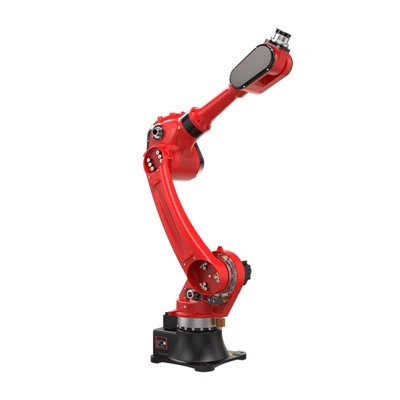
Industrial Robot If you are a manufacturer looking to improve your injection molding process and enhance your production capabilities, we invite you to contact us for a detailed discussion. Our team is ready to provide you with customized solutions based on your specific needs. Let’s work together to take your manufacturing to the next level.
References
- "Automation in Injection Molding" by John Smith. Published by Manufacturing Press.
- "Advanced Robotics in Industrial Processes" edited by Emily Johnson. Academic Publishers.
- Industry reports from the International Association of Injection Molding Manufacturers.
Robotic Technology (GD) Co., Ltd.
Robotic Technology (GD) Co., Ltd. is one of the most experienced injection molding robot manufacturers and suppliers in China, also supports custom service and one year warranty. Please feel free to wholesale CE approved injection molding robot for sale here from our factory. Contact us for quotation.
Address: Room 102, No. 30,Hengfeng 2nd Road,Daguo, Changping Town, Dongguan City,Guangdong,China
E-mail: admin@iroboticplus.com
WebSite: https://www.rb-tic.com/
