As a supplier of jumbo toilet roll paper dispensers, one of the most common questions we get from facility managers, building owners, and maintenance teams is straightforward: “Can a jumbo toilet roll paper dispenser be used with different paper sizes?” It’s a question that makes sense on the surface—jumbo rolls are bulkier and designed for high-traffic spaces, so the thought of making them compatible with smaller or alternative paper sizes seems like a smart way to reduce costs and streamline inventory. But the answer isn’t a simple “yes” or “no.” It depends on how the dispenser is engineered, the standards that govern restroom paper products, and the practical needs of the spaces they serve. Let’s break this down, rooted in both industry science and real-world experience from years of working with thousands of clients. Jumbo Toilet Roll Paper Dispense

First, let’s define what we mean by “jumbo toilet roll” and the standard sizes it aligns with. For context, a standard jumbo roll (often called a JRT roll) is designed to hold 1,000 feet or more of toilet paper, with a core diameter of 3 inches, an outer diameter of up to 9 inches, and a width of 3.5 inches. These are built for high-traffic areas like office buildings, schools, hospitals, and shopping malls, where restroom paper changes are less frequent—sometimes only every 4-6 weeks, depending on usage. By contrast, “different paper sizes” can refer to a few categories: smaller standard rolls (the 500-foot or 1,000-foot rolls with a 3.5-inch width, common in smaller office restrooms or retail stores), wider specialty rolls (like 4-inch widths for commercial restrooms with higher hand cleansing needs paired with tissue, or even 6-inch rolls for niche spaces), or even non-standard core sizes (such as 2-inch cores found in some budget dispensers).
The core of the answer lies in dispenser design. Not all jumbo dispensers are created equal. Some of our most popular models—engineered for universal compatibility—feature adjustable spindle systems. These spindles aren’t just fixed rods; they have spring-loaded arms or sliding brackets that can adapt to different roll widths and core diameters. For example, our line of heavy-duty jumbo dispensers includes adjustable spindles that can fit rolls from 3-inch to 4.5 inches in width, and core sizes from 2 inches to 3 inches. That means a facility that installs these dispensers can switch between standard jumbo rolls for peak holiday periods and smaller rolls for quieter off-seasons, without needing to replace the entire dispenser.
But why would a business want to mix paper sizes in the same jumbo dispenser? The reasons are both cost-related and practical. A facility manager might bulk-buy jumbo rolls when they’re on sale, then switch to smaller rolls when sales are slow and restroom usage drops. Or a building might have multiple restrooms on one floor—some with very high traffic, some with moderate—and one dispenser per floor makes inventory easier to track, rather than managing separate units for each space. There’s also the benefit of reducing waste. If a dispenser can accommodate a range of roll sizes, businesses don’t have to stock two types of rolls, which cuts down on storage space and reduces the chance of expired or unused paper going to waste.
That said, there are limitations, and these come down to two key factors: structural fit and functional performance. Structural fit refers to whether the roll physically fits in the dispenser. Even with adjustable spindles, if a roll is too wide to fit between the dispenser’s side panels, it can’t be installed. For example, a 6-inch wide roll won’t fit in a dispenser designed for a maximum width of 4.5 inches, no matter how adjustable the spindles are. Core size is another structural factor: a 2-inch core roll will slide right onto a 3-inch spindle, but if the spindle doesn’t have a mechanism to lock the smaller core in place, the roll might wobble or spin unevenly, leading to jams or inconsistent paper dispensing.
Functional performance is equally important. A jumbo dispenser works by feeding paper through a mechanism that controls the amount dispensed, usually with a serrated blade for tearing. If you use a smaller roll, the paper’s path through the dispenser might change. For example, a 3.5-inch wide roll might sit too far back in the dispenser, so the serrated blade can’t catch the edge of the paper, leading to partial sheets dispensing at once or paper tearing unevenly. This is more than a minor annoyance—it can lead to higher paper usage, as users pull more paper than they need to compensate for the tear issue. In high-traffic spaces, that extra usage can add up to hundreds of dollars in unnecessary costs each year.
It’s also worth referencing industry standards here. The American National Standards Institute (ANSI) has set guidelines for commercial restroom paper products and dispensers, which includes dimensions and compatibility requirements. ANSI/ASME A112.19.7M-2017, the standard for commercial tissue dispensers, states that a universal dispenser should accommodate at least two roll sizes: the standard 3.5-inch jumbo roll and the smaller 500-foot roll. This isn’t a recommendation to mix sizes arbitrarily, but a recognition that many facilities need flexibility. Our dispensers are tested against these standards, which is why they can safely and effectively handle multiple roll sizes without compromising performance.
From our years of experience working with facility managers, the biggest mistake we see is trying to force a non-compatible roll into a dispenser that isn’t designed for it. For example, some budget jumbo dispensers have fixed spindles that only fit one specific roll size, and forcing a smaller or larger roll can bend the spindle, damage the internal mechanism, or even cause the dispenser to leak if it’s a wet-dry model that also dispenses soap or sanitizer. We’ve had clients come to us after trying to save a few dollars on a cheaper dispenser that didn’t fit their existing rolls, only to have to replace the entire unit within a year—costing them far more than investing in a compatible, adjustable model upfront.
Another point to consider is maintenance. Dispensers that are designed for multiple paper sizes often have simpler mechanisms, which makes them easier to clean and repair. If a dispenser only fits one roll size, any variation in paper thickness (which is common between brands) can cause jams. Adjustable spindles, by contrast, account for small variations in roll diameter and thickness, so jams are less frequent and easier to fix when they do happen. That’s a big win for maintenance teams, who are often stretched thin and don’t have time to deal with constant dispenser issues.
So, can you use a jumbo toilet roll paper dispenser with different paper sizes? The short answer is: yes, if the dispenser is engineered for compatibility. But it’s not a one-size-fits-all solution. If you’re looking for flexibility, here’s what to look for when choosing a dispenser: adjustable spindles with locking mechanisms to secure different core sizes, wide enough side panels to accommodate varying roll widths, and testing against industry standards for performance. If you’re a facility manager looking to switch up your paper inventory, reach out to a supplier who can help you match the right rolls to your existing dispensers, rather than assuming all jumbo dispensers are interchangeable.
We’ve seen this flexibility work for all kinds of clients. A university campus, for example, uses our adjustable jumbo dispensers across all its campus buildings. During the school year, when dorms and lecture halls are packed, they use 9-inch outer diameter jumbo rolls to minimize changes. During summer break, when foot traffic drops by 70%, they switch to smaller, 6-inch diameter rolls to reduce paper waste. The same dispensers work for both, saving them over $12,000 a year in paper costs alone. Another client, a hospital chain, uses compatible jumbo dispensers in both high-traffic emergency rooms and quieter admin areas, allowing them to use the same bulk jumbo rolls for all locations, cutting down on inventory and storage space.
At the end of the day, the goal of any commercial dispenser is to provide a reliable, cost-effective solution for restroom needs. Compatibility with different paper sizes is a valuable feature when it’s designed and implemented correctly, but it shouldn’t come at the cost of performance. If you’re in the market for a jumbo toilet roll paper dispenser that offers the flexibility to adapt to your paper inventory needs, or you’re looking to optimize your existing dispenser setup for cross-size paper compatibility, we’re here to help. Reach out to our team to discuss your specific facility needs, get product recommendations, and learn more about how our dispensers can save you time and money.
Glove Dispenser References
ANSI/ASME A112.19.7M-2017: Performance Standard for Commercial Tissue Dispensers. American Society of Mechanical Engineers, 2017.
Restroom Industry Association. “2023 Commercial Restroom Inventory & Cost Analysis.” Restroom Industry Association, 2023.
Tissue Paper Association. “Standard Dimensions for Commercial Toilet Rolls and Dispensers.” Tissue Paper Association, 2022.
Fanda Hygiene Co., Ltd.
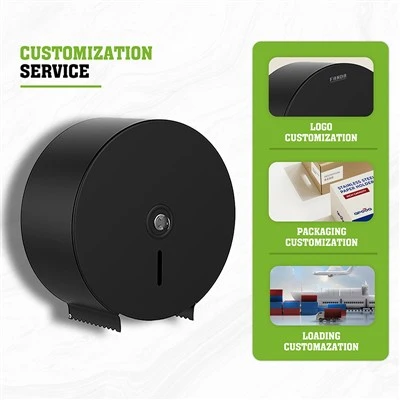
As one of the most professional jumbo toilet roll paper dispense manufacturers and suppliers, we also support customized service. With a professional production team, we are able to meet the needs of the majority of our customers. Welcome to wholesale bulk jumbo toilet roll paper dispense in stock here and get quotation from our factory.
Address: No.18-25, Changsheng Ln., Sec. 1, Huanzhong Rd., Beitun Dist., Taichung, Taiwan
E-mail: Sales03@fanda.com.tw
WebSite: https://www.fanda-hygiene.com/
