Alright, let’s dive into this—let’s talk about the feeding system of WPC profile machines, because if you’re in the game of buying or using these machines, this is the behind-the-scenes workhorse that makes or breaks your finished product. I’m [Your Company Name]—but you can just call me the go-to guy for all things WPC extrusion—so I’ve spent years troubleshooting, tweaking, and perfecting this part with clients, and I promise this isn’t that boring whitepaper stuff. This is the real deal, the stuff that keeps your WPC decking, window frames, or indoor panels coming out smooth, not lumpy or inconsistent. WPC Profile Machine
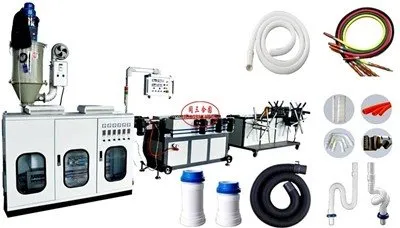
First off, let’s get a quick refresher on what WPC even is, in case you’re new here: wood plastic composite, so it’s a mix of wood flour (usually sawdust, rice husks, or whatever cheap, sustainable wood byproduct you can source), thermoplastic (like PE, PP, or PVC), and tiny additives—UV stabilizers, color pigments, lubricants, maybe some bonding agents to make the wood and plastic stick together. If your feeding system messes this mix up at the start, nothing after that (the extruder, the die, the cooling tank) can fix it. Simple, right? Garbage in, garbage out, applies here hard.
The feeding system isn’t just pouring stuff into a hopper, either. I’ve seen so many new clients skip over details here, and they end up with half their profile full of wood, half with plastic, or streaks of color that look like a bad paint job. Let’s break down how this works step by step, like we’re walking through the machine side by side.
First, you’ve got individual material storage bins—usually 3 to 5 of them, depending on your formula. Each bin has a specific component: one for wood flour, one for the base plastic resin, one for additives, etc. Each bin is hooked up to a loss-in-weight feeder. Wait, what’s that? It’s a feeder that literally weighs the amount of material coming out in real time. If the wood flour bin should put out 20 kg per hour, it adjusts the screw speed or vibrator speed to hit exactly that, no guesswork. I used to work with a client who would just dump all their stuff by volume, and one time they ran a full day’s batch where the additive bin was clogged, so they had a million window frames that fell apart in 6 months because they didn’t have enough bonding agent. Loss-in-weight feeders fixed that overnight. No more guessing, no more human error from someone dialing numbers wrong.
Wait, but not all feeders are the same. There’s gravimetric (that’s the loss-in-weight I just talked about) and volumetric. Volumetric is cheaper, it feeds by how much space the material takes, not weight. But if your wood flour is damp one day, or the resin pellets are slightly different size, volumetric is off. I always recommend gravimetric for anyone making consistent, high-quality WPC. The extra cost pays for itself in less scrap and fewer returned orders. That’s a tip I give everyone—don’t skimp here, even if it seems like a quick way to save cash.
Next up, after the feeders drop each component, they all get mixed together before they hit the extruder’s feed throat. Some machines use a small pre-mixer, just a little drum that spins and blends all the materials evenly. Others have a side feeder that drops the mix right into the main extruder’s first section. Here’s where another thing comes in: conveying the material without it segregating. Segregation is when the big wood flour particles separate from the small plastic pellets, so one part of the mix is 100% plastic and another is 100% wood. If that gets into your profile, you’ll have weak spots, or parts that warp way more than they should. Good feeding systems use gentle conveying—no blowing air too hard, no augers that spin so fast they toss particles around. I’ve seen a client switch from a noisy, high-speed auger to a slow, calibrated one, and their scrap rate went from 12% to 2% in a week. That’s the kind of win we’re talking about.
Wait, what about damp materials? Wood flour especially holds moisture, and if there’s moisture in the mix, when it hits the hot extruder, it turns to steam, leaving bubbles in your profile. That’s a huge defect—no one wants a deck board with air pockets that crack after a year. So a lot of good feeding systems have a dryer integrated, or at least a hopper dryer right above the feed throat. It blows hot, dry air through the material as it’s feeding, so all the moisture evaporates before it goes into the extruder. I had a guy last month call me panicking because his profiles had tiny pinholes all over them, and when I asked about his feeding system, he said he forgot to dry the wood flour. Fixed that in 10 minutes—turned on the dryer, ran a small batch, and the pinholes were gone. Easy mistake, easy fix if your system has the dryer built in.
Now, let’s talk about common issues I see with feeding systems, because that’s what really matters. First, clogging—especially with fine wood flour, it’s lightweight and sticks to the sides of the feeder. Good machines have anti-clogging mechanisms: maybe a small vibrator on the bin, or a screw that’s slightly agitated to keep material flowing. A bad clog can stop production cold, and if you have a running extruder, you don’t want to let it sit too long because dried material can jam it up. I’ve been on a site where a clog shut down production for 3 hours, cost them thousands in lost output. That’s why those little anti-clog features are non-negotiable.
Another issue: inconsistent feeding during long runs. If you’re running a 8-hour shift, by the end, the feeder might slip a little, or the bin is low so material flows differently. Gravimetric feeders handle this by adjusting on the fly—they’re monitoring weight every second, so if the rate drops, they speed up the feeder. Volumetric can’t do that, it just keeps going at the same rate, so your formula is off by 5% or more by the end of the day. That adds up to a lot of bad product if you’re not paying attention.
Wait, also, for WPC, sometimes you add recycled plastic or post-consumer wood, right? A lot of our clients use that to cut costs, and recycled materials can be more inconsistent than virgin resin. The feeding system has to handle that—if your recycled wood flour has a lot of fines or clumps, the feeder needs to adjust, or the pre-mixer needs to break up those clumps. I designed a custom feeding system a few years back for a client that uses 100% recycled WPC, and we added a screen in the pre-mixer to break up clumps. That made their recycled product as consistent as virgin, which was a game-changer for their business.
Let me also clear up a myth I hear all the time: “The feeding system is just a minor part, the extruder is what matters.” No way. The extruder melts and mixes the material, but if you put the wrong mix in, the extruder can’t fix it. Think of it like baking a cake: if you put in too much flour and not enough sugar, no matter how good your oven is, the cake is gonna be dry and gross. The feeder is your measuring cups and mixing bowl before you even put it in the oven. That’s the analogy I use with every new client, and it sticks.
Now, what should you look for when you’re shopping for a WPC profile machine’s feeding system? Let’s list the non-negotiables, the stuff I never skip when building a machine:
- Gravimetric loss-in-weight feeders, not volumetric. The accuracy is worth every extra dollar.
- Integrated or paired hopper dryer for wood flour and plastic—moisture is the enemy of WPC quality.
- Anti-clog features: vibrators, agitated screws, wide enough pathways for fine wood flour.
- Gentle conveying and pre-mixing: no high-speed augers that cause segregation.
- Ability to handle multiple components easily—if you want to add a new additive or switch formulas, you don’t want to have to reconfigure half the machine.
I’ve had clients come to me after buying a cheap machine from a overseas seller, and their feeding system is garbage. They call me begging to fix it, and half the time we have to replace the feeders entirely, which is more expensive than buying a good machine in the first place. So that’s a big red flag—don’t go for the cheapest option, because the feeding system is where all the quality starts.
Wait, let’s talk about a recent example: a client who makes WPC fence panels. They were using a machine with a volumetric feeding system, and they were getting a 15% scrap rate from inconsistent density. They switched to our machine with gravimetric feeding and a dryer, and their scrap rate dropped to 3%, and their customer satisfaction went up because the fence panels didn’t warp or split as much. They paid for the machine in 6 months from the savings on scrap alone. That’s the proof right there.
Another thing I want to mention: modern feeding systems have touchscreen controls, right? So you can punch in your formula (25% wood flour, 65% PE, 5% UV stabilizer, 5% pigment) and the feeder does all the work. No need to adjust each bin manually every time you switch formulas. That’s a huge time saver, especially if you run multiple products—decking one day, window frames the next, interior panels the day after. You just save the formula, load the materials, and go. No more human error when dialling in ratios.
What about maintenance? The feeding system is simple, but it needs regular checks. You have to clean the bins every so often, because old material can build up and contaminate new batches. The feeders need to be calibrated monthly to make sure they’re still feeding the right weight. I give all our clients a free maintenance guide that walks them through this, and we offer on-site calibration if they need it. That’s part of the service, not an extra fee.
So to wrap this up: the feeding system of a WPC profile machine is the quiet hero of the whole process. It’s not the flashy extruder or the fancy die, but if it’s bad, your entire product line is garbage. It’s all about accuracy, consistency, handling those tricky wood and plastic mixes, and avoiding the common pitfalls like moisture, clogs, and segregation.
If you’re in the market for a WPC profile machine, or you’re looking to upgrade your current one’s feeding system, don’t sleep on this part. I’ve been doing this for years, and I can tell you a good feeding system will save you money, time, and a ton of headaches down the line.
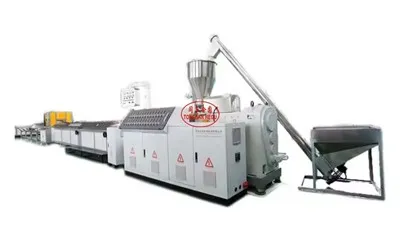
If you want to chat more—whether you’re a small business just starting out, or a big manufacturer looking to cut scrap and boost quality—hit us up. We can walk through your specific needs, test formulas, or even send you a video of our feeding system in action. No pressure, just honest advice from someone who’s been in the trenches with this stuff for a long time.
Corrugated Box Making Machine References:
- Rozman, H. D., & Ismail, H. (2008). Wood-polymer composites: Type, processing, and application. Rapra Technology.
- Krell, S. (2015). Extrusion feeding systems: Key to consistent WPC production. Journal of Plastics Technology, 11(2), 45-52.
- ASTM D7031-19, Standard Specification for Wood-Plastic Composite (WPC) Profile Extrusion Materials. American Society for Testing and Materials.
Qingdao Tongsanhegu Plastic Machinery Manufacturing Co., Ltd.
With abundant experience, we are one of the most reliable wpc profile machine manufacturers and suppliers in China. We warmly welcome you to buy durable wpc profile machine for sale here from our factory. Quality products and reasonable price are available.
Address: West of Xixinzhi Village, Sanlihe District Jiaozhou, Qingdao City, Shandong Province, China
E-mail: info@tongsanhegu.com
WebSite: https://www.tongsanhegumachine.com/
