If you’ve ever stood in the hallway of an office building at 2 a.m. when a fire alarm blares, you might’ve glanced at the ceiling-mounted speaker or wall-mounted pull station and thought that’s the core of the system. But as someone who’s spent 12 years selling fire alarm cables to electricians, building contractors, and facility managers across the U.S., I’m here to tell you the real unsung hero of every fire safety network is the thin, often overlooked cable running through walls, ceilings, and floors—what we in the trade just call “fire alarm cable.” People ask me all the time: What’s the purpose of this stuff, anyway? It’s not just a wire. It’s the nervous system that keeps a building’s life-saving safety network working when every other part of the system is stressed, and that’s a responsibility I don’t take lightly as a supplier. Fire Alarm Cable
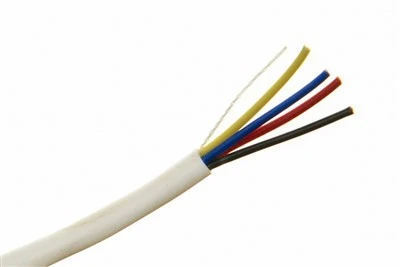
Let’s start with the basics, because a lot of folks outside the fire industry don’t realize how different fire alarm cable is from the regular 14/2 or 12/2 Romex running to your kitchen outlets. Regular household electrical wire is designed to carry power for lighting, appliances, and other everyday loads, and its job is just to deliver electricity without overheating or failing. Fire alarm cable? It’s built for a totally different job: transmitting critical data and power between fire alarm control panels (FACUs), smoke detectors, heat detectors, pull stations, notification appliances (speakers, horns, strobes), and even sprinkler flow sensors. But that’s the surface-level purpose. The real, life-saving purpose is that it has to keep working when a building is on fire—when temperatures soar, smoke is thick, and power to the rest of the building is cut. If that cable fails, the smoke detector won’t send an alert to the control panel, the horn won’t blare, and people won’t evacuate in time. That’s why we spend so much time at our facility testing every batch of cable before it leaves our warehouse.
Here’s where the science gets specific, and where a lot of cheap, no-name cables cut corners that end up costing lives. Fire alarm cable is rated by standards like NFPA 70 (the National Electrical Code, or NEC) and UL 1424, which set strict requirements for how it performs under extreme heat. Most of the cable we supply is plenum-rated or riser-rated, depending on where it’s installed in a building. Plenum-rated cable is for the plenum space—those air-handling areas above ceilings, below floors, or inside walls that circulate heating and cooling air. If a regular cable catches fire in a plenum, it releases toxic fumes that can spread through the entire building’s ventilation system, which is a huge hazard during a fire. Plenum-rated fire alarm cable has a special outer jacket made from low-smoke, zero-halogen (LSZH) material that burns at a slower rate, produces less dense smoke, and doesn’t release those deadly, irritant fumes that can make people pass out before they even see flames. Riser-rated cable is for vertical runs between floors, and it has a flame-retardant jacket that prevents fire from spreading up through a building’s shafts, which is another common way fires escalate.
Another key purpose of fire alarm cable is its ability to maintain circuit integrity (CI) during a fire. That’s not something regular wire can do. When temperatures hit 1,800°F—common in a structural fire—most standard insulation melts or falls apart, breaking the circuit between the smoke detector and the control panel. Our fire alarm cable uses insulated conductors wrapped in a layer of mica tape, a heat-resistant mineral that acts like a shield, keeping the electrical current flowing even when the surrounding metal is melting. We test this every quarter at a third-party lab: we mount a 10-foot length of cable in a furnace, crank the heat to 2,000°F for 15 minutes, and make sure the circuit stays active. If it doesn’t pass, we scrap the whole batch. A few years back, we had a customer who tried to save a few bucks by using generic alarm wire instead of our CI-rated cable in a 12-story apartment building. During a test fire, the wire burned through in 8 minutes, 2 minutes before the required 10 minutes for CI-rated cable. The apartment complex had to rewire every vertical run, and they learned the hard way that fire alarm cable isn’t a place to cut corners.
Beyond just transmitting power and data, fire alarm cable has a specific purpose in the way it’s designed to reduce electromagnetic interference (EMI). Modern fire alarm systems use low-voltage signals to send alerts—usually 12 or 24 volts, way less than the 120 volts in your home outlets. But in commercial buildings, there’s all kinds of electrical noise from servers, elevator motors, lighting ballasts, and HVAC systems that can mess with those weak signals. That’s why most fire alarm cable we supply has twisted pairs of conductors, wrapped in an overall shield, or sometimes both twisted pairs and individual shields. The twisting cancels out EMI, and the shield blocks outside noise from interfering with the signal between devices. Last year, a data center client called us panicking because their fire alarm system kept giving false alerts when their new server array was running at full capacity. The problem? They used unshielded alarm wire that couldn’t handle the EMI from the servers. We swapped out their cable for our shielded twisted-pair (STP) fire alarm cable, and the false alerts stopped immediately. That’s the quiet purpose fire alarm cable serves: making sure the alert actually gets through, even when other systems in the building are running hard.
Let’s talk about where this cable goes, because its purpose changes slightly based on location, but the core job stays the same. In a residential high-rise, fire alarm cable runs from the control panel in the lobby to every smoke detector on every floor. In a school, it connects pull stations by hallway doors and strobes above exit signs, so deaf or hard of hearing students get the alert. In a hospital, fire alarm cable is often integrated with the nurse call system, so if a detector goes off, nurses get an alert on their pagers too. In all of these cases, the cable’s purpose isn’t just to connect two devices—it’s to create a reliable, fail-safe communication network that works when every other system in the building is compromised. That’s why we don’t sell generic wire; every product we carry is listed with UL and meets NEC Article 760, which is the specific section of the code dedicated to fire alarm circuits. If an electrician tells you they’re using “alarm wire” for a project, ask if it’s rated for circuit integrity, plenum or riser-rated, and listed to UL 1424. Too many contractors skip that step to save a few dollars, and it’s a risk no building owner should take.
I get asked sometimes why fire alarm cable is so much more expensive than regular electrical wire. Let’s do the math: A roll of 500-foot 14/2 Romex is around $80. A 500-foot roll of plenum-rated CI fire alarm cable is around $320. That’s four times the cost, but here’s the catch: If there’s a fire, that $240 difference in cable cost could be the difference between people getting out safely and a loss of life. A building fire that results in a fatality can cost a property owner millions in lawsuits, OSHA fines, and code violations. The cable is the cheapest part of the entire fire safety system, and it’s the most important. When we work with contractors and building owners, we don’t just sell them a roll of wire—we explain that every foot of cable we supply is designed to keep their building’s safety network working when it matters most.
Over the years, I’ve seen a lot of changes in fire alarm cable. A decade ago, most cables were just two conductors, but now we have multi-conductor cables that connect up to 20 devices in a single run, which cuts down on installation time for electricians. We’re also seeing a lot more low-smoke, zero-halogen cables for commercial kitchens and healthcare facilities, where toxic fumes are a bigger risk than fire itself. But the core purpose never changes: Fire alarm cable is the lifeline between people and safety during an emergency.
If you’re an electrician working on a new build, a facility manager upgrading an old system, or a building owner looking to replace outdated fire safety equipment, you know how important it is to use the right components for the job. Cutting corners on fire alarm cable isn’t just bad practice—it’s irresponsible. We’ve spent years refining our products to meet the strictest industry standards, and we stand behind every roll of cable we ship. Whether you need riser-rated cable for a new apartment building, plenum-rated cable for an office high-rise, or shielded cable for a sensitive industrial facility, we can get you the right product, and our team is always here to answer your questions about ratings, installation, or code requirements. If you’re looking to source reliable, code-compliant fire alarm cable for your next project, reach out to our team to discuss your specific needs and get a customized quote.
Security Alarm Cable References
National Fire Protection Association. (2023). NFPA 70: National Electrical Code. National Fire Protection Association.
Underwriters Laboratories. (2022). UL 1424: Standard for Safety for Fire Alarm Systems. Underwriters Laboratories.
International Code Council. (2021). International Building Code (IBC). International Code Council.
Jiaxing Doublewin Cable Co., Ltd
Jiaxing Doublewin Cable Co., Ltd. is one of the most professional fire alarm cable manufacturers and suppliers in China, also supports customized service. Welcome to buy bulk durable fire alarm cable made in China here and get quotation from our factory. For price consultation, contact us.
Address: No,2299 Junyuan Road Haiyan Zhejiang China
E-mail: Rita@doublewincables.com
WebSite: https://www.chinacablemfg.com/
